




Silver Nutmeg Grater
A silver nutmeg grater is a pocket-sized piece of Georgian or Victorian silver designed to grate spice at the dining table.
What the pieces are
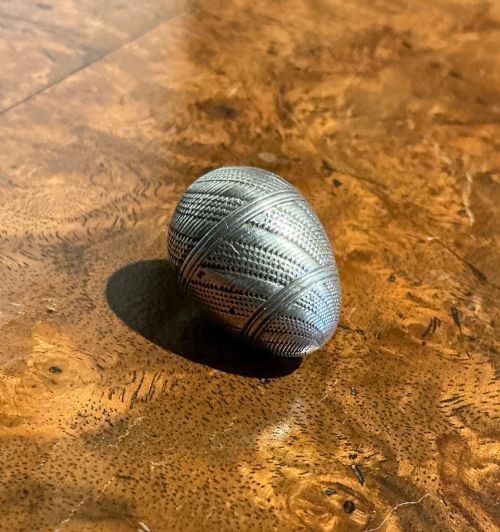
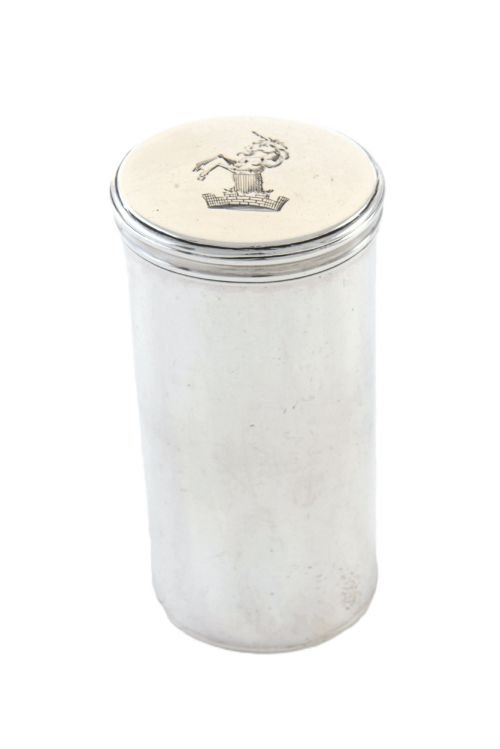
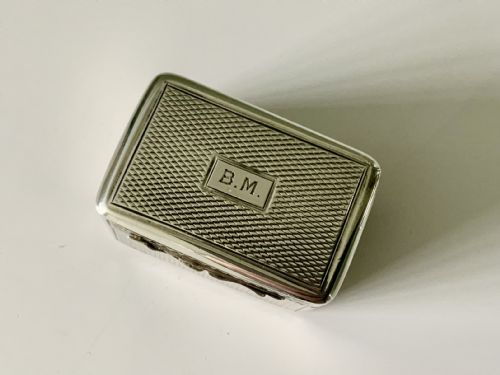
A silver nutmeg grater is a small domestic utensil designed to hold a whole nutmeg and a rasp, appearing frequently in 18th Century and 19th Century forms. Collectors meet these items fashioned as acorns, cylinders, eggs, barrels, and teardrops, reflecting the varied tastes of Georgian and Victorian households.
The most common version on this page is the Georgian egg or barrel shape, often bearing hallmarks from Birmingham makers. These portable items sat in a pocket or dining case, ready to flavour punch or food.
The eras represented span from the 18th Century through the Victorian period, encompassing sterling silver bodies paired with steel grates. Each object shows the evolution of dining customs where guests grated their own spice.
How they were made
Makers formed these items from sterling silver using techniques like bright-cut engraving, casting, and shaping into acorns, eggs, or cylinders. The exterior shells hinge or screw together to enclose the spice chamber and the internal rasp.
Inside each sterling silver housing sits a pierced steel grater plate, secured to shred the hard nutmeg kernel efficiently. Silversmiths integrated these steel components into the precious metal frames with precise fitting.
Retail Price Guide 2026
Typical UK retail prices for silver nutmeg grater, calculated from the Sellingantiques database of over a million retail prices indexed since 2003. This retail price guide relies exclusively on Sellingantiques data; no external sources or auction records are used, so the figures do not describe the wider market.
Listings feature sterling silver and steel materials across Georgian and Victorian periods.
What varies in quality
The distinction between standard examples and the finest pieces rests in the sharpness of the engraving and the crispness of the maker marks. Bright-cut engraved patterns and sculptural forms like acorns or detailed dog crests demand higher skill from the silversmith.
Weight and structural integrity of the sterling silver hinge or screw mechanism also define the grade of the item. Pieces bearing clear, full hallmarks and intact steel grates represent the upper tier of surviving examples.
Daniel Field·Reid and Summers·J Taylor·Samuel Meriton II·Joseph Willmore·Thomas Willmore·Samuel Pemberton·Phipps and Robinson
The Silver Nutmeg Grater Glossary
- Hallmark
- Official stamps struck into precious metals to indicate the maker, standard of silver, and year of assay. These marks provide the primary evidence for dating Georgian and Victorian items.
- Bright-cut engraving
- A surface decoration technique using faceted cuts to reflect light from the silver. This style appears frequently on egg-shaped pieces from the 18th Century.
- Sterling silver
- An alloy consisting of silver and other metals to ensure durability for daily handling. It serves as the primary material for the outer cases of these graters.
- Rasp
- The internal steel grating plate used to reduce the hard spice. Steel was chosen for this component to maintain a sharp cutting surface.
Frequently Asked Questions
What shapes do these graters come in?
Surviving examples appear in naturalistic and geometric forms such as acorns, eggs, barrels, cylinders, and teardrops.
Silversmiths shaped the sterling silver casings to conceal the functional purpose while remaining portable.
How do I identify a Georgian grater?
Georgian pieces typically date from the 18th Century to the early 19th Century, featuring styles like bright-cut engraving.
Assay office marks and maker stamps on the sterling silver help confirm the exact period of production.
Are the grater plates made of silver?
The exterior case is fashioned from sterling silver, but the internal grating surface is made of steel.
Steel provided the necessary hardness to grate dry nutmeg kernels without wearing down too quickly.