


Silver Novelty Snuff Box
These silver novelty snuff box pieces combine practical pocket containers with inventive animal, shoe and trunk forms that delight collectors.
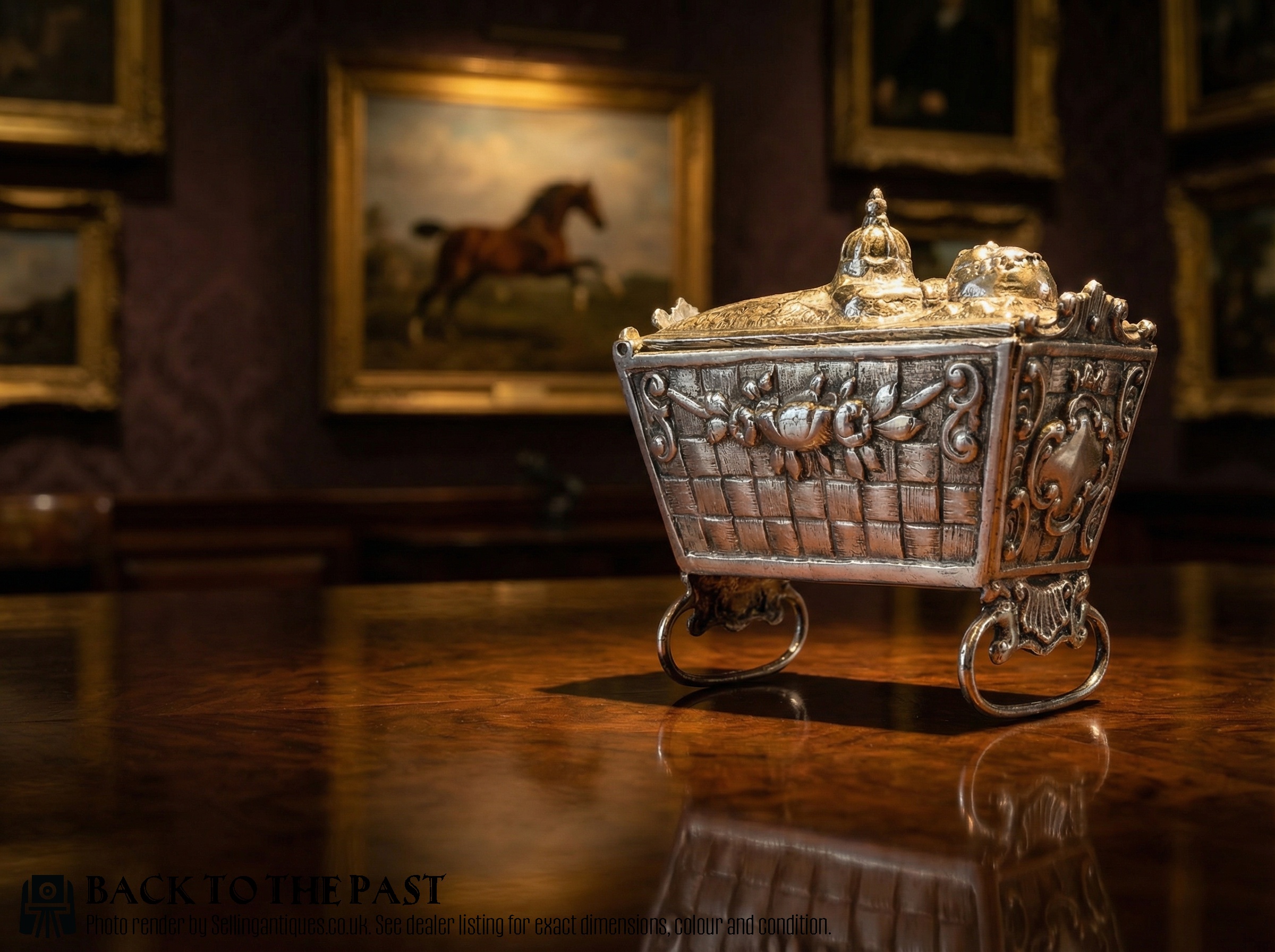
Silver Novelty Snuff Box
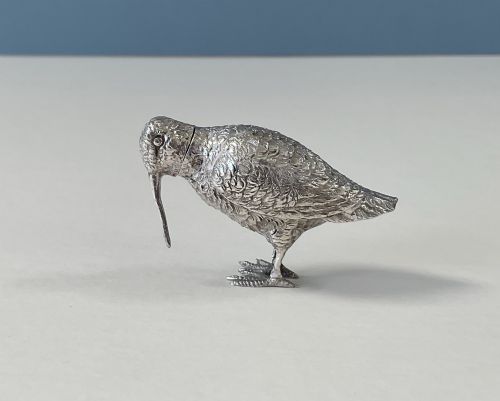
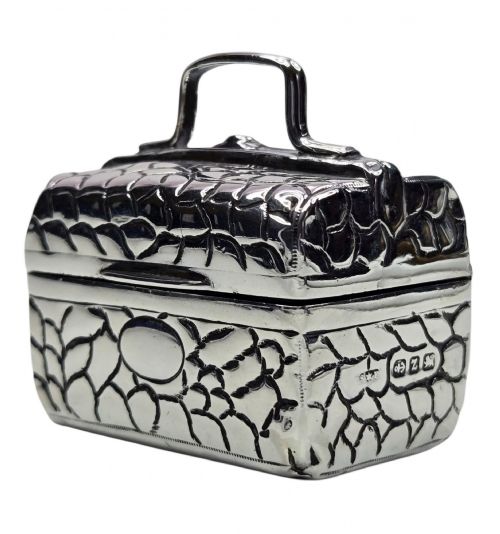
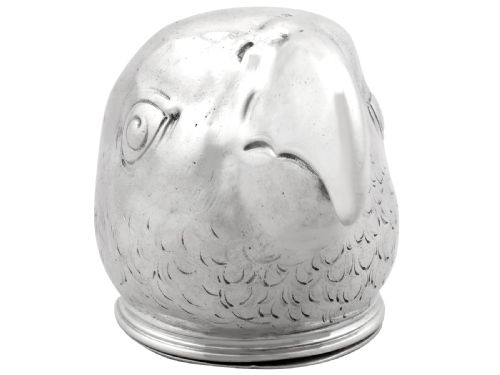
A silver novelty snuff box takes whimsical forms ranging from animals like dogs, birds, and fish to inanimate objects such as trunks, hats, and shoes. These items appear across Georgian, Victorian, and Edwardian periods, alongside pieces from around nineteen hundred and the mid-twentieth century.
The objects serve as small containers, functioning as snuff boxes, vinaigrettes, pill boxes, trinket boxes, or even handles on walking canes. Natural materials such as cowrie shell, turtle shell, mother-of-pearl, wood, and glass frequently combine with sterling silver, German silver, and silver gilt.
Victorian and Edwardian novelty examples dominate the available selection, often taking the shape of specific creatures or detailed objects with hinged components. Makers from London and Birmingham feature prominently among the recorded items, alongside continental German silver work.
Quality factors in craftsmanship
The crispness of the chasing and the complexity of the form determine the standard of a piece. Articulated joints that move fluidly without looseness indicate superior manufacturing skill.
The integration of secondary materials, such as fitted shell or detailed mother-of-pearl panels, elevates the refinement of the object. Clear hallmarks and maker marks provide concrete evidence of origin and standard.
Materials recorded across the inventory include sterling silver, silver gilt, German silver, cowrie shell, turtle shell, mother-of-pearl, wood, and glass.
Samson Mordan·John Bettridge·W Comyns
The Silver Novelty Snuff Box Glossary
- Vinaigrette
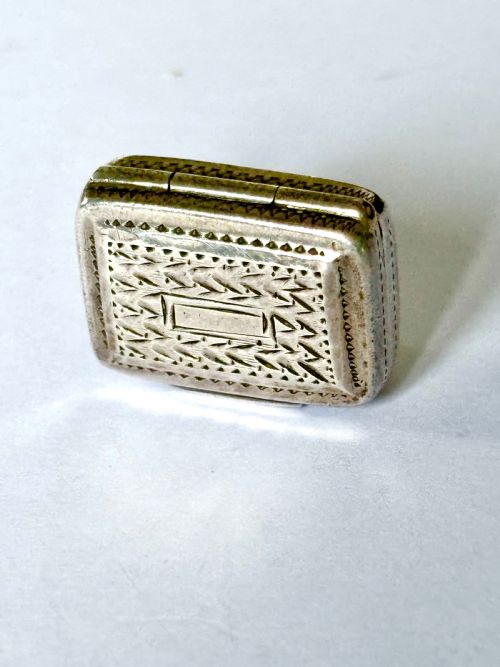
- A small ornamental box featuring an internal pierced grille that originally held a sponge soaked in aromatic vinegar. These pieces date across Georgian and Victorian periods.
- Silver gilt
- Silver that has been coated with a thin layer of gold on its surface. This technique provides a rich interior colour contrast.
- German silver
- A copper-nickel-zinc alloy, also known as nickel silver, used widely for decorative metalwork and novelty boxes. It contains no actual silver despite the name.
- Cowrie shell
- A glossy, rounded marine shell often mounted in sterling silver for snuff boxes during the Georgian era. The natural pattern gives each box a distinct appearance.
- Articulated body
- A construction method where sections of an animal form are linked to move independently. This mechanical feature appears on fish and reptile novelty items.
Silver Novelty Snuff Box: Frequently Asked Questions
How were vinaigrettes used?
Vinaigrettes held a small sponge soaked in aromatic vinegar to help mask unpleasant odours in public spaces. The user would open the outer lid to reveal a pierced internal grille.
This pierced metal plate allowed the scent to diffuse while keeping the damp sponge secure inside the silver or silver gilt box. They were carried in pockets or reticules by Georgian and Victorian owners.
How do I identify a Victorian piece?
Victorian pieces often display specific hallmarks showing the assay office, date letter, and sterling standard. Stylistically, they lean into naturalistic animal forms, textured surfaces, and detailed chasing.
Examining the construction methods, such as the hinges on a crocodile skin trunk or an articulated fish, helps confirm the nineteenth-century manufacturing techniques.
What materials are used besides silver?
Many boxes incorporate organic materials like cowrie shell, turtle shell, and mother-of-pearl alongside sterling silver mounts. German silver also appears on continental table pieces.
Glass and wood occasionally form parts of the body, while gold gilt lines the interiors of vinaigrettes and specific snuff boxes to prevent corrosion from contents.
How should I display small trinket boxes?
Small novelty boxes look best grouped in shallow glass display cabinets or on dedicated trays where their detailed forms can be examined up close. Adequate lighting highlights the chased surfaces and shell textures.
Handling them requires care to protect delicate hinges, articulated joints, and softer organic materials like mother-of-pearl or shell from accidental drops.