

Victorian Novelty Box
A victorian novelty box turns everyday storage into wit, shaping metal, wood and horn into animals, books, shoes and trunks.
Victorian Novelty Box
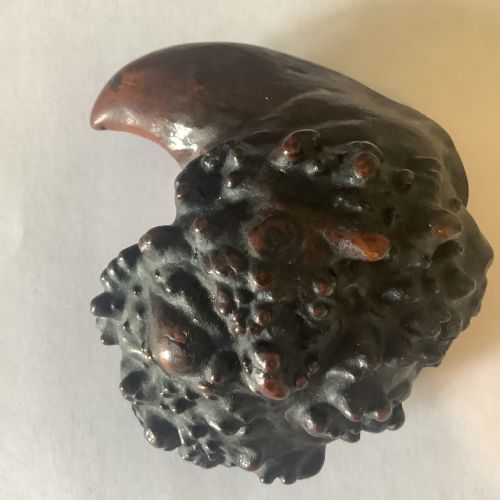
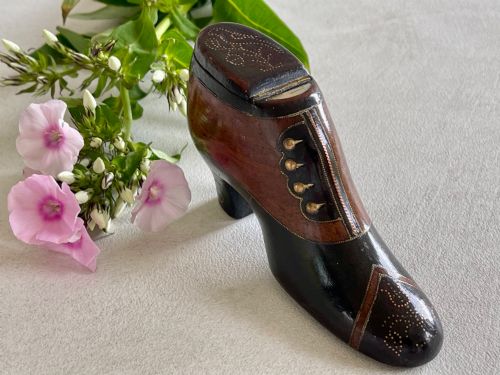
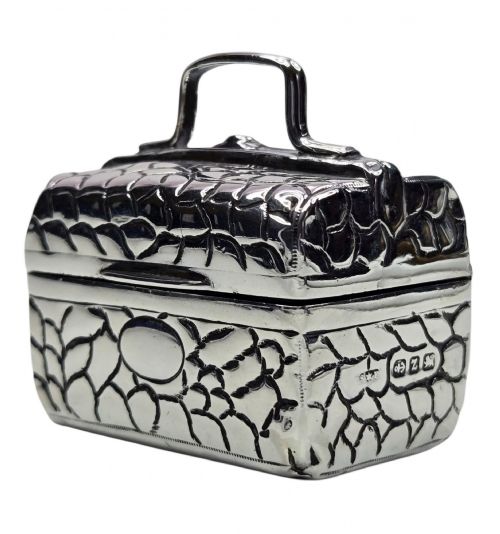
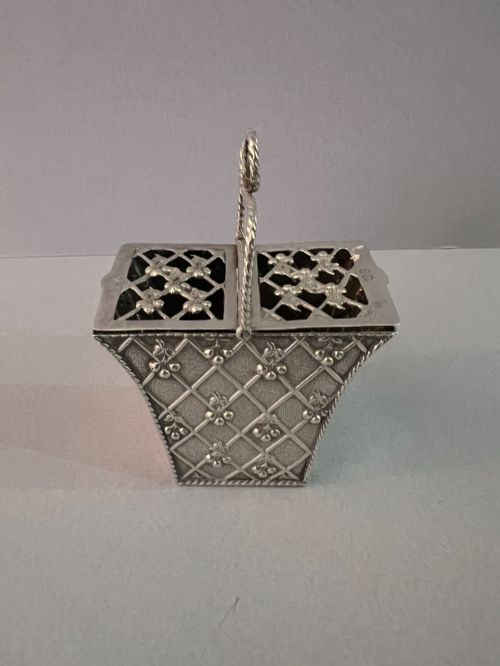
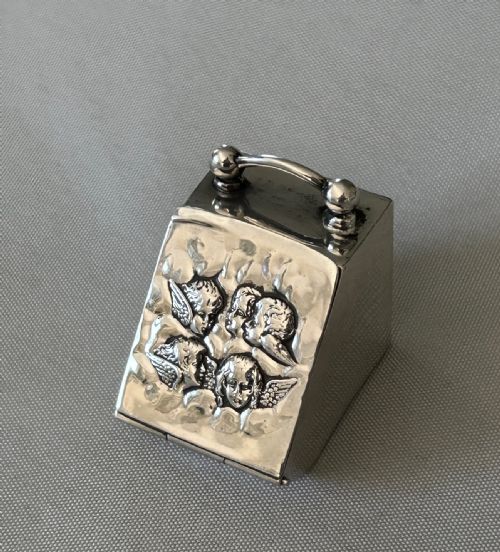
A victorian novelty box takes a familiar everyday container and disguises it as an animal, a book, a shoe or an inanimate object. When looking for a victorian novelty box on this page, a buyer encounters everything from tiny silver vesta cases shaped like animals to substantial oak and silver-plated biscuit barrels.
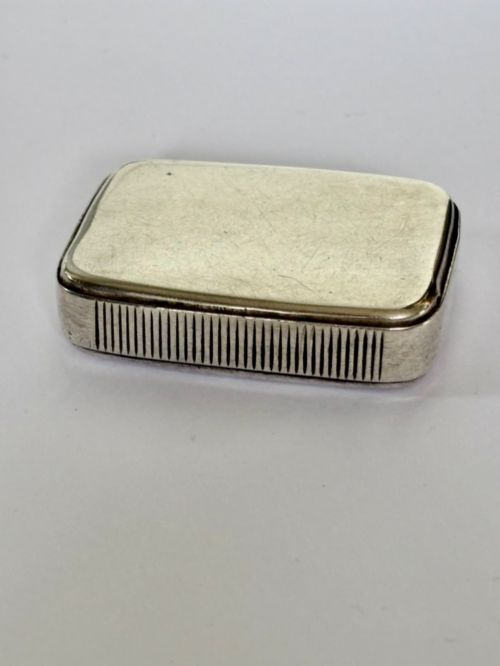
The objects span desk accessories, pocket containers and table pieces. Small items such as pill boxes, vesta cases and snuff boxes dominate the selection, though larger biscuit barrels, cigar humidors and tea caddies also appear.
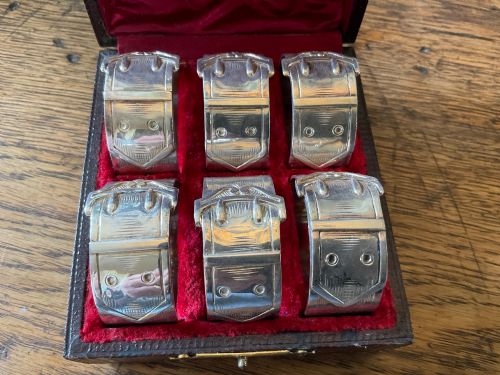
Most examples date from the nineteenth century, ranging through the Victorian and Edwardian eras, with occasional Georgian precursors and early twentieth-century pieces. Makers utilised sterling silver, silver plate, hardwoods, bone, enamel and brass to construct these humorous and tactile items.
Materials and construction
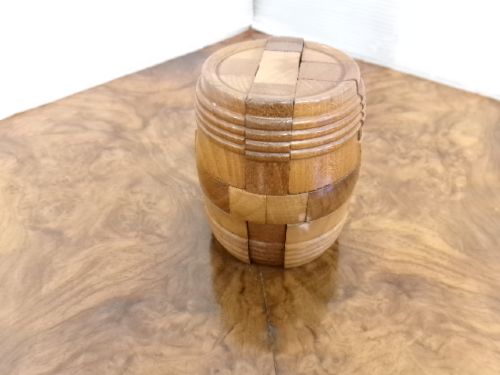
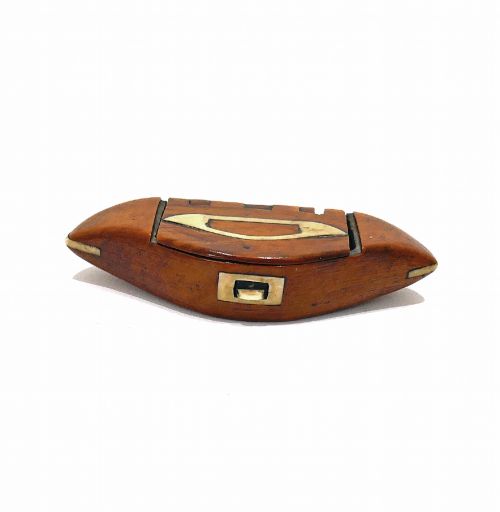
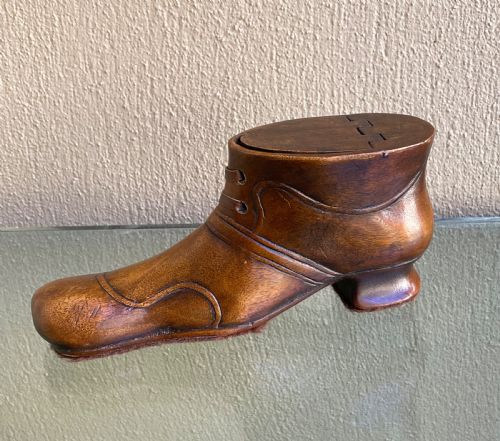
Cabinetmakers and folk artists shaped hardwoods such as oak, walnut, burr walnut and fruitwood into shoes, books, barrels and animals. They often enhanced these wooden pieces with bone inlay, brass pique work or marquetry patterns.
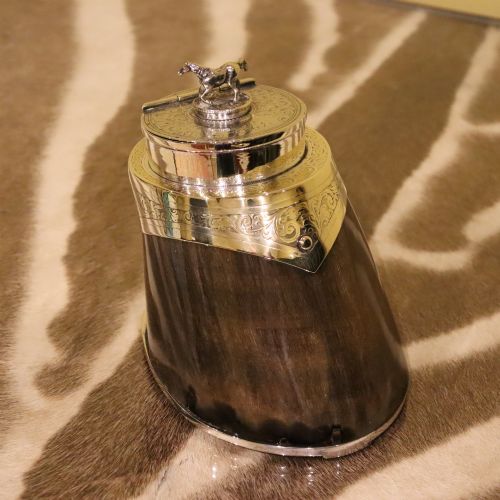
Specialist materials like tortoiseshell, buffalo horn and taxidermy elements such as horse hooves appeared in specific functional forms. Hinges, spring lids and articulated fish bodies demanded considerable mechanical skill from the artisans who built them.
A fish-shaped snuff box comes with an articulated body and a hinged head that wiggles when held.
Separating top work from standard output
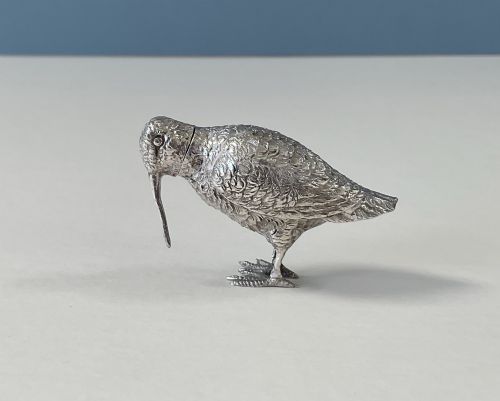
Quality rests heavily on the naturalism and sculptural depth of the form. A superior silver vesta case or wooden snuff box captures anatomical details, avian feathers or book spines with crisp definition rather than soft, generalised moulding.
The standard of mechanics dictates the worth of pieces with moving parts. Hinges that shut flush, smoothly sliding stamp cases, secure trick catches and articulated bodies that move without friction mark out workshop mastery.
Renowned makers and clear hallmarks elevate certain pieces above anonymous factory output. Stamped signatures from makers like Sampson Mordan or A & J Zimmerman denote superior silver fabrication and design ambition.
Sampson Mordan & Co·A & J Zimmerman·Andrew Barrett & Sons·W Comyns
The Victorian Novelty Box Glossary
- Vesta case
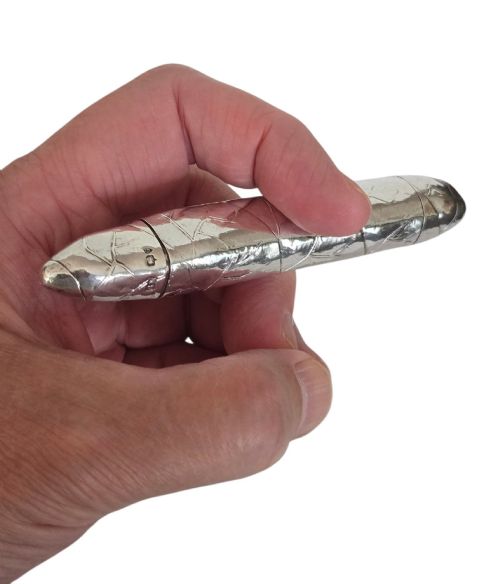
- A small pocket container designed to hold safety matches, often featuring a striking groove on the base. Victorian examples frequently took whimsical animal or figural shapes.
- Treen
- Small handmade wooden household objects turned on a lathe or carved by hand. Collectors prize early fruitwood snuff boxes and shoe-shaped containers carved from single blocks.
- Silver gilt
- Silver covered with a thin layer of gold, providing a rich interior finish. This technique frequently protected the metal inside salt cellars, vinaigrettes and pill boxes.
- Pique work
- A decorative technique involving tiny inlaid points of gold, silver or brass set into tortoiseshell or wood. It appears on floral and geometric motifs across various small boxes.
- Biscuit barrel
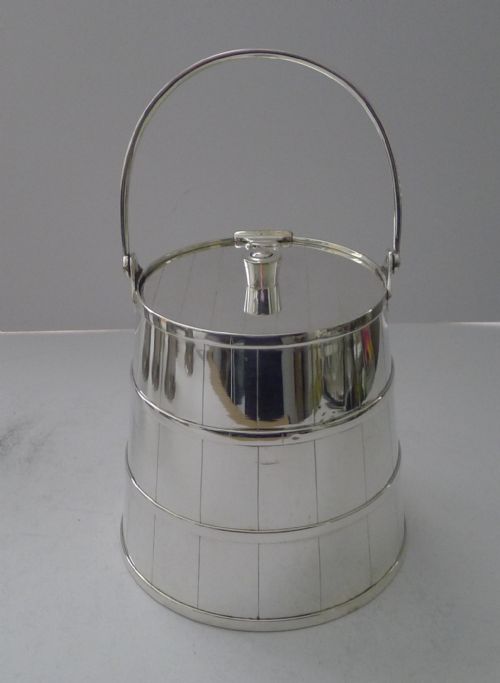
- A large container designed for storing dry biscuits on the dining table. Novelty versions often mimicked ice buckets, tree trunks or wicker pails using oak and silver plate.
Victorian Novelty Box: Frequently Asked Questions
What is a novelty box?
A novelty box is a container shaped deliberately to resemble an animal, a book, a shoe or another unrelated object. These pieces combined practical storage for snuff, matches or trinkets with witty design.
Victorian craftsmen produced them in silver, wood, brass and horn for everyday use in the pocket or on the desk.
How were silver vesta cases used?
Vesta cases held short matches known as vestas, which ignited by friction against a rough surface. Smokers carried them in pockets or attached them to watch chains to keep matches dry.
Makers turned these functional items into miniature sculptures of animals, boots and buildings to amuse the owner.
What is treen?
Treen refers to small, functional wooden objects shaped by turning, carving or woodworking. Items like snuff shoes, nutmeg graters and puzzle boxes fall into this category.
Collectors prize antique treen for its tactile surface, rich patina and the folk art skill required to carve moving parts from a single piece of wood.
How do I date an antique silver box?
English silver boxes usually carry hallmarks indicating the assay office, the metal standard and a date letter corresponding to a specific year. Maker's marks also help identify the silversmith and active period.
Unmarked pieces or wooden items require stylistic analysis, looking at construction methods, materials and wear patterns to determine age.