


Silver Novelty Condiments
Silver novelty condiments bring animal forms and practical tableware together on the dining table.
Silver Novelty Condiments
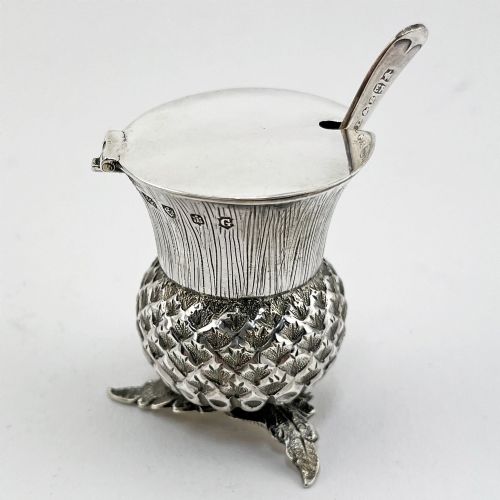
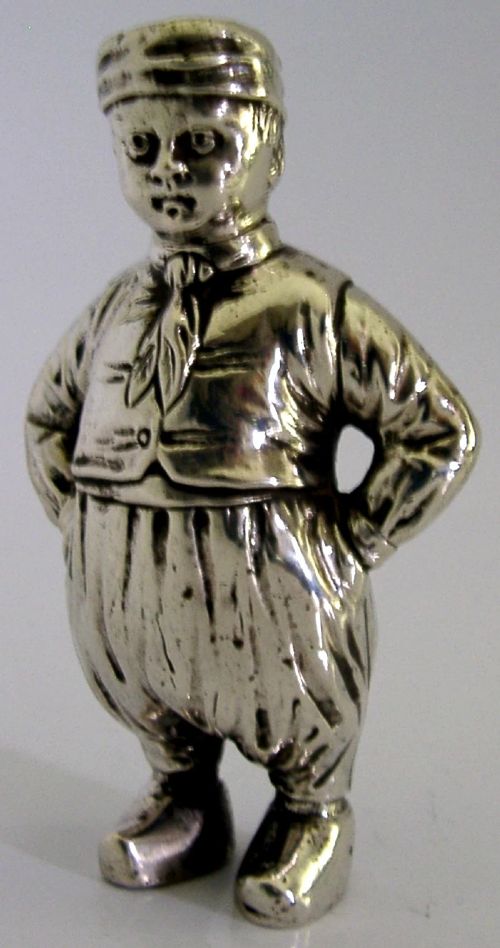
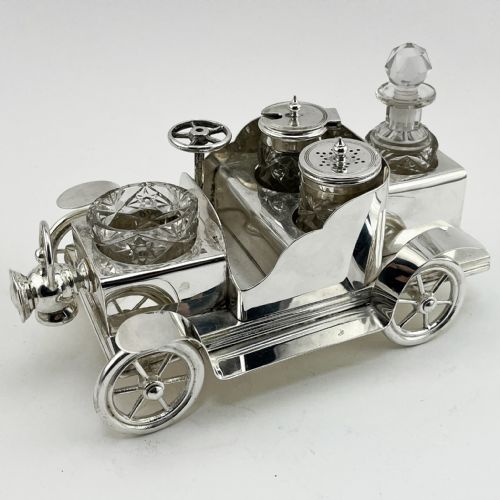
When you search for silver novelty condiments, you are looking at functional tableware shaped as animals, birds, vehicles, and figures. These pieces range from individual pepper pots to complete cruet sets designed to amuse diners.
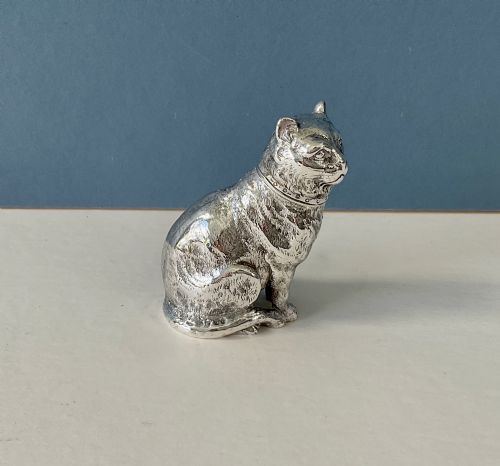
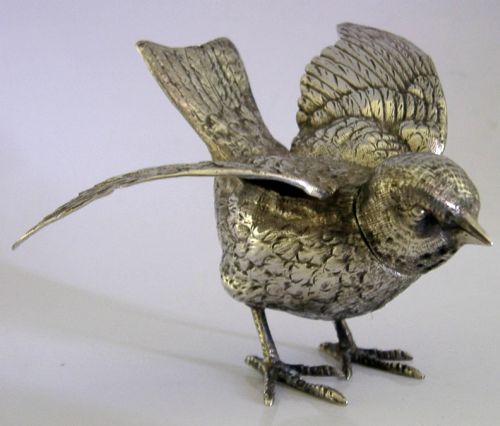
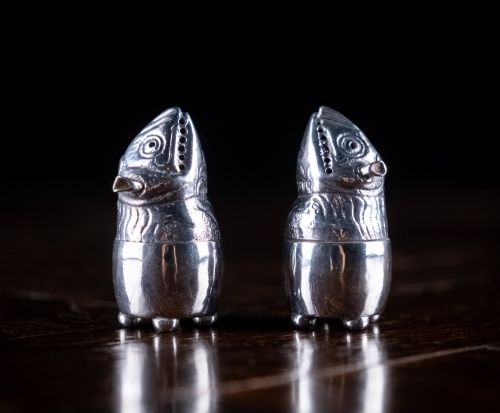
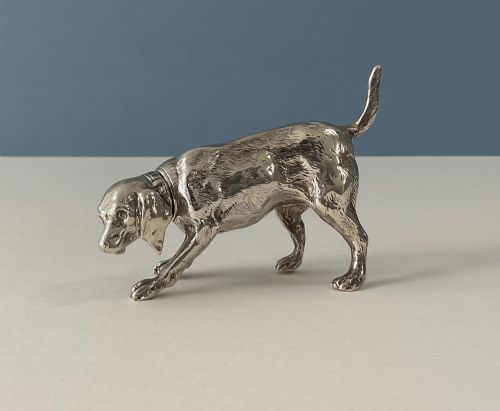
You are most likely to meet Victorian and Edwardian examples on this page, particularly pepper pots modelled as owls, chicks, dogs, and birds. These items combine practical condiment storage with imaginative sculptural design.
The selection includes sterling silver, silver plate, and solid silver pieces alongside cut glass containers, oak stands, and fitted cruet frames. Workshops produced everything from realistic animal figures to grotesque characters for the dining table.
How They Were Made
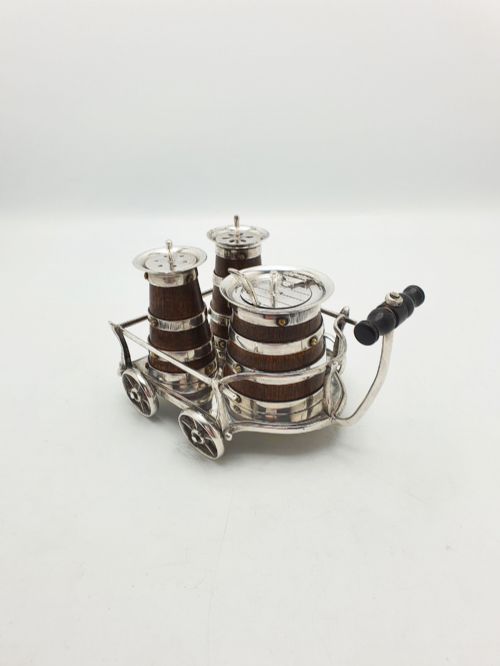
Makers combined silver with glass, oak, and walnut to create functional cruet sets and condiment holders. Cut glass liners held mustard and preserves, while silver-plated frames and wirework stands supported multiple bottles and shakers.
Mr Punch's dog Toby stands ready to dispense pepper.
What Varies in Quality
The distinction between ordinary and superior pieces rests on the crispness of the casting and the naturalism of the modelling. Master silversmiths captured realistic textures in feathers and fur, whereas simpler versions relied on plain stamped surfaces.
Design complexity and maker reputation separate standard production items from exceptional workshop creations. Cast figural pieces by known makers demonstrate heavier gauge metal and more sophisticated detailing than basic plated wares.
Frederick Brasted·Hukin and Heath·Josiah Williams and Co·Thomas Johnson·Sampson Mordan·Berthold Muller·Mappin and Webb
The Silver Novelty Condiments Glossary
- Pepperette
- A small shaker designed specifically for dispensing ground pepper at the table. These containers often took the form of birds, animals, or standing figures.
- Cruet set
- A fitted frame or stand holding multiple bottles, jars, or shakers for condiments such as oil, vinegar, salt, and pepper. Sets often incorporated novelty transport designs like carts or carriages.
- Salt cellar
- An open dish or small vessel used to hold salt before the invention of the shaker. Diners used tiny spoons or pinched the salt directly from the container.
- Mustard pot
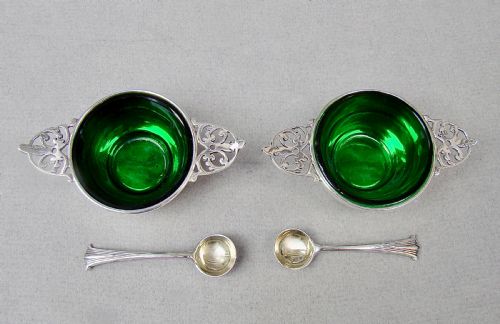
- A small lidded jar designed to hold prepared mustard, frequently supplied with a matching spoon. Many included blue glass liners to protect the silver from mustard corrosion.
- Chasing
- A metalsmithing technique used to ornament silver by hammering the front surface to create raised relief designs. This method defined the feather patterns and facial expressions on animal figures.
Silver Novelty Condiments: Frequently Asked Questions
What are silver novelty condiments?
These pieces are functional tableware items designed to hold salt, pepper, mustard, or sugar in entertaining sculptural shapes. Silversmiths shaped them as animals, birds, vehicles, and figures.
They served as practical dining accessories that doubled as conversation pieces on the Victorian and Edwardian table.
How were novelty pepper pots used?
Dinners used individual pepper pots and shakers to season food at the table during formal meals. The salt and pepper pots were placed alongside cruet frames or passed between guests.
Many designs included removable heads or base plugs to allow easy refilling of the spices.
How do I date an antique silver condiment set?
Dating relies on hallmarks stamped into the silver, which record the assay office, date letter, and maker's mark. Stylistic clues also help, as Victorian pieces often feature naturalistic animals while Edwardian and later items explore different figures.
Examining the manufacturing technique and materials like cut glass or oak provides further context for the period.
How do I care for antique silver cruet sets?
Care requires gentle cleaning with a soft cloth and proprietary silver polish to avoid damaging fine chased details. Glass liners should be removed and washed separately in warm soapy water.
Storing pieces away from direct sunlight and damp environments helps preserve the silver and any fitted wooden bases.