


Novelty Pepper Pots
Novelty pepper pots bring theatrical flair to the dining table through playful figural designs crafted across the Victorian, Edwardian, and later periods.
Novelty Pepper Pots
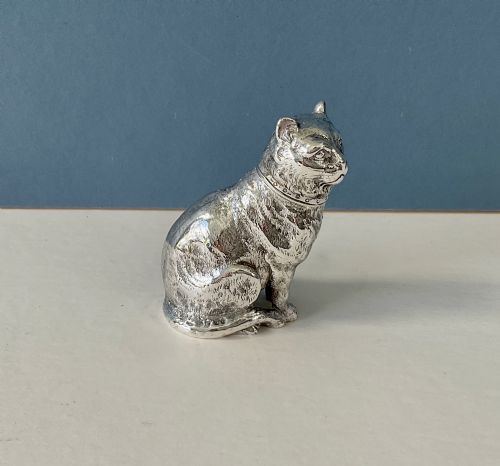
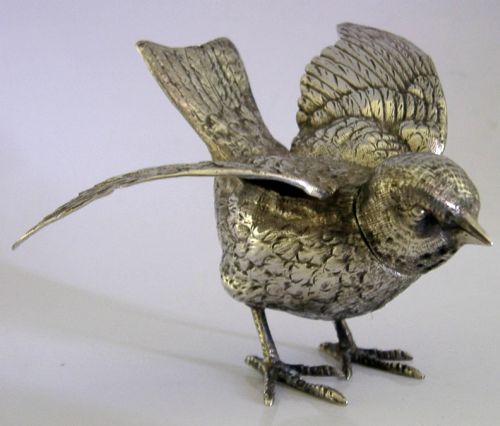
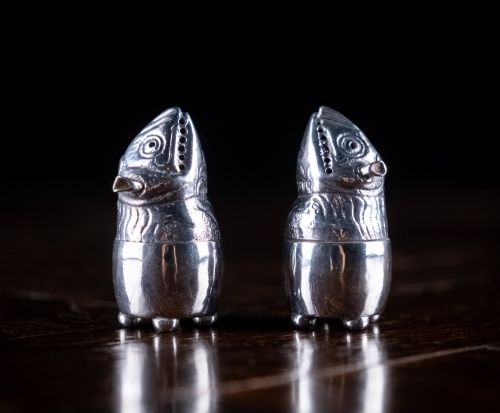
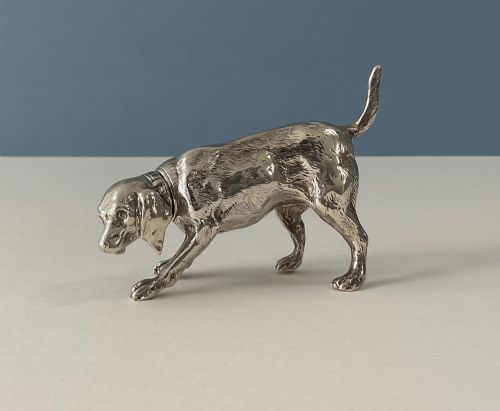
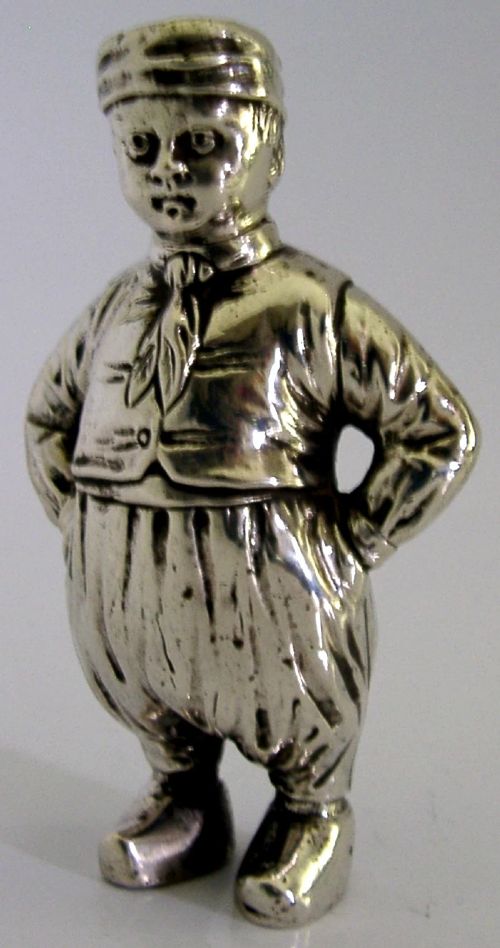
Novelty pepper pots take the form of animals, birds, humans, and objects rather than standard shaker shapes. When searching for novelty pepper pots, collectors encounter subjects ranging from owls, dogs, and chicks to barrels, musical instruments, and boots.
The pieces emerge most frequently from the Victorian and Edwardian eras, executed in sterling silver, silver plate, and occasionally glass, pewter, or oak. Workshops of the nineteenth and twentieth centuries produced these condiment containers both as matched pairs and standalone table sculptures.
Makers shaped these utilitarian dining accessories to amuse diners, frequently incorporating naturalistic feather or fur textures alongside functional screw-fit bases or push-in stoppers for refilling.
How they were made
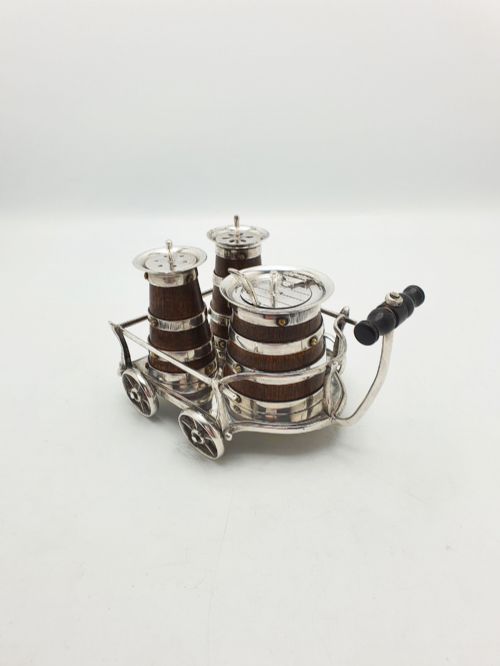
Makers combined silver with cut glass, oak, and pewter on cruet sets and barrels, securing metal mounts to wooden staves or glass bodies. Piercing work formed the shaker holes discretely within beaks, hats, or tops without disrupting the sculpture.
Victorian diners seasoned their soup from the head of Mr Punch's dog Toby.
What varies in quality
Quality rests upon the crispness of the casting and the sensitivity of the modelling. Superior examples display fine hand-chased feather or fur detail and accurate anatomical proportions, whereas lesser pieces rely on simpler, softer machine stamping or basic casts.
The integration of the filling mechanism and the discretion of the shaker holes dictate the refinement of a piece. Finer items conceal perforations within the natural design, maintaining the illusion of a solid cabinet figure on the dining table.
Frederick Brasted·Sampson Mordan·Berthold Muller·Mappin & Webb
The Novelty Pepper Pots Glossary
- Pepperette
- A small container specifically designed for dispensing ground pepper at the table. These often take slender tubular or figural shapes.
- Cruet set
- A matched collection of condiment containers holding items such as pepper, salt, mustard, and vinegar. These sit together on a dedicated stand or tray.
- Sterling silver
- A silver alloy containing 92.5 percent pure silver and 7.5 percent other metals, usually copper. This standard composition appears frequently across Victorian and Edwardian pieces.
- Silver plate
- A base metal such as copper or Britannia metal coated with a thin layer of pure silver. Manufacturers utilised this method to offer decorative table wares at a lower cost.
- Chasing
- A metalsmithing technique where the artisan hammers metal from the front to push and define surface details such as bird feathers or fur.
Novelty Pepper Pots: Frequently Asked Questions
How do I fill these pots?
Most novelty pepper pots feature a removable base plug, a threaded screw-fit bottom, or a lift-off head depending on the specific construction and period.
Collectors should handle older stoppers with care to avoid damaging the surrounding metal or glass threads during removal.
Were these made as singles or pairs?
Makers produced novelty pepper pots in both formats, creating standalone animal figures as well as matched pairs for opposite ends of the dining table.
Pairs often command greater attention from collectors seeking symmetry for historical table settings.
How do I clean silver pepper pots?
Maintenance requires a soft cloth and a reputable silver polish formulated to preserve fine chased details without abrading the metal surface.
Owners must ensure no moisture or polish residue remains trapped inside the shaker holes after cleaning.
How can I date my pepper pot?
Dating relies upon hallmarks stamped onto silver pieces, which indicate the assay office, city, and year of manufacture alongside the maker's mark.
Unmarked silver plate or pewter items require stylistic comparison with documented Victorian, Edwardian, and mid-century designs.