


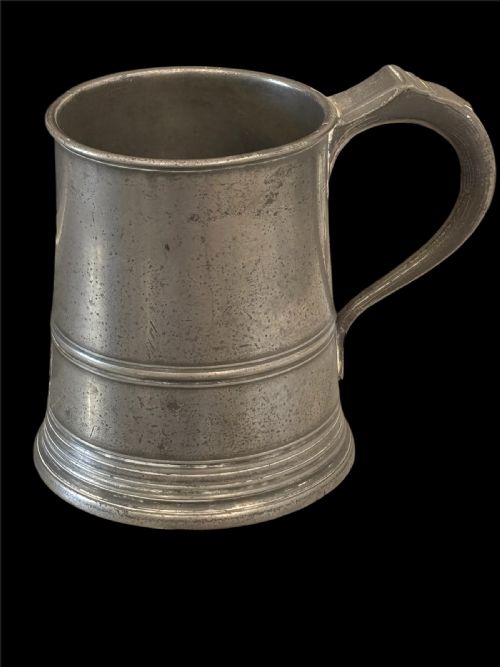


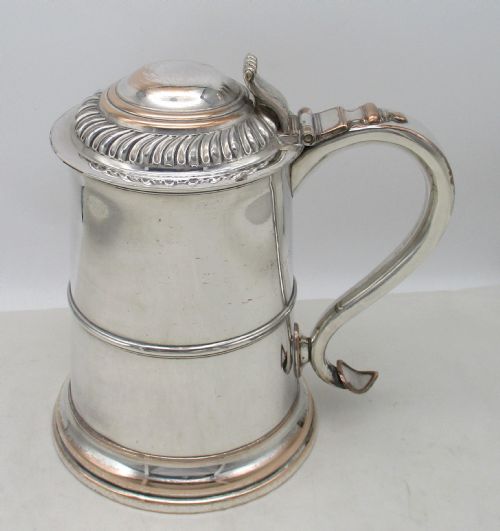
Silver Metal Tankard
A silver metal tankard is a robust drinking vessel in silver, Old Sheffield plate or pewter, chosen for its heft and historical character.
Silver Metal Tankard
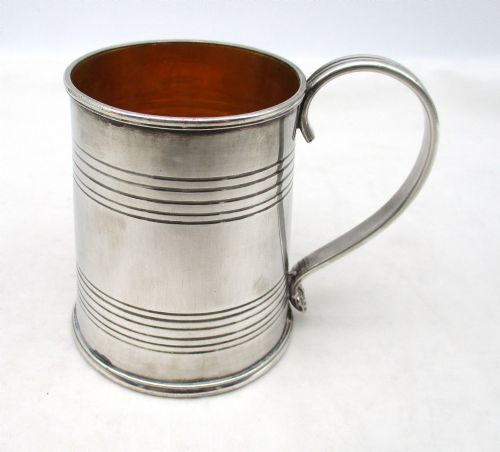
A silver metal tankard comprises cylindrical drinking vessels and lidded jugs produced across the eighteenth and nineteenth centuries. These drinking vessels appear in styles ranging from Georgian restraint to Victorian revivalism and Arts and Crafts simplicity.
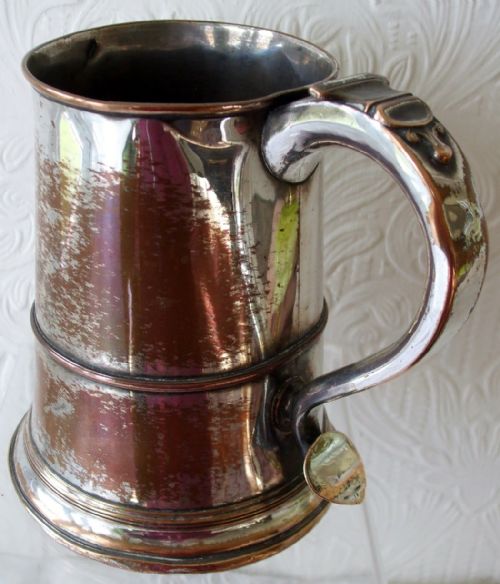
The version you are most likely to meet on this page is the Old Sheffield plated tankard, often in pint or quart capacities. These pieces utilise fused metal techniques that bridge solid silver and base metal manufacture.
Forms extend from plain baluster mugs to elaborate lidded quart tankards and small child's christening mugs. Makers utilise pewter and electroplated nickel silver alongside traditional silver and copper combinations.
How they were made
Old Sheffield plate involves fusing a thin sheet of silver to a thicker copper ingot under heat, creating a composite material that responds well to hammering and soldering. Makers then shape the fused metal into cylindrical bodies and attach cast handles.
Pewter tankards rely on an alloy of tin combined with copper or antimony, cast in moulds and finished on a lathe. Craftsmen polish the surface to a soft lustre that differs from the brighter finish of silver plate.
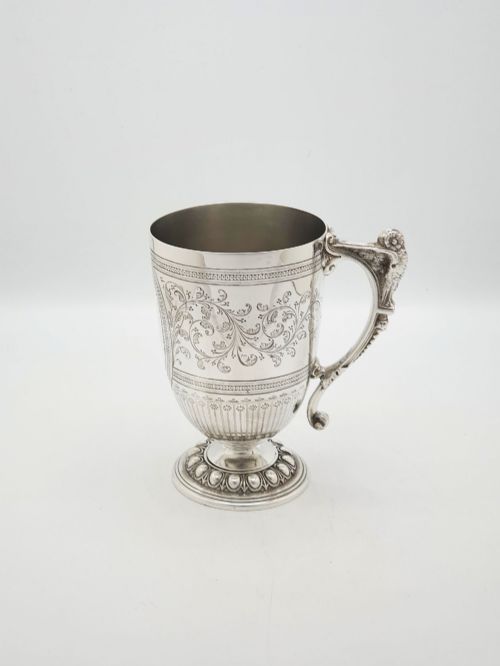
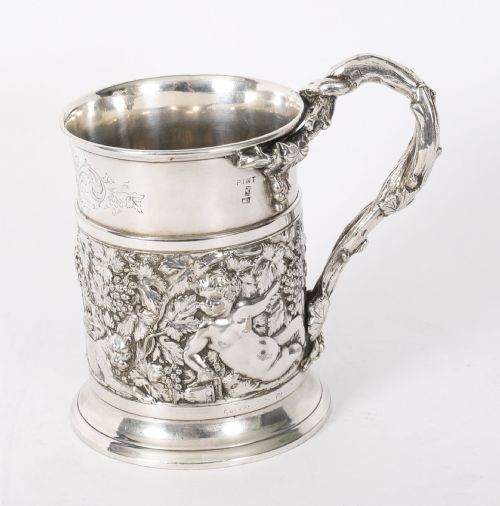
Decoration includes hand engraving, deep embossing, and applied rococo scroll handles soldered to the main body. Lidded variants incorporate hinged thumbpieces that require precise metalworking to align the lid with the rim.
What varies in quality
Quality rests upon the preservation of the fused silver layer over copper, particularly where edges and handle attachments experience friction. Thicker plating and crispness in embossed or engraved detailing distinguish finer examples from standard production pieces.
The weight and balance of the vessel dictate its standing, with substantial pewter walls and sturdy cast handles indicating superior workshop output. Marks left by makers or retailers also influence the standing of a piece within its period.
G R Collis·Richard Morton·Watts & Harton·Liberty & Co Tudric
The Silver Metal Tankard Glossary
- Old Sheffield Plate
- A composite material made by fusing silver onto a copper base, developed in the eighteenth century before electroplating became common.
- Baluster
- A architectural form featuring a swelling lower body tapering towards the rim, frequently seen on eighteenth and nineteenth-century mugs.
- Quart
- A traditional liquid capacity measure equivalent to two pints, often stamped or indicated by the substantial size of large drinking vessels.
- Thumbpiece
- A small lever attached to the lid of a tankard, allowing the drinker to push the lid open with a single thumb while holding the handle.
Silver Metal Tankard: Frequently Asked Questions
How do I clean a silver plated tankard?
Clean silver plated surfaces gently with a soft cloth and a mild cream specifically formulated for plated metal to avoid wearing through the thin silver layer.
Avoid abrasive dips or harsh scrubbing that might expose the underlying copper base, especially around engraved or embossed decoration.
Can I drink from an antique pewter tankard?
Many historical pewter tankards contain lead depending on their exact alloy composition and manufacturing date. It is generally advisable to treat them as decorative objects rather than functional drinkware.
Display them on shelves or sideboards where their soft grey lustre and traditional forms can be appreciated safely.
What is the difference between Old Sheffield plate and silver plate?
Old Sheffield plate is created by mechanically fusing a sheet of real silver to a copper core under high heat before rolling them together into sheets. Later silver plating methods use an electrical current to deposit a thin layer of silver onto a base metal substrate.
How do I identify a Georgian tankard?
Georgian tankards typically display simple, clean lines, substantial weight, and hallmarks or maker marks appropriate to the eighteenth century. Their proportions often favour straightforward cylindrical or baluster profiles without Victorian ornamentation.
Look for evidence of hand-beaten construction and early soldering techniques that distinguish them from later nineteenth-century revival pieces.