



Silver Inkwell Stand
A silver inkwell stand brings functional elegance to a desk, holding writing vessels alongside pens in solid sterling, plate, or glass.
Silver Inkwell Stand
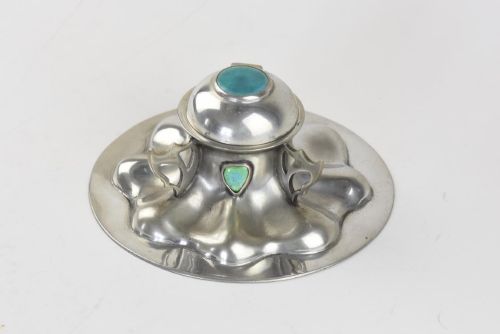
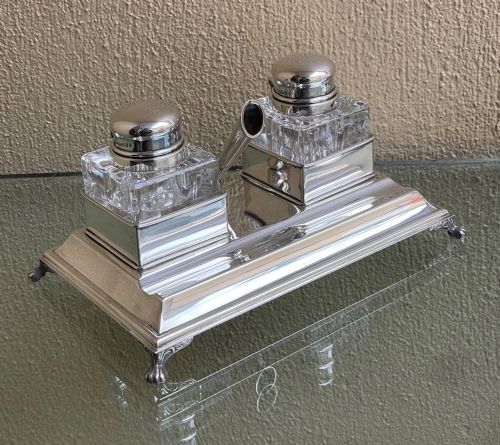
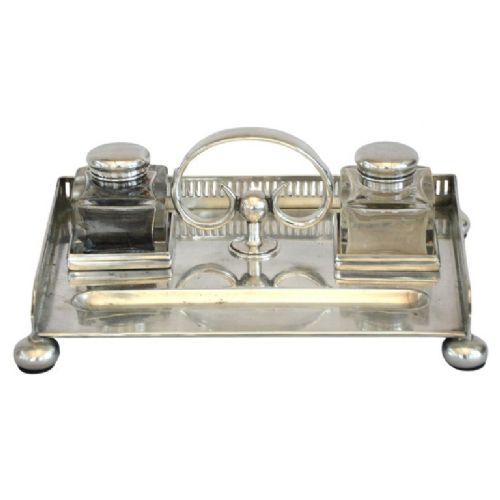
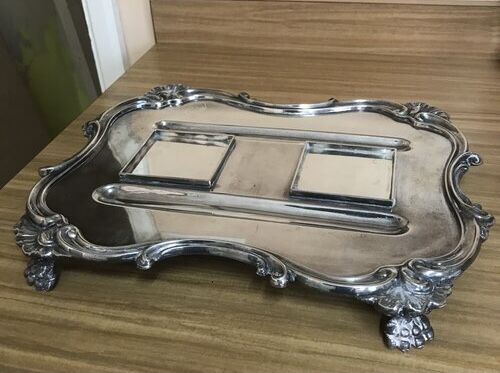
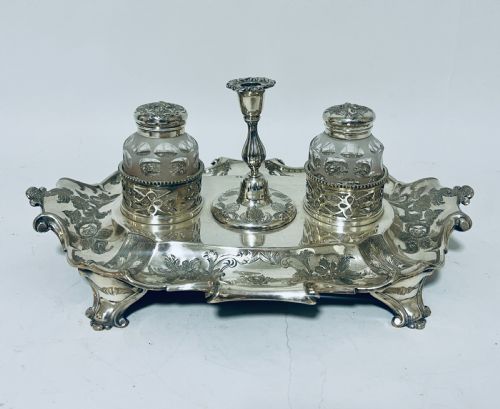
A silver inkwell stand gathers writing implements upon a dedicated tray or base, functioning as a complete desk tidy for correspondence. The pieces seen here span Victorian, Edwardian, and Georgian periods, alongside Arts and Crafts and Art Nouveau interpretations.
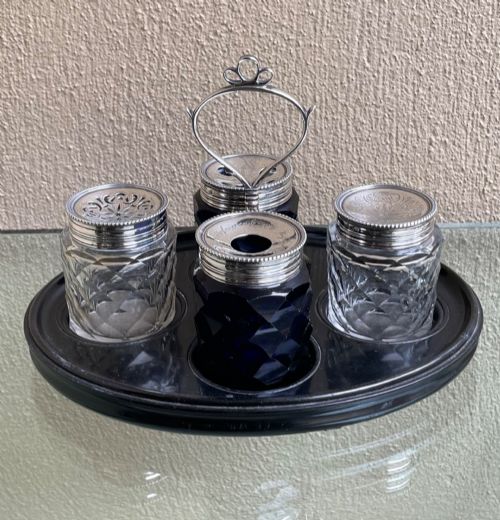
Most examples combine precious metal or silver plate with heavy cut glass or ceramic inserts to hold the ink safely. Formats range from single capstan inkwells to substantial double inkstands equipped with chambersticks, pen rests, and letter boxes.
How They Were Made
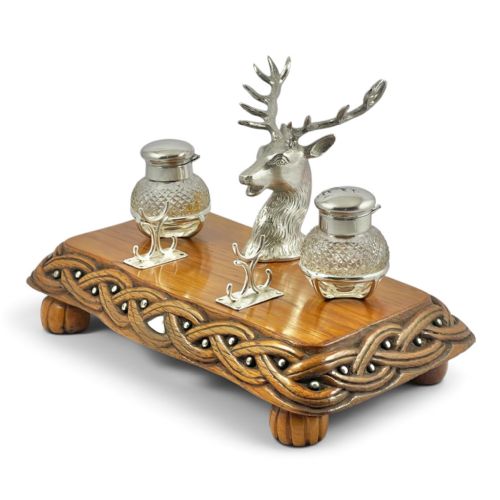
Silversmiths utilised sterling silver and Sheffield or electroplate over base metals, shaping bases through casting, hammering, and rolling. Many incorporate turned hardwoods like oak and ebony, or exotic materials such as horn, coromandel, and onyx.
Glass inserts and inkwell bodies were typically heavy-moulded or hand-cut, fitted with hinged metal lids and hallmarked collars. Decorative elements often included applied silver mounts, enamel cabochons, and cast animal figures.
Listings feature designs spanning the Georgian, Victorian, and Edwardian eras, alongside Arts and Crafts and Art Nouveau styles.
What Varies in Quality
The weight and gauge of the metal determine the initial substance of an inkstand, distinguishing solid silver constructions from plated wares. Superior examples display crisp chasing, fully articulated novelty mechanisms, and heavy cut-glass bottles free from chips.
Maker attribution and provenance elevate specific pieces, particularly those bearing the marks of prominent silversmiths or retailed by notable establishments. The integration of unusual companion items, such as integrated pocket watches, bell mechanisms, or taxidermy mounts, adds complexity to the design.
William Hutton·Walker And Hall·Robert Garrard·Robert Hennell·Maurice Dufrene·Elkington·Martin Hall·George Fox·James Deakin·Goldsmiths And Silversmiths·Emile Puiforcat·Hukin And Heath·Asprey·Carrington·Henry Lias·William Comyns
The Silver Inkwell Stand Glossary
- Capstan inkwell
- A desk inkpot shaped like a ship's capstan, typically tapering toward the top with a hinged lid.
- Standish
- A traditional portable desk stand holding inkwells, sanders, and pen trays.
- Desk tidy
- A combined stand or box designed to hold stationery, pens, and ink bottles in one place.
- Hallmark
- An official stamp applied to precious metals indicating purity, maker, and assay office year.
- Cut glass
- Glass decorated by cutting facets into the surface using a wheel, adding weight and sparkle.
Silver Inkwell Stand: Frequently Asked Questions
What is a silver inkwell stand?
A silver inkwell stand is a desk accessory designed to hold one or more ink pots alongside pens and other writing tools. These pieces served as permanent fixtures on writing desks during the nineteenth and early twentieth centuries.
They combine a metal or wooden base with glass ink containers, often featuring integrated rests for quill or dip pens. Many incorporate additional compartments for stamps, wafers, or sealing wax.
How do I date an antique inkstand?
Dating relies primarily on the hallmarks stamped onto the silver components, which indicate the assay office and year of manufacture. Stylistic clues, such as Victorian aesthetic movement engraving or Art Nouveau curves, also point to specific decades.
Materials and construction techniques further narrow the age, distinguishing early nineteenth-century Sheffield plate from later electroplated wares.
Were these stands used daily?
These pieces were essential daily tools for correspondence, accounting, and writing before the invention of the fountain pen. They sat on desks in offices, libraries, and parlours where letters were written by hand.
The inclusion of items like chambersticks and stationery boxes shows they were meant for comprehensive desk organisation.
How do I care for silver and glass?
Silver components require periodic gentle cleaning with a soft cloth and appropriate polish to maintain their finish without removing fine details. Glass inserts can be lifted out and washed in warm soapy water to remove dried ink residue.
Care should be taken around wooden bases and horn mounts to avoid excessive moisture during cleaning.