





Silver Hollowware Set
A silver hollowware set brings formal domestic ritual to the table, uniting vessels crafted for tea, coffee, cream, and sugar.
Silver Hollowware Set
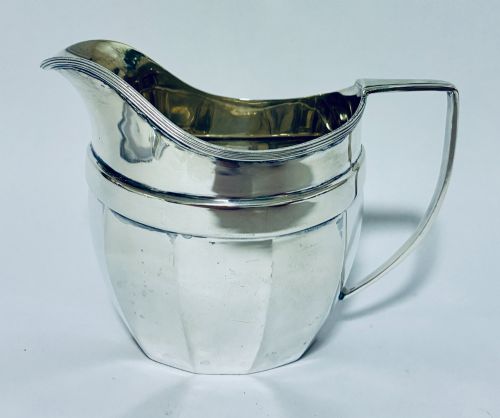
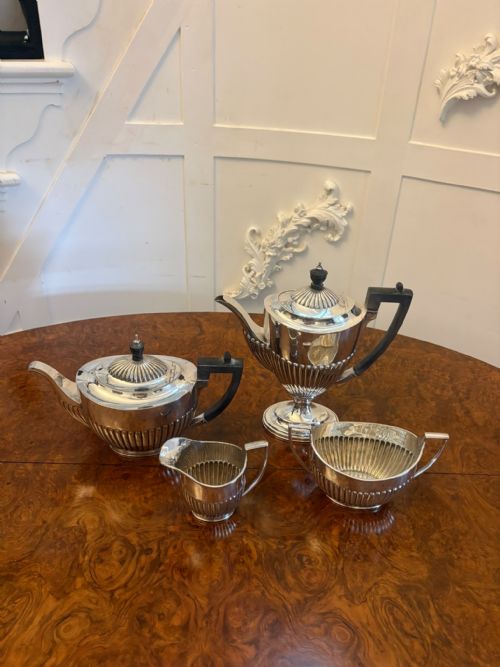
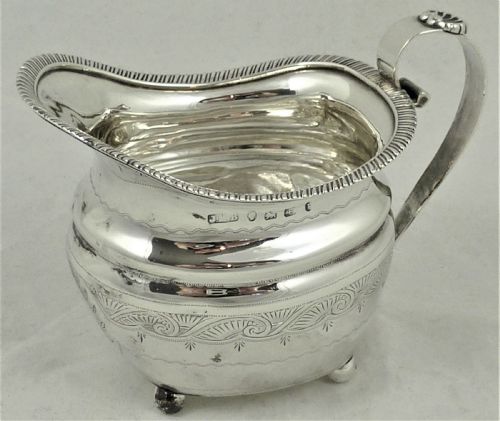
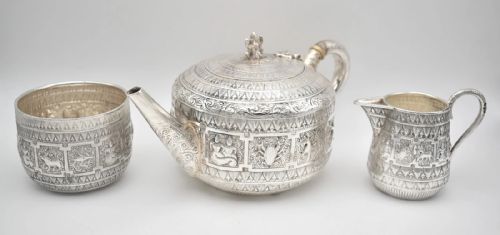
A silver hollowware set comprises matched or complementary vessels designed for beverage service and table condiment deployment. These groupings range from modest pairs of cream jugs and sugar bowls to extensive four-piece tea and coffee suites.
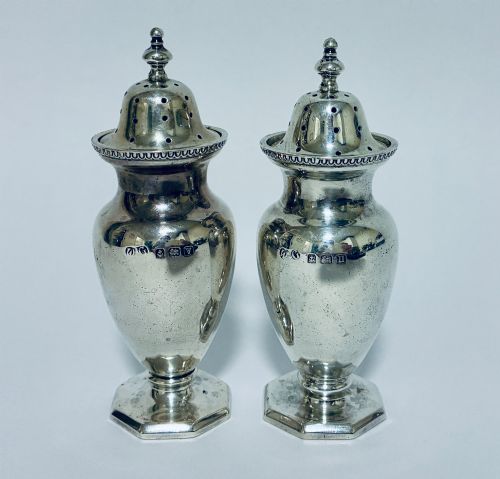
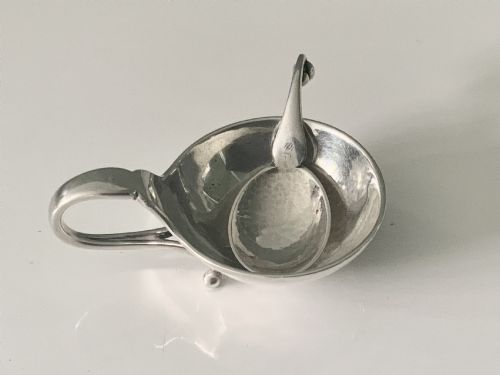
The most frequent arrangements met here are three-piece and four-piece tea sets, alongside smaller groupings of cruet stands, pepper pots, and salt cellars. Such collections originate across the Georgian, Victorian, and Edwardian eras, as well as the opening decades of the twentieth century.
Makers produced these assemblies for daily domestic display and hospitality, combining practical liquid storage with ornamental metalwork. Surviving examples reflect the shifting dining habits from the eighteenth century through to the Edwardian period.
How they were made
Silversmiths formed the primary bodies of these vessels from sterling silver or applied silver plate over base metal, utilising hammering, spinning, and casting techniques. Handles frequently incorporate insulating spacers of ebony, ebonised wood, or bone to prevent heat transfer during service.
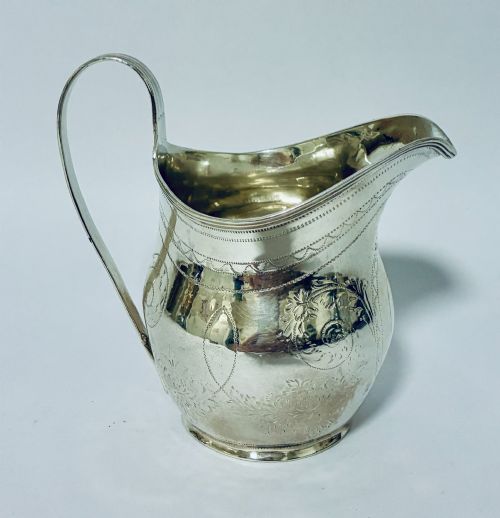
Ornate decoration such as grapevine detailing, swags, and bows was achieved through chasing, embossing, and applied cast elements soldered to the main body. Individual components like matching spoons and stands were executed to harmonize with the principal service pieces.
Silver Hollowware Set Retail Price Guide 2026
Typical asking prices for silver hollowware set among the pieces listed under this phrase on Sellingantiques today, from the lower quarter to the upper quarter. They describe what is for sale here now, not the wider market.
Listings span the Georgian, Victorian, Edwardian, and 1920 periods, utilising sterling silver, silver plate, ebony, bone, and wood.
What varies in quality
Quality rests upon the weight of the metal, the crispness of chased or cast ornamentation, and the integrity of the joins between handles, spouts, and bodies. Superior sets maintain proportional harmony across every constituent piece, ensuring that handles and finials complement the main vessel profile.
The degree of preservation in silver plating or sterling hallmarks dictates the distinction between standard utilitarian production and masterwork output. Maker attribution, such as work by recorded silversmiths, elevates the standing of a service within the broader field.
Georg Jensen·William Hutton and Sons·George Fox·Robert Hennell
The Silver Hollowware Set Glossary
- Hollowware
- Table vessels such as pots, jugs, bowls, and casters that are hollow rather than flat. This category excludes flatware like spoons and forks.
- Sterling silver
- An alloy consisting of a high proportion of pure silver combined with other metals for durability. It carries official hallmarks denoting purity and origin.
- Silver plate
- A manufacturing method where a thin layer of silver is fused to a base metal core. This technique offered an accessible alternative to solid silver.
- Cruet stand
- A frame holding bottles or castors for condiments such as salt, pepper, oil, and vinegar. These frames often feature a central carrying ring.
- Chasing
- A metalworking technique where the smith pushes the surface from the outside with hammers and punches to create raised decorative relief.
Silver Hollowware Set: Frequently Asked Questions
What is a silver hollowware set?
A silver hollowware set is a collection of three-dimensional vessels, such as teapots, coffee pots, cream jugs, and sugar bowls, designed for beverage service.
These groupings were produced in sterling silver and silver plate to provide a coordinated table service for domestic hospitality.
How were tea sets used historically?
Tea sets formed the centrepiece of formal drawing-room entertaining and afternoon tea rituals in prosperous households.
The host used the pot, cream jug, and sugar bowl to dispense hot drinks to guests using specialised tableware.
How do I care for silver hollowware?
Regular dusting and occasional gentle cleaning with appropriate silver polish maintain the lustre of the metal without wearing away thin plating.
Storing pieces away from direct heat and moisture prevents tarnish accumulation on both the silver and any organic handle components like ebony or bone.
How do I distinguish Victorian from Edwardian pieces?
Victorian services often display heavier, highly ornate decoration including floral repoussé work and substantial proportions, reflecting mid-to-late nineteenth-century tastes.
Edwardian designs frequently lean towards lighter, neo-classical revivals with cleaner lines, simpler borders, and restrained decorative motifs.