

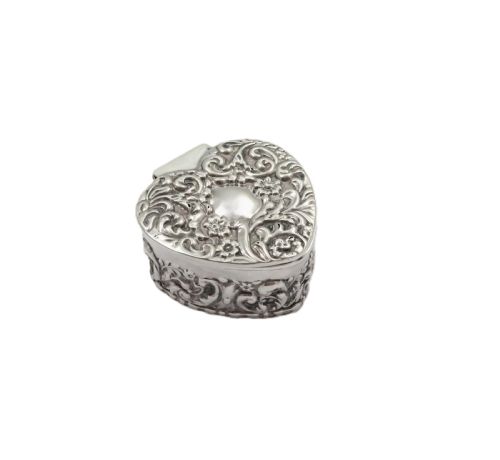


Silver Heart Trinket Dish
These silver heart trinket dish pieces are small, charming receptacles shaped to hold precious keepsakes and small personal items on a dressing table.
Silver Heart Trinket Dish
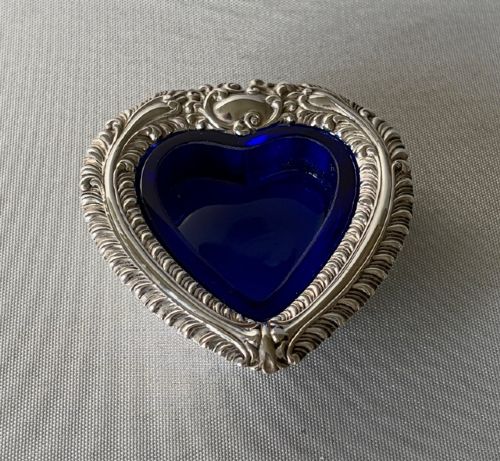
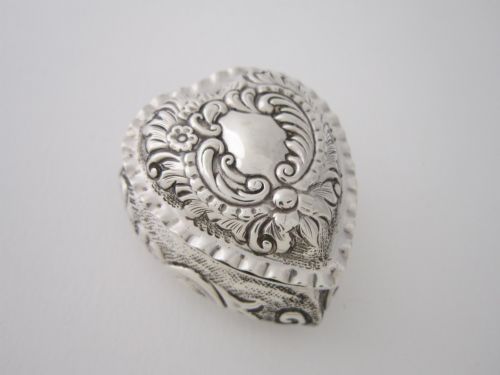
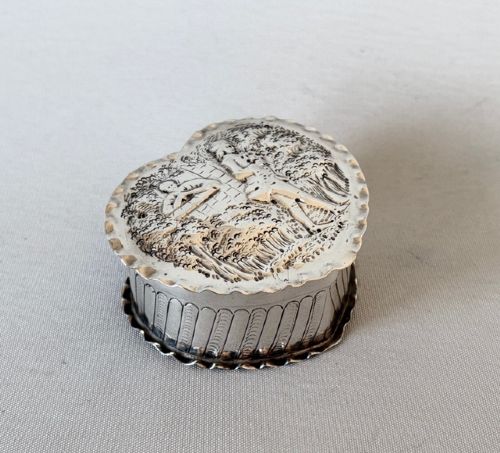
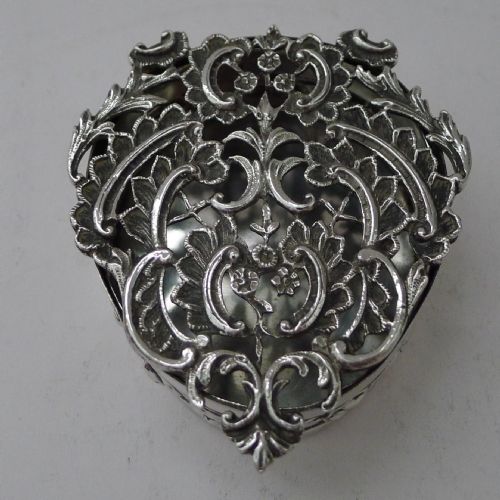
A silver heart trinket dish represents a specialised form of small container, appearing on this page as salt tubs, ring boxes, and pot pourri boxes. These items serve to hold small personal treasures, rings, and desktop items with distinctive sentimental shape.
Collectors encounter single heart shapes alongside double heart shaped dishes, reflecting domestic vanity table accessories of the late nineteenth and early twentieth centuries. Each piece combines functional storage with the decorative motifs popular during the Victorian and Edwardian decades.
How they were made
The construction of these pieces relies on sterling silver and silver plate combined with cut glass and cobalt glass liners. Artisans formed the metal mounts and hinged lids through stamping and chasing, then paired them with heavy glass bases.
Hallmarks stamped directly into the silver provide assay office locations such as London and Birmingham, alongside date letters corresponding to years like 1898 and 1915. These marks confirm the English origin and metallurgical standard of the precious metal components used in each box or dish.
Silver Heart Trinket Dish Retail Price Guide 2026
Typical asking prices for silver heart trinket dish among the pieces listed under this phrase on Sellingantiques today, from the lower quarter to the upper quarter. They describe what is for sale here now, not the wider market.
The listings on this site span the Victorian, Edwardian, and George V periods, featuring sterling silver, silver plate, cut glass, and cobalt glass.
What varies in quality
Quality in these small dishes rests upon the crispness of the repoussé or chased decoration on the silver lid and the integrity of the glass body. Pieces with deep, clear detailing and undamaged glass demonstrate superior craftsmanship compared to simpler, worn examples.
The precision of the hinge mechanism and the clarity of the English hallmarks further distinguish finer specimens. Well-preserved makers marks and robust closures elevate the overall standard of a heart shaped box.
William Comyns
The Silver Heart Trinket Dish Glossary
- Sterling silver
- A silver alloy containing 92.5 percent pure silver by mass, forming the primary metal standard for these antique boxes.
- Hallmark
- An official stamp applied by an assay office to indicate the purity of the metal, the maker, and the year of production.
- Salt tub
- A small open vessel or covered container originally designed to hold table salt, adapted here in miniature heart forms.
- Pot pourri box
- A small lidded container featuring pierced or perforated metalwork designed to diffuse scent from dried flower petals.
- Cobalt glass
- A deep blue glass frequently utilised for interior liners or decorative vessels during the Victorian and Edwardian periods.
Silver Heart Trinket Dish: Frequently Asked Questions
What is a silver heart trinket dish used for?
These small vessels were traditionally placed on dressing tables to store rings, pins, and other small personal items safely out of sight. Their distinct heart shape made them popular gifts for holding sentimental tokens.
Today, they serve a similar decorative and practical purpose in modern interiors, holding modern jewellery or simply displayed as cabinet pieces.
How do I date a silver heart trinket box?
Dating these items relies on reading the English hallmarks stamped onto the silver components. These marks include assay office symbols, standard marks like the lion passant, and specific date letters.
Comparing the style of decoration, such as late Victorian chasing or Edwardian simplicity, helps narrow down the period when hallmark letters are worn.
Are these pieces made entirely of silver?
Many examples combine sterling silver lids or mounts with glass bodies, such as cut glass or cobalt glass bases. Some items consist entirely of silver, while others are silver plate over a base metal.
Examining the piece closely and checking for hallmark stamps on the metal sections clarifies the exact materials used in its construction.
How should I clean antique silver and glass?
Cleaning requires gentle care to preserve the original patina and avoid damaging the delicate hinges or glass inserts. Using a soft cloth designed for silver helps maintain the metal shine without abrasive scratching.
Harsh chemical dips should be avoided, particularly where glass meets silver mounts or where antique hallmarks might be worn away.