


Silver Handle Jug
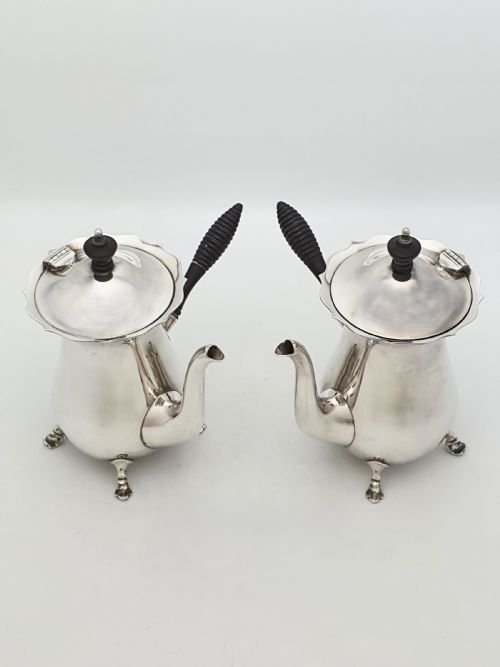
A silver handle jug brings together polished metal and glass, earthenware or crystal in forms from claret jugs to coffee pots.
Silver Handle Jug
A silver handle jug covers a broad spectrum of domestic vessels, ranging from tall glass claret jugs with silver mounts to solid sterling coffee pots, cream jugs and water pitchers. When you search for a silver handle jug, you encounter functional serving pieces designed for the dining table, tea service or sideboard across several centuries of British and international design.
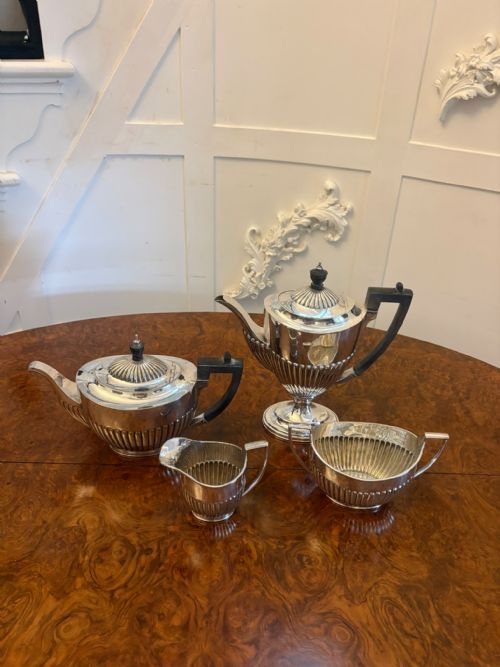
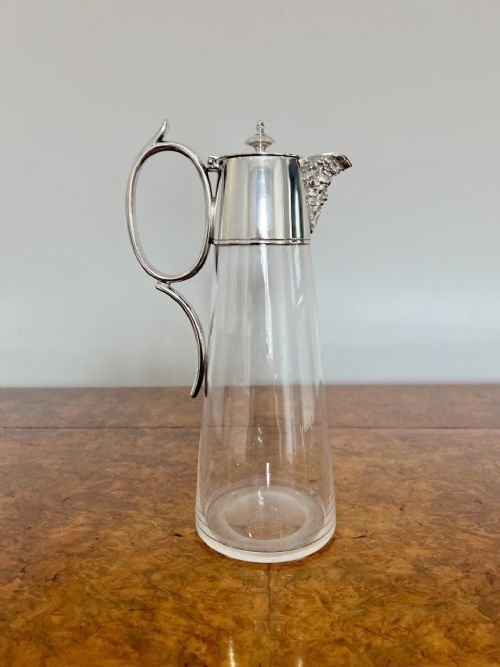
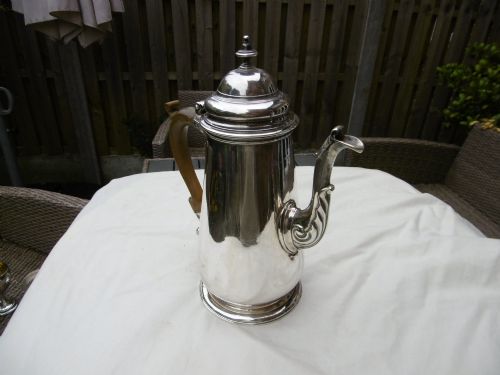
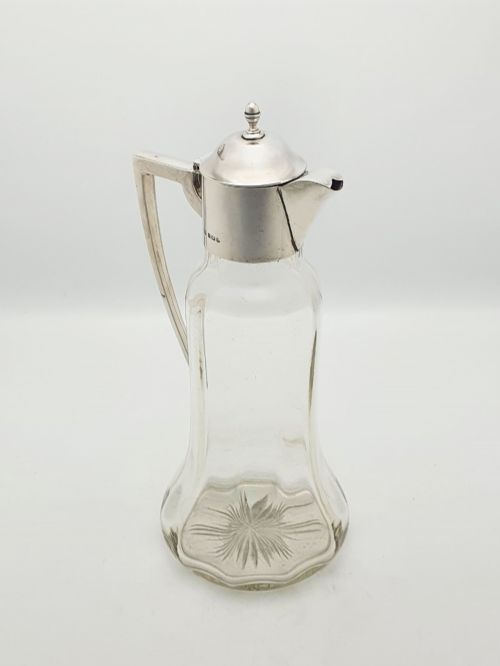
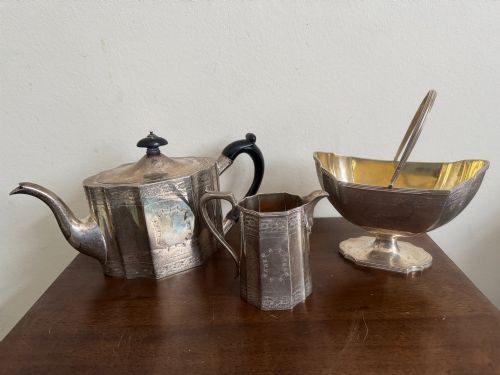
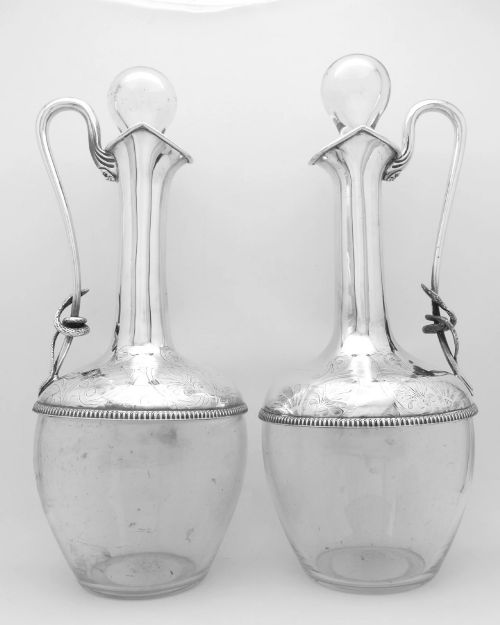
The versions most frequently met on this page are Edwardian and Victorian silver-plated or glass claret jugs featuring cast scroll, serpent or organic handles, alongside Georgian coffee pots and Edwardian tea sets. These objects combine metalwork with pouring vessels, utilising the contrast between gleaming handles and bodies of cut crystal, silver plate, or solid sterling silver.
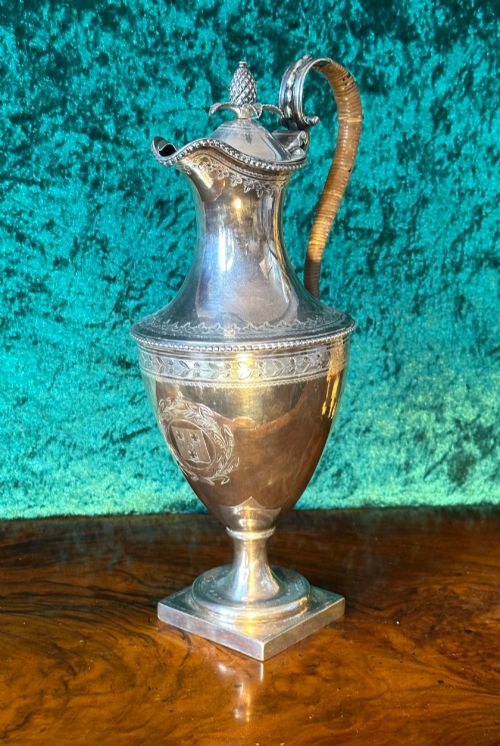
The selection extends from 18th-century Old Sheffield Plate and Georgian vessels through to Art Nouveau pewter designs and later 20th-century tea and coffee services. Each piece reflects the social rituals of its period, whether pouring claret after dinner or serving morning coffee from a side-handled pot.
How they were made
Makers constructed these vessels using a combination of metals and transparent bodies, mounting sterling silver or silver plate onto cut glass, crystal and ceramic forms. Handles were cast separately, often featuring intricate scrollwork, figurative elements like gargoyles and Bacchus masks, or organic forms such as serpents, bamboo and woven materials, then soldered or pinned securely to the body mounts.
Techniques varied from traditional silversmithing methods such as raising and hammering solid sterling silver to Old Sheffield Plate production, where a thin sheet of silver was fused to a copper base. Silver plating on Britannia metal or copper became widespread during the Victorian and Edwardian eras, utilising electroplating to achieve a durable, uniform finish on complex jugs and tea services.
Glass bodies were often mould-blown, cut with geometric patterns or engraved with floral motifs before being fitted with collars, hinged lids and spouts. Pewter examples from the Arts and Crafts and Art Nouveau periods were cast in moulds, sometimes incorporating enamel accents or patinated finishes to complement unconventional handle shapes.
Listings for silver handle jugs feature periods ranging from the 18th century through to the mid-20th century, encompassing Georgian, Victorian and Edwardian eras.
What varies in quality
The distinction between ordinary and exceptional examples rests upon the crispness of the casting in the handle and mounts, the weight and clarity of the glass or metal body, and the harmony of the overall design. Superior pieces display finely detailed chasing, robust hinges that keep lids aligned precisely, and handles that feel balanced and comfortable in the hand.
Maker attribution plays a role in distinction, with works from notable designers or firms such as Christopher Dresser, Hukin & Heath, or Walker and Hall commanding attention for their forward-thinking aesthetics and rigorous construction. The quality of engraving, the depth of silver plating over base metal, and the retention of original gilding inside cream jugs or coffee pots further separate standard utility wares from collector pieces.
Richard Gurney·Matthew Boulton·Archibald Knox for Liberty and Co·John Hoyland·John Mackfarlan·Walker and Hall·Luen Hing·Harrison Brothers and Howson·Hukin and Heath·WMF
The Silver Handle Jug Glossary
- Claret jug
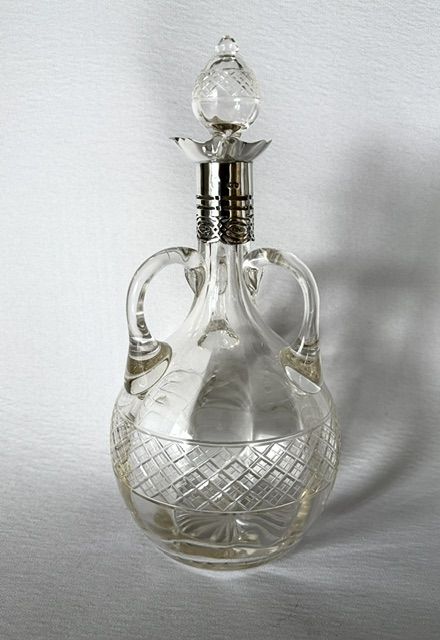
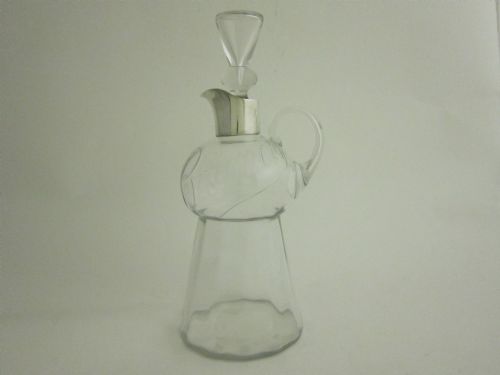
- A pouring vessel specifically designed for serving claret or red wine at the dining table, usually combining a cut glass body with a silver-plated or sterling silver handle, mount and hinged lid. These vessels often feature elaborate spouts shaped like masks or gargoyles.
- Old Sheffield Plate
- An early method of fusing a thin sheet of sterling silver to a thicker copper core, produced before the invention of electroplating. Pieces made this way often reveal a thin line of copper along exposed edges.
- Sauce boat
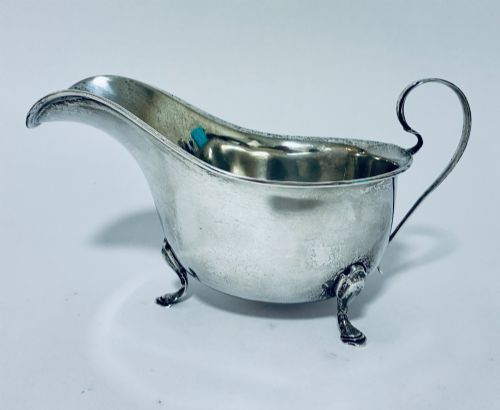
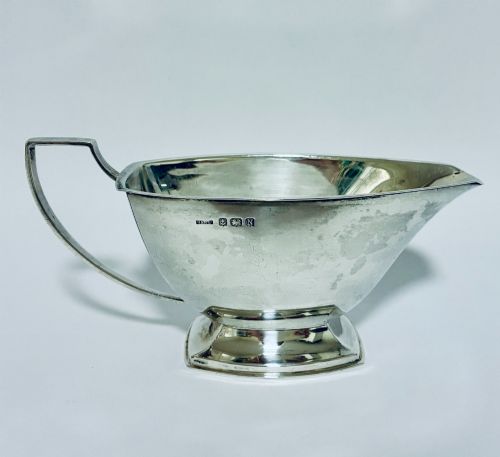
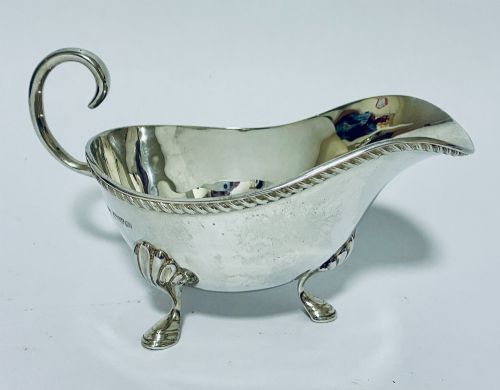
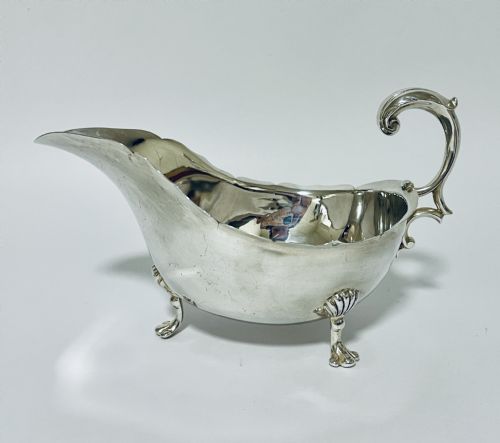
- An open boat-shaped vessel used for serving gravies or sauces, typically supported on three feet or an integral tray and fitted with a single loop handle. They are found across Georgian, Victorian and later periods.
- Sterling silver
- An alloy containing 92.5 percent silver by weight, combined with other metals like copper to increase durability. British pieces usually carry a full set of hallmarks confirming this standard.
- Britannia metal
- A tin-based alloy used as a base metal for silver plating during the 19th century, known for its light weight and smooth surface. It provided an affordable foundation for ornate tea sets and jugs.
Silver Handle Jug: Frequently Asked Questions
What is the difference between silver plate and sterling silver?
Sterling silver is a solid precious metal alloy containing 92.5 percent silver throughout its structure, while silver plate consists of a thin layer of silver bonded to a base metal such as copper, brass or Britannia metal. Solid silver pieces usually carry hallmarks indicating the purity standard and assay office.
Silver plate offers the appearance and brightness of solid silver at a different weight and price point. Over many decades of polishing, silver plate may show base metal underneath on high points, whereas sterling silver remains uniform.
How can I tell the period of a silver jug?
Examine any stamped hallmarks on the silver mounts, which provide specific date letters, maker's marks and city marks for British sterling silver and plated wares. Stylistic clues such as Neoclassical symmetry, Victorian ornamentation or Art Nouveau fluid lines also point towards specific decades of manufacture.
The weight of the piece, the method of handle attachment and the type of glass cutting offer further indicators of age. Georgian and early Victorian pieces often display hand-finished details that differ from later mass-produced Edwardian items.
Were these jugs used daily or for display?
Most of these vessels were created for active domestic use in dining rooms, drawing rooms and parlours during tea services or dinner parties. Claret jugs, water pitchers and coffee pots formed part of the routine hospitality of middle and upper-class households.
Over time, many transitioned from functional dining implements to decorative cabinet pieces or display items. Even today, they can be utilised for serving drinks or displayed as examples of historical metalwork and glass design.