


Silver Guilloche Compact
A silver guilloche compact combines precision metal engine-turning with translucent vitreous enamel, offering a tactile pocket accessory from the early twentieth century.
Silver Guilloche Compact
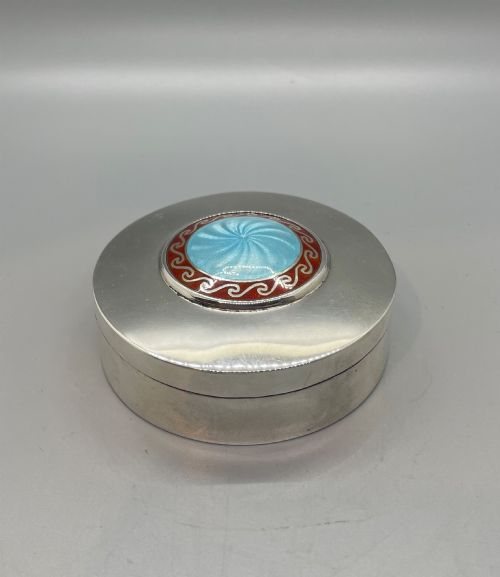
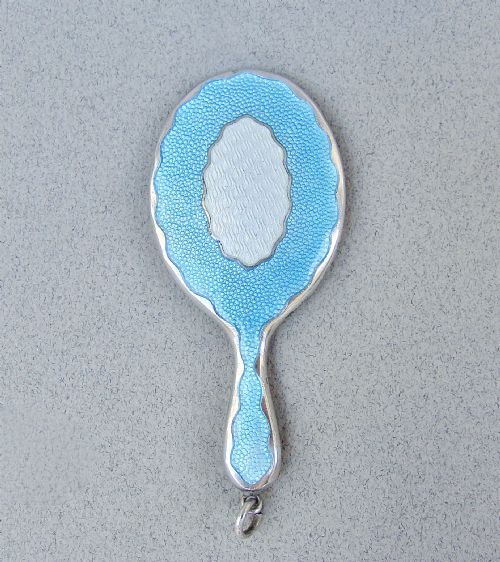
A silver guilloche compact serves as a small personal container designed for powder, rouge, or mirrors, frequently paired with matching trinket boxes, pill boxes, and cigarette cases. These items surface most commonly from the Edwardian era through the Art Deco period, spanning the early decades of the twentieth century alongside occasional nineteenth-century examples.
The objects take circular, square, and hexagonal forms fashioned from sterling silver or continental silver, sometimes finished with silver-gilt. British assay offices in Birmingham and London stamp many surviving specimens, while continental European workshops produce alternative designs.
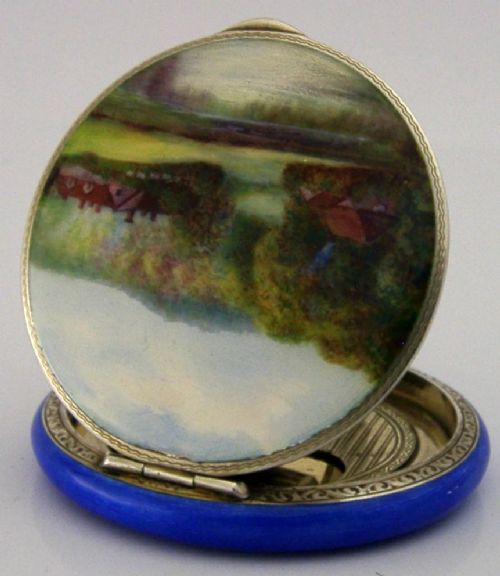
Makers integrate functional internal components such as glass mirrors, suede linings, and mesh screens alongside hinged lids. Collectors encounter these pieces ranging from standalone pocket items to chatelaine attachments meant to hang from a belt.
Materials and technique
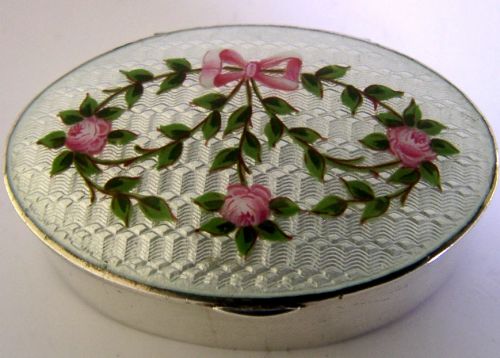
Craftsmen shape the body using sterling silver or silver-gilt, then mount mechanical components like hinges and bezels to secure the lid. Workshops apply vitreous enamel over a base layer of metal that receives precise geometric patterns from a mechanical lathe.
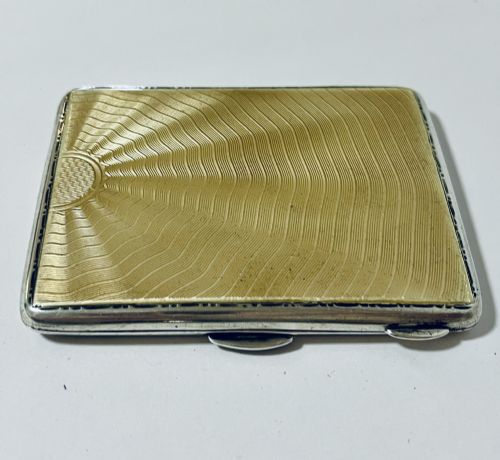
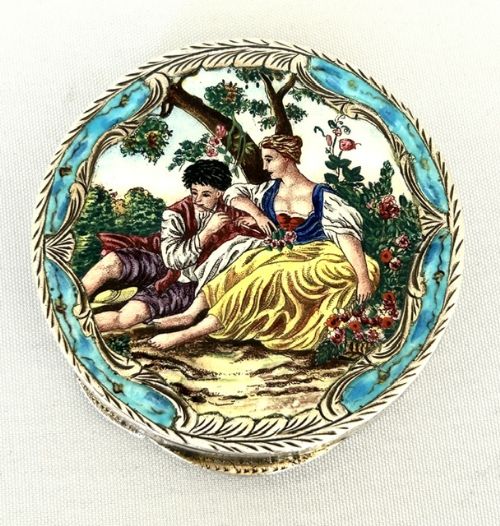
The engine-turning machine cuts repeating waves, sunbursts, or straight lines into the silver substrate before translucent or opaque enamel gets fused by heat. Additional details occasionally incorporate marcasite decorations or hand-painted miniature scenes set directly into the enamel surface.
Materials documented across the inventory include sterling silver, glass, suede linings, and vitreous enamel.
Evaluating craftsmanship and condition
Quality separates pieces by the complexity and depth of the underlying engine-turned pattern beneath the translucent enamel. Finer specimens display crisp, mathematically regular lathe work that catches light through the coloured glass layer without interruption.
The integrity of the vitreous enamel dictates the standard of the item, where superior examples maintain an even, glossy surface free from extensive stress fractures or heavy impact loss. Maker attribution and clear full hallmarks stamped by official assay offices further distinguish standard production from premier workshop output.
Henry Williamson·Henry Matthews·Henry Perkins And Sons·Crisford And Norris·Turner And Simpson·Levi And Salaman·Joseph Gloster·Foster And Bayley·Broadway And Co·Cohen And Charles·Jackob Tostrup·Adie Brothers·Deakin And Francis·Albert Carter·Henry Clifford Davis·The Goldsmiths And Silversmiths Company
The Silver Guilloche Compact Glossary
- Guilloche
- An ornamental engraving technique where a mechanical lathe etches precise geometric repeating patterns into a metal surface. This worked metal serves as the textured base beneath translucent enamel.
- Vitreous Enamel
- A material made by fusing powdered glass to a substrate through firing at high temperatures. The resulting glossy compound provides rich colour across metal accessories.
- Sterling Silver
- An alloy of silver containing ninety-two point five percent silver by mass and seven point five percent other metals, usually copper. British pieces carry assay office hallmarks confirming this standard.
- Chatelaine
- A decorative belt hook worn to suspend utilitarian items such as small boxes, watches, or vanity cases. These suspended accessories allow quick access to daily personal tools.
- Silver-Gilt
- Silver that has been coated with a thin layer of gold on its exterior or interior surfaces. This treatment adds a warm metallic tone to the base metal.
Silver Guilloche Compact: Frequently Asked Questions
What is a guilloche compact?
A guilloche compact is a small metal container featuring mechanical engine-turning covered by coloured glass enamel. These items store face powder or mirror reflections for daily personal use.
Craftsmen produced them in large numbers during the early twentieth century, particularly the Art Deco era. They remain collectible vanity objects due to their intricate surface decoration.
How do I date a silver piece?
Dating relies heavily on official hallmarks stamped into the metal by assay offices in towns such as Birmingham and London. These marks include letters indicating the specific year of testing.
Stylistic cues like geometric Art Deco motifs or floral Edwardian lines also help narrow the manufacturing decade. Maker's marks further anchor the timeline to active workshop operating dates.
Can I still use these for powder?
Many surviving examples retain their internal compartments, mirrors, and mesh screens originally intended for loose face powder. Modern users often clean the interiors gently before placing them on a dressing table.
Age can make vintage enamel vulnerable to harsh cosmetics, so collectors typically treat them as display items rather than daily carry accessories.
What is continental silver?
Continental silver refers to items manufactured outside of Britain that adhere to different regional purity standards. These pieces frequently feature alternative numeric purity stamps instead of traditional British hallmarks.
European workshops often utilised distinct pictorial styles and hinge mechanisms compared to their London and Birmingham counterparts.