




Silver Glass Wine Carafe
A silver glass wine carafe combines metal mounts with blown glass bodies to serve fine drink.
Silver Glass Wine Carafe
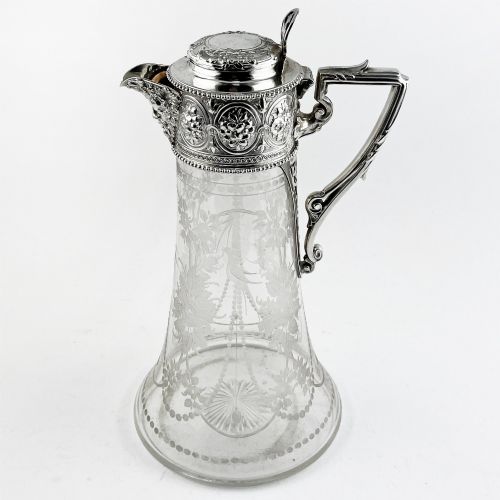
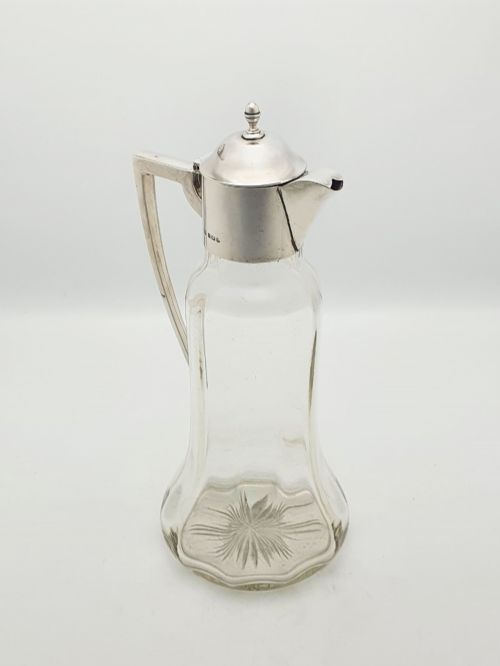
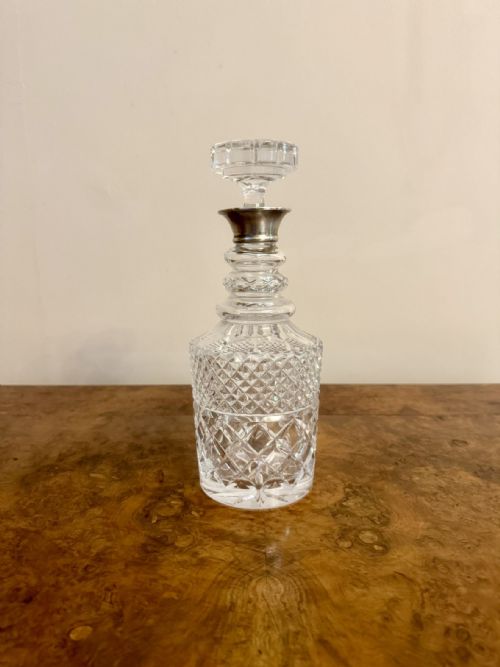
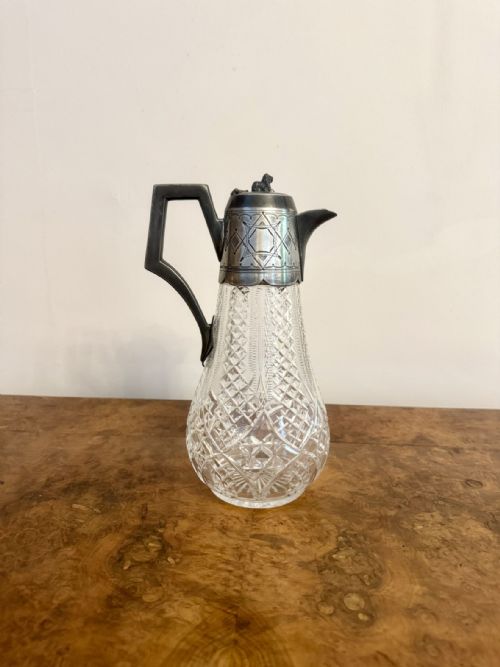
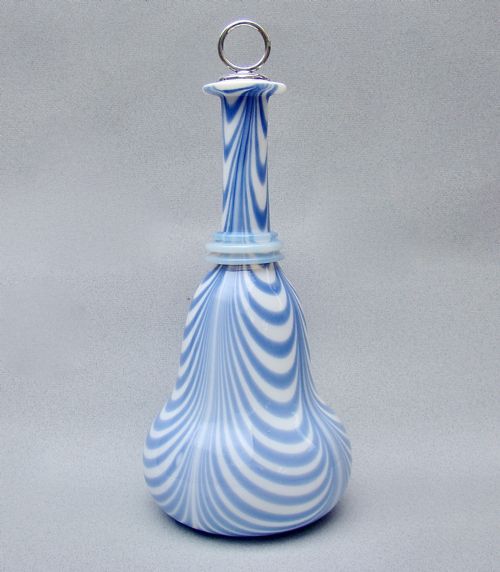
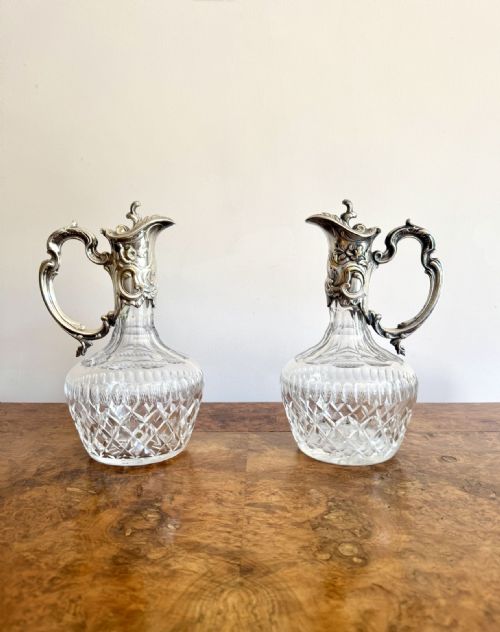
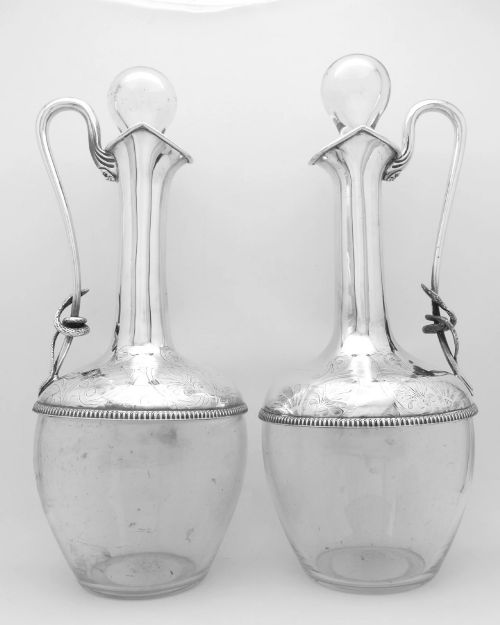
The most common examples on this page are Victorian and Edwardian claret jugs and decanters. Such forms display various glass treatments, from clear cut crystal to coloured Nailsea, cranberry, green, and blue glass.
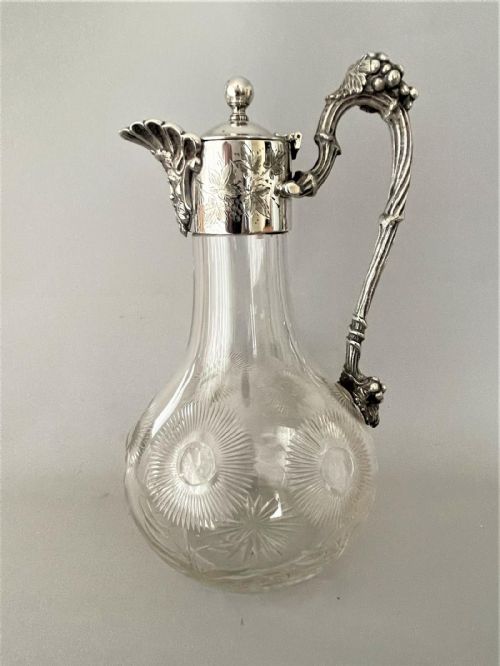
Makers and silversmiths utilised styles ranging from plain Edwardian collars to elaborate French Rococo Revival mounts and Art Nouveau curves. Buyers find pieces spanning from the mid-nineteenth century up to mid-twentieth century productions.
Materials and construction
Glass bodies were blown into moulds or hand-blown before receiving deep wheel-cut decoration, acid etching, or smooth coloured finishes. Craftsmen then fitted metal necks, spouts, and hinged lids, securing them firmly around the glass rim.
Metal mounts incorporate either solid sterling silver, marked with full hallmarks indicating assay office and date, or silver plate applied over base metal foundations. Handles often take naturalistic or sculptural forms, such as serpents or Bacchus masks, riveted or soldered directly to the collar.
Current listings feature carafes and claret jugs spanning from the Victorian era through the Edwardian period and into the mid-twentieth century.
Assessing quality and finish
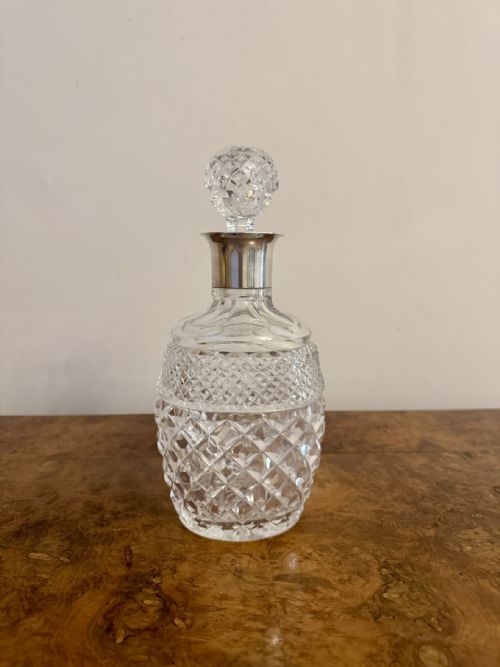
Quality rests primarily on the crispness of the glass cutting and the weight of the metal mounts. Heavy crystal bodies with sharp, deep facets separate superior vessels from lighter, moulded glass alternatives.
The precision of the silversmithing dictates the overall standard, evident in tightly fitted collars, smoothly operating hinged lids, and cast handle details that remain sharp rather than smoothed over from worn moulds.
Asprey and Co. Ltd·Elkington·Hukin and Heath·Archibald Knox for Liberty
The Silver Glass Wine Carafe Glossary
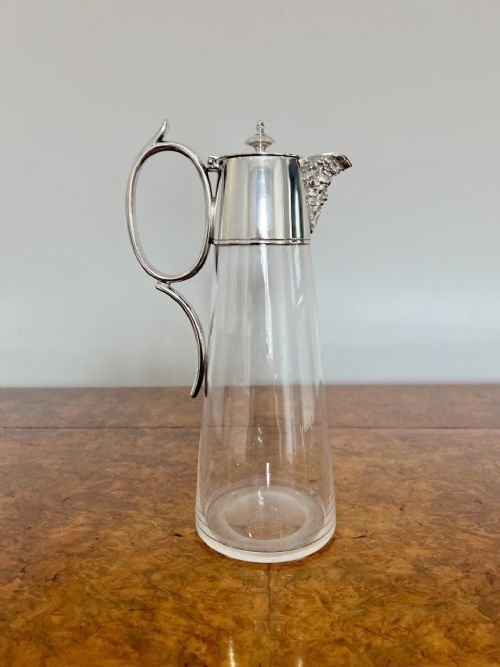
- Claret jug
- A specialised vessel designed specifically for serving red wine at the dining table. These typically feature a pouring spout and a hinged lid.
- Silver plate
- A layer of silver fused or electroplated onto a base metal core such as copper or Britannia metal. This technique allowed makers to produce ornate mounts at a lower cost than solid silver.
- Nailsea glass
- A type of glass characterised by looped or combed coloured glass trails embedded within the body. It originates from the Nailsea glassworks near Bristol.
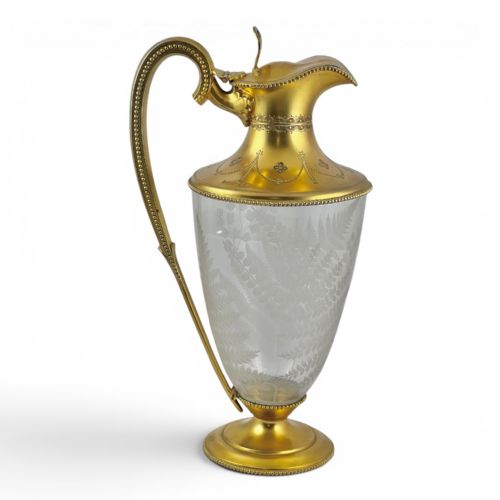
- Silver gilt
- Silver that has been coated with a thin layer of gold on its surface. This treatment provides a rich golden hue to the interior of mounts or specific decorative details.
- Cranberry glass
- A transparent pinkish red glass coloured by the addition of gold chloride during manufacture. It became popular during the Victorian period for decorative tableware.
Silver Glass Wine Carafe: Frequently Asked Questions
How do I date a silver glass wine carafe?
Dating relies on examining silver hallmarks stamped onto the metal collar or mount, which indicate the exact year and assay office. Stylistic clues such as cut glass patterns and handle shapes also help narrow down the period.
Unmarked silver plated pieces require closer inspection of the glass type, form, and construction methods. Comparing these details with known Victorian and Edwardian examples establishes an approximate timeframe.
Are these carafes safe for serving wine today?
Most antique vessels remain entirely functional for serving wine once thoroughly cleaned. The glass bodies and metal collars hold liquids securely if handled with care during pouring.
Owners should avoid using harsh detergents or abrasive scrubbers on the antique silver plate and glass. Gentle hand washing preserves both the metal finish and the integrity of the glass.
What is the difference between a decanter and a claret jug?
A claret jug specifically includes a handle and a hinged lid operated by a thumbpiece for pouring wine at the table. Decanters more often feature a simple glass stopper rather than an attached metal lid.
Both forms serve similar functions in aerating and presenting wine, but claret jugs place greater emphasis on decorative metal mounts and spouts.
How should I clean tarnished silver mounts?
Tarnished silver mounts require a specialised liquid silver polish applied carefully with a soft cloth. Care must be taken to avoid getting polish onto the glass surface or into crevices.
Using a gentle approach prevents wear to thin silver plate layers on older pieces. Regular dusting with a dry microfiber cloth minimises the need for frequent polishing.