

Silver Glass Salt Cellar
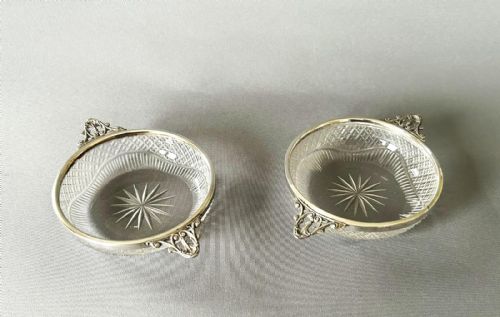
These silver glass salt cellar pieces combine precious metal mounts with brilliant glass liners, serving dining tables with both function and decorative polish.
Silver Glass Salt Cellar
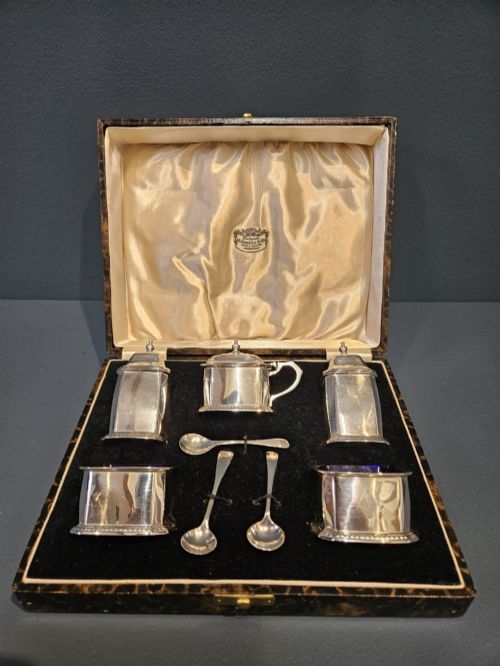
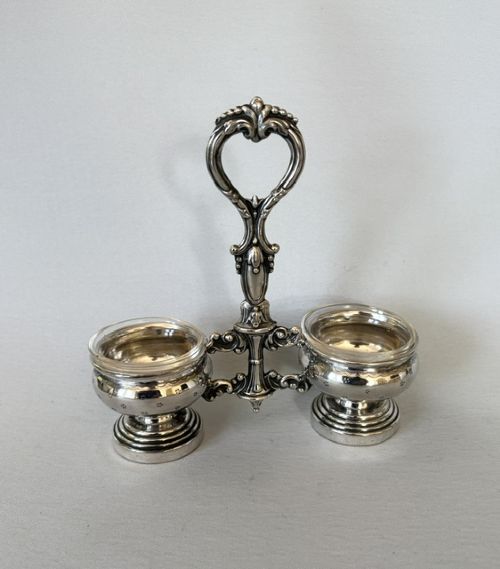
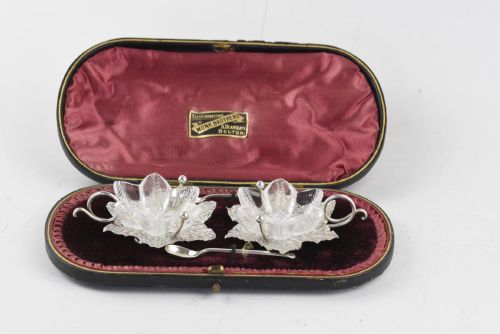
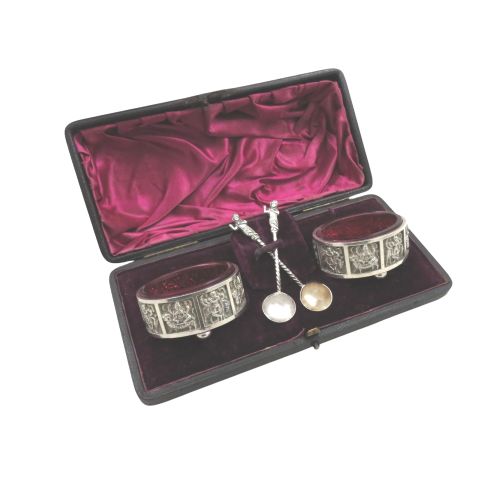
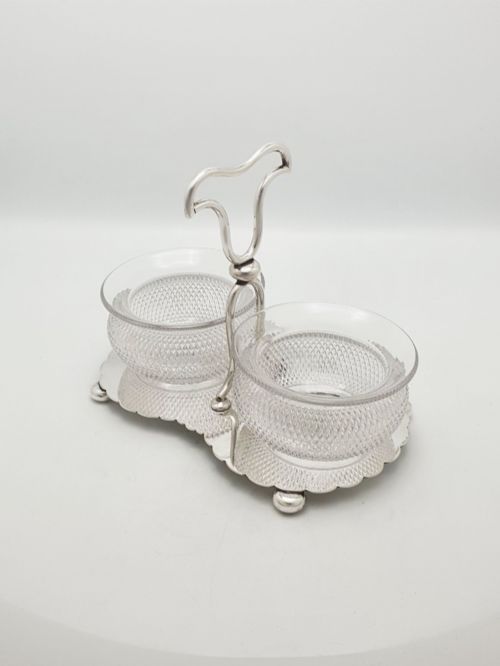
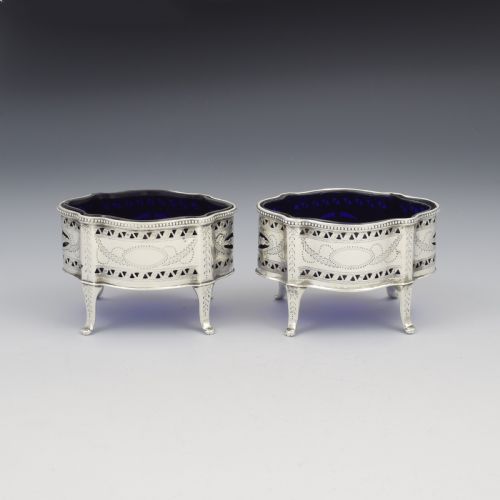
A silver glass salt cellar unites a metal frame or rim with a removable glass insert, primarily designed for dining table seasoning. You will encounter these as individual open vessels, matched pairs, or larger multi-piece condiment stands.
The surviving selection spans from Georgian and Victorian examples through Edwardian and Art Deco designs up to mid-century tableware. Common forms range from boat-shaped tubs and wirework frames to novelty animal subjects and lidded pots.
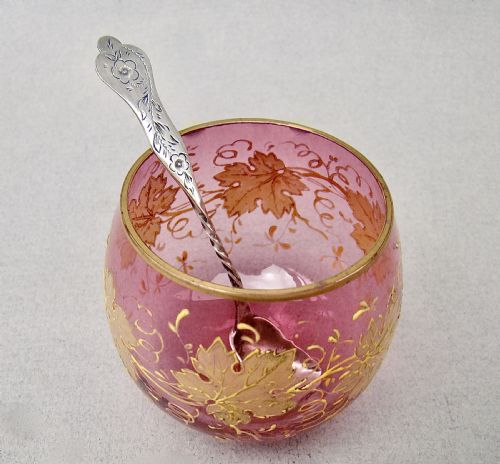
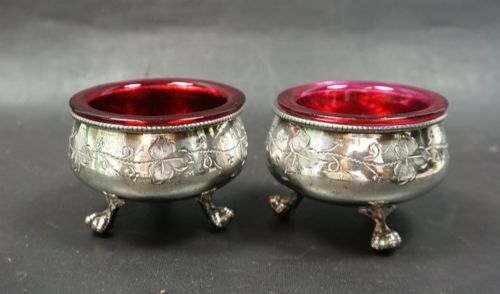
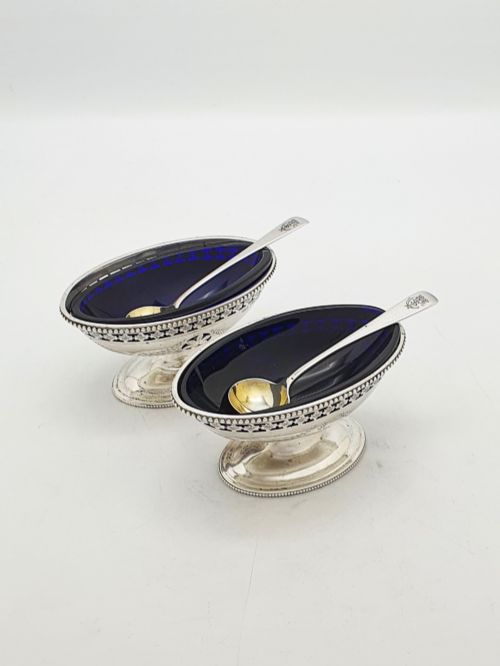
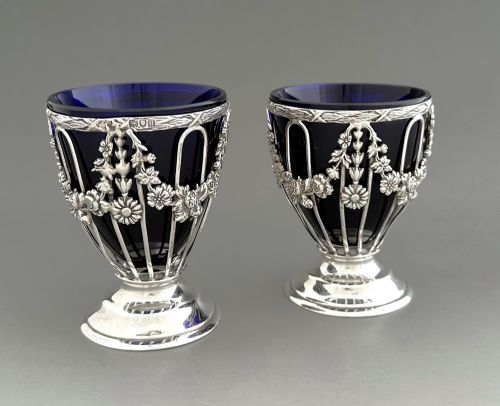
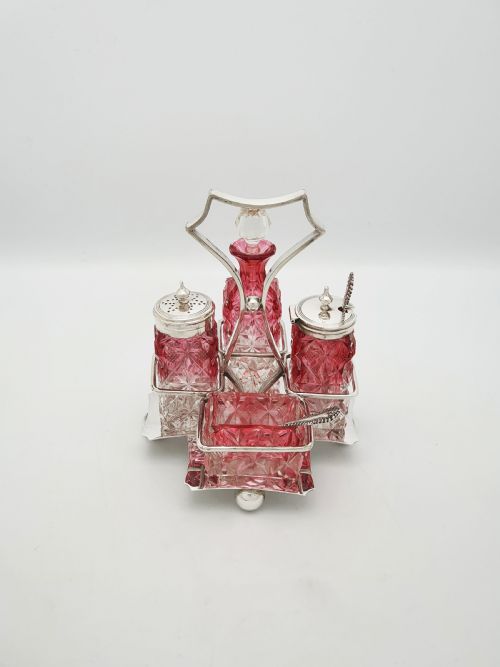
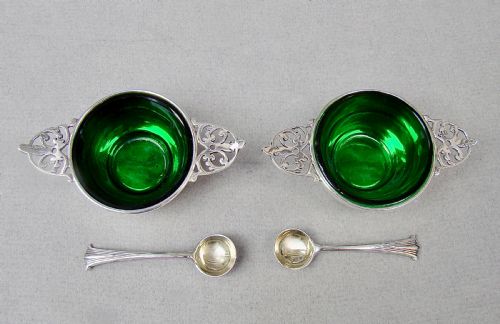
Most items feature either sterling silver or silver plate housing transparent, cobalt blue, or cranberry flash-cut glass liners. They frequently arrive alongside original spoons or form part of larger cruet sets.
Materials and construction methods
Silversmiths shaped the outer frames through casting, piercing, or wirework, utilising either solid sterling silver or base metals coated in silver plate. Pierced serpentine patterns and chased floral motifs demonstrate traditional metalworking techniques.
The glass elements rely on hand-blowing, moulding, and sharp wheel-cutting to fit securely within the metal mounts. Cobalt and cranberry colours were achieved by adding specific metallic oxides to the molten glass batch before forming.
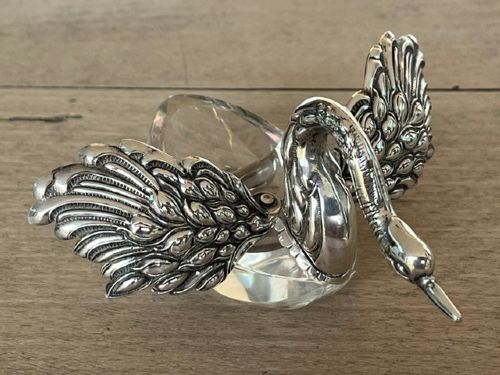
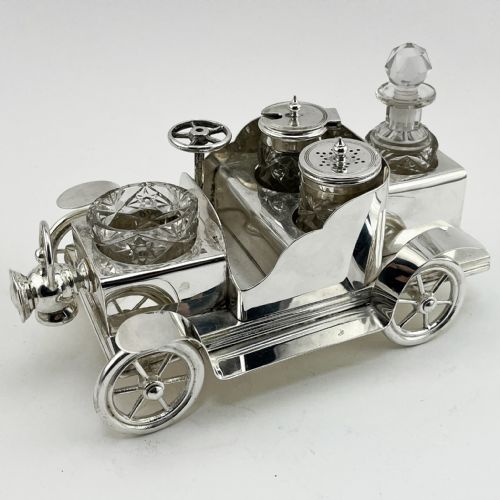
Among the tabletop menagerie, you will find salt cellars shaped as swimming swans, perched owls, and vintage motor cars.
Factors influencing quality
The standard of craftsmanship shows in the crispness of the metal chasing, the weight of the silver or plating, and the precise fit of the glass liner within its mount. Superior pieces maintain crisp detail on pierced galleries and decorative borders without soft edges.
The quality of the glass insert itself defines the piece, with hand-cut crystal and deeply saturated coloured glass marking out finer examples. Complete sets retaining their original matching spoons and intact liners represent higher levels of preservation.
William Neale·Josiah Williams & Co·William Hutton & Sons
The Silver Glass Salt Cellar Glossary
- Open salt
- A small tabletop vessel designed to hold loose salt, accessed with a tiny spoon rather than shaken.
- Cruet set
- A matched assembly of bottles, jars, or salt cellars held together in a fitted stand.
- Cobalt glass
- Deep blue glass created by adding cobalt oxide, frequently used for liners in open salts.
- Silver plate
- A base metal such as copper or Britannia metal coated with a thin layer of pure silver.
- Liner
- The removable glass insert that sits inside a metal salt cellar to protect the silver from corrosion.
Silver Glass Salt Cellar: Frequently Asked Questions
How were salt cellars used on historic tables?
Diners used small spoons to transfer salt from the open vessel onto the side of their plate for individual seasoning.
Before the invention of free-flowing table salt in the twentieth century, salt cellars held coarse or flake salt safely away from moisture.
What is the difference between sterling and silver plate?
Sterling silver contains a legally regulated high purity of silver throughout the entire object, bearing official hallmarks for verification.
Silver plate consists of a cheaper base metal foundation covered by a thin external layer of pure silver.
How do I care for silver and glass salt cellars?
Wash the glass liners gently in warm soapy water, removing them completely from the metal frames to avoid trapping moisture underneath.
Clean the silver mounts using a soft cloth and appropriate polish, taking care to keep abrasive substances away from any glass surfaces.
How can I date my salt cellar?
Examine any stamped hallmarks on the silver components, which often record specific assay office symbols and date letters for the year of manufacture.
Stylistic clues such as geometric Art Deco lines or heavy Victorian chasing also help narrow down the period of production.