

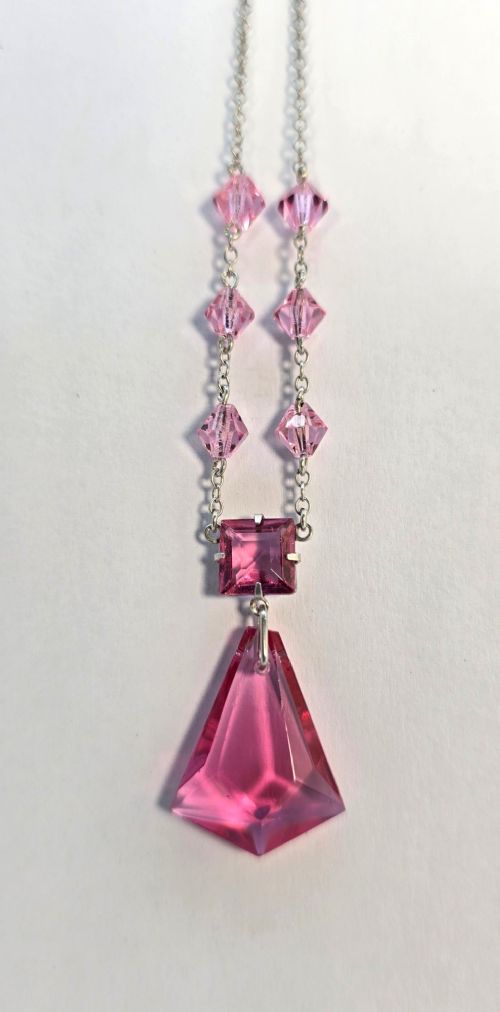


Silver Glass Necklace
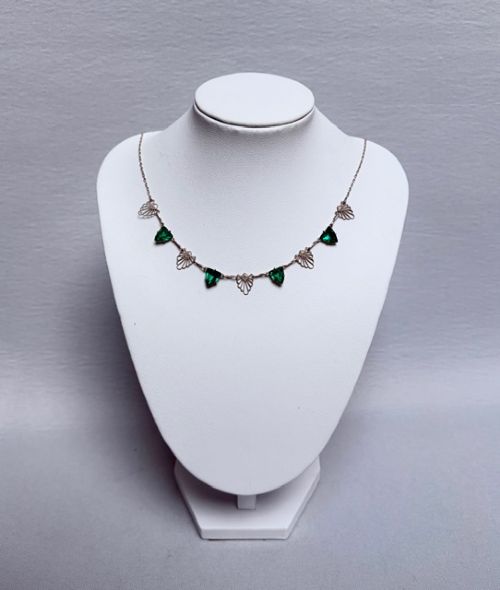
A silver glass necklace brings together bright metalwork and luminous paste stones for wearable history that spans the Georgian era to the Art Deco period.
Silver Glass Necklace
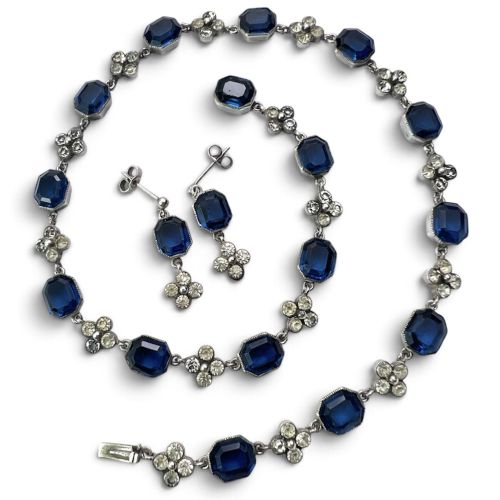
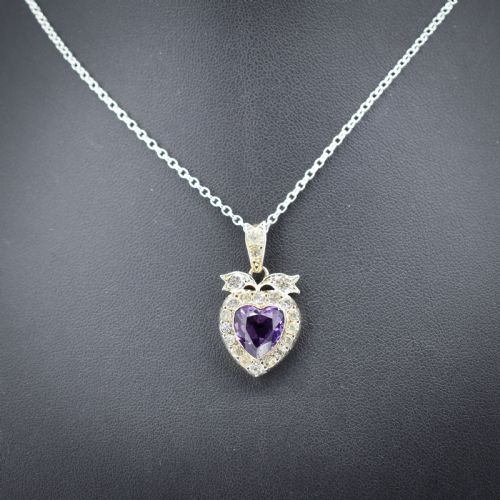
When you search for a silver glass necklace, you encounter varied historical forms ranging from rigid necklaces and matched sets to single pendants on chains. The selection spans the Georgian period through to the 1920s, with Edwardian lavaliers and Art Deco designs appearing alongside older rivières.
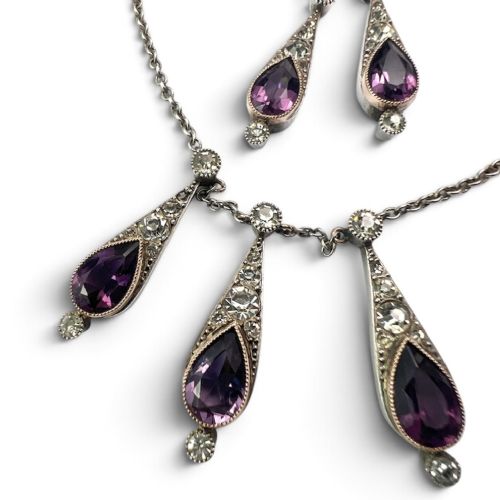
You are most likely to meet pieces featuring paste glass or crystal set in silver mountings, often echoing the fine gemstone jewellery of their day. Forms include floral drops, heart pendants, cross pendants, and even scent bottles mounted in silver.
The aesthetic shifts across eras, moving from the foiled stones and black dot paste of the Georgian years to the clean geometric lines of Art Deco sets. Each piece reflects the prevailing style of its decade while maintaining the core pairing of silver and glass.
Materials and construction
Makers shaped silver into settings that secure various forms of glass, paste, and crystal. Paste glass stones were hand cut and sometimes foiled at the back to enhance their colour and reflection, as seen in Georgian amethyst and black dot examples.
Mountings range from simple bezels to intricate floral drop frameworks, sometimes incorporating gold alongside silver or utilising marcasite and pearls for added texture. Stones show period-specific cuts, such as old cut paste or hand cut crystal, secured within metalwork that reflects the craftsmanship of the nineteenth and early twentieth centuries.
Silver Glass Necklace Retail Price Guide 2026
Typical asking prices for silver glass necklace among the pieces listed under this phrase on Sellingantiques today, from the lower quarter to the upper quarter. They describe what is for sale here now, not the wider market.
A cranberry penny scent bottle in silver proves that Victorians liked their smelling salts served with miniature fruit-like charm.
Judging quality in historic pieces
Quality reveals itself in the precision of the stone cutting and the integrity of the silver mountings. Finer pieces demonstrate careful hand cutting in the glass paste and secure, neat claw or bezel settings that hold each element firmly.
The visual depth of the stones and the harmony of the overall design set superior examples apart. Better pieces retain their original foiled backs and show thoughtful integration between the silver metalwork and the glass elements.
The Silver Glass Necklace Glossary
- Rivière
- A necklace made of a continuous sequence of stones of similar size or graduating smoothly. They sit closely around the neck.
- Black dot paste
- A specific technique from the Georgian era where a small dark spot was applied to the back of a paste stone to mimic the culet of a real diamond.
- Lavalier
- A pendant featuring a main drop suspended from a shorter centrepiece or chain. This style gained popularity during the Edwardian period.
Silver Glass Necklace: Frequently Asked Questions
How do I date a silver glass necklace?
Dating relies on the style of the metalwork, the cut of the glass stones, and the overall construction methods used. Georgian pieces often feature foiled stones and closed-backs, whereas Edwardian and Art Deco examples show lighter wirework or geometric symmetry.
Comparing the clasp type and the mounting style against known period designs helps confirm the era. Subtle details like black dot paste point directly to eighteenth or early nineteenth-century work.
Were paste glass necklaces considered valuable originally?
Historic paste jewellery was often created to rival genuine gemstone pieces rather than serve as cheap imitation. Wealthy individuals frequently travelled with paste replicas for safety while leaving precious jewels at home.
Skilled artisans spent considerable time hand cutting and setting the glass, making these pieces expensive luxury items in their own right. Today, collectors value them for their distinct craftsmanship and historical survival.
How should I care for antique silver and glass jewellery?
Keep these pieces away from water, ultrasonic cleaners, and harsh chemical dips to protect the delicate foils behind the glass. Moisture trapped behind foiled stones can cause permanent dark spots or corrosion.
Store each necklace flat in a lined box to prevent tangling and scratching. Gentle dusting with a soft, dry cloth is usually sufficient for maintenance.
Can I wear an antique silver glass necklace daily?
While these pieces were built to be worn, their age requires a degree of mindfulness during use. Older settings and delicate chains can be fragile after a century or more of existence.
Reserving them for special occasions helps preserve the original mountings and fragile glass stones. Regular checks on the clasp and settings by a professional jeweller add extra security.