

Edwardian Green Pendant
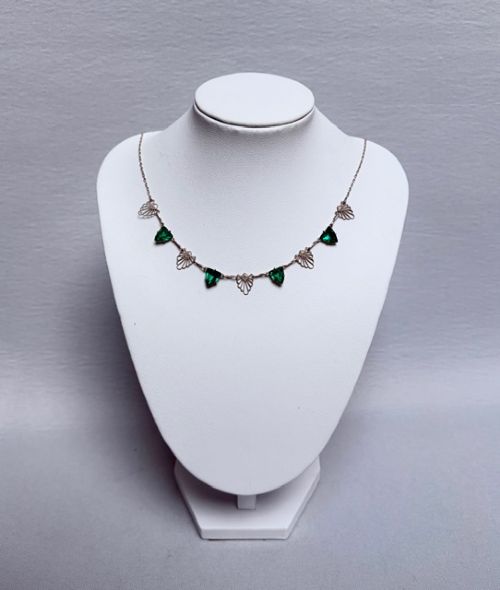
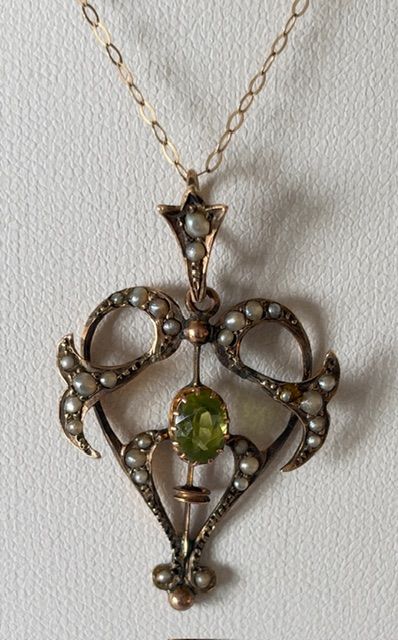
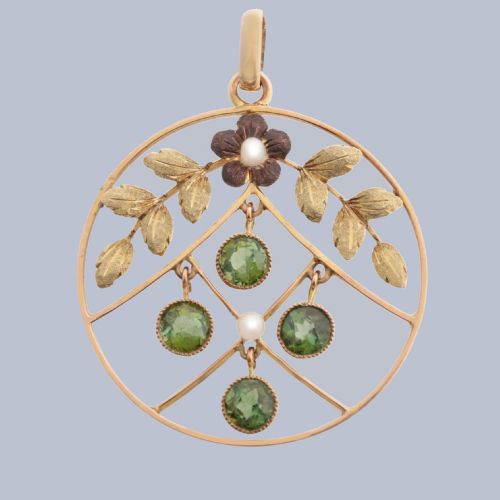
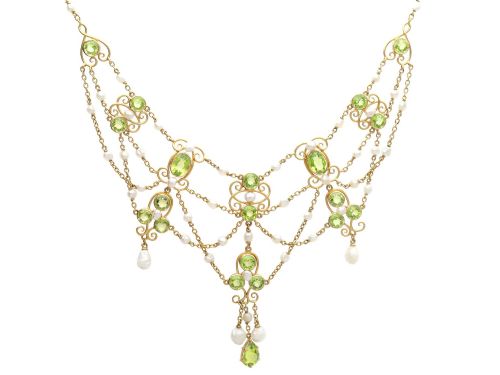
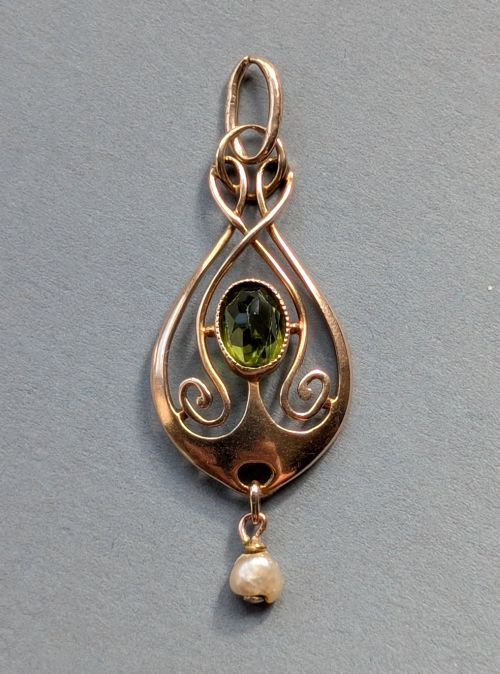
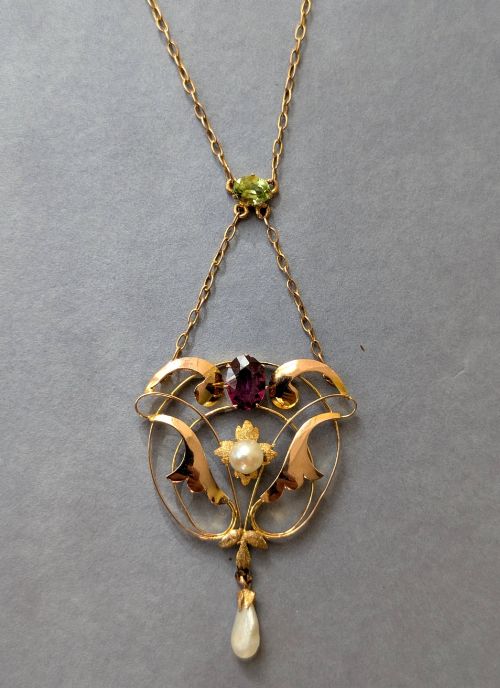
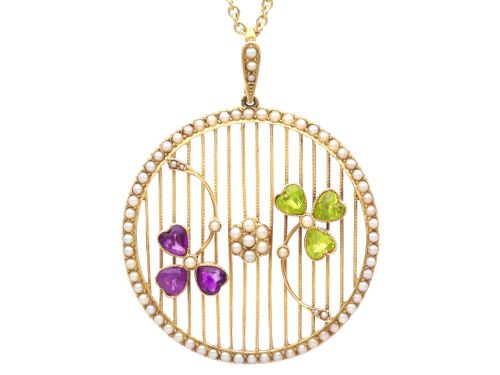
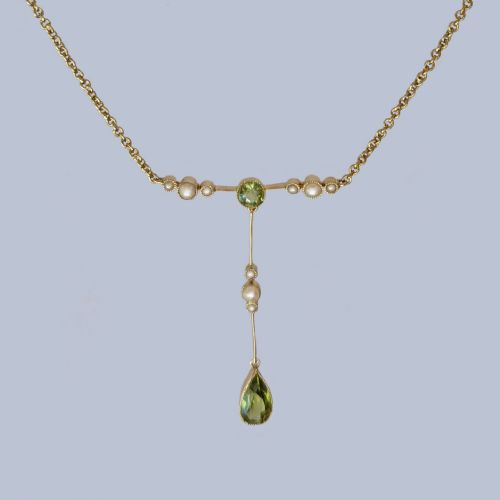
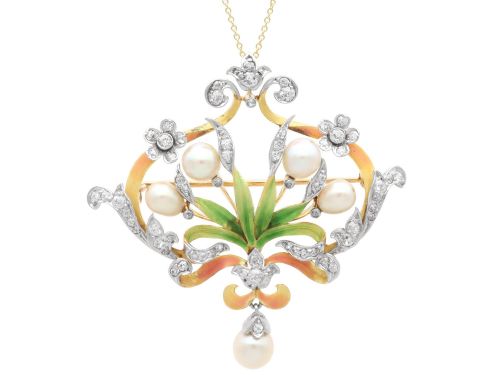
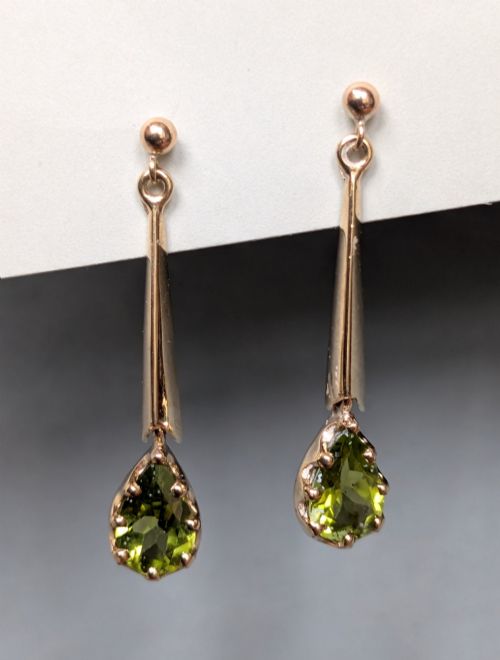
An edwardian green pendant brings together pale peridots, bright enamels and delicate seed pearls set in yellow gold or silver.
Edwardian Green Pendant
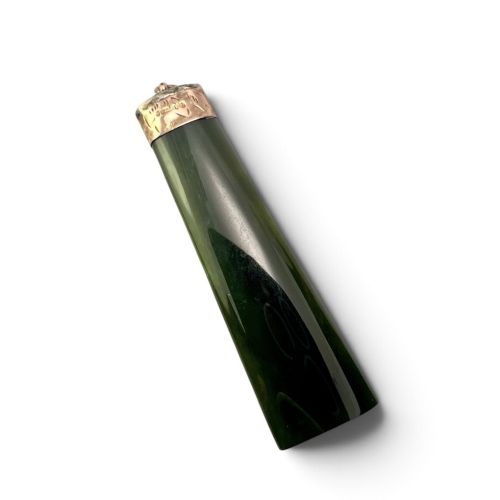
An edwardian green pendant is a piece of jewellery created during the early twentieth century, drawing on the botanical curves of Art Nouveau and the structured geometry of the Arts and Crafts movement. These pieces centre on green stones such as peridot, jadeite, and tourmaline, often accompanied by luminous pearls.
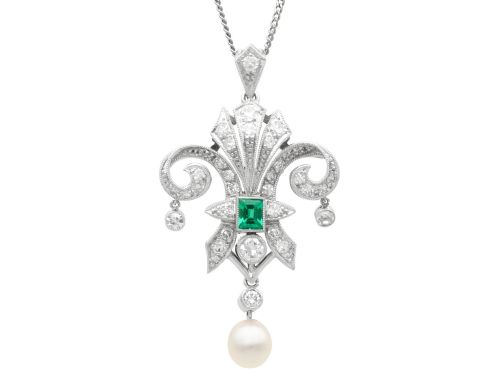
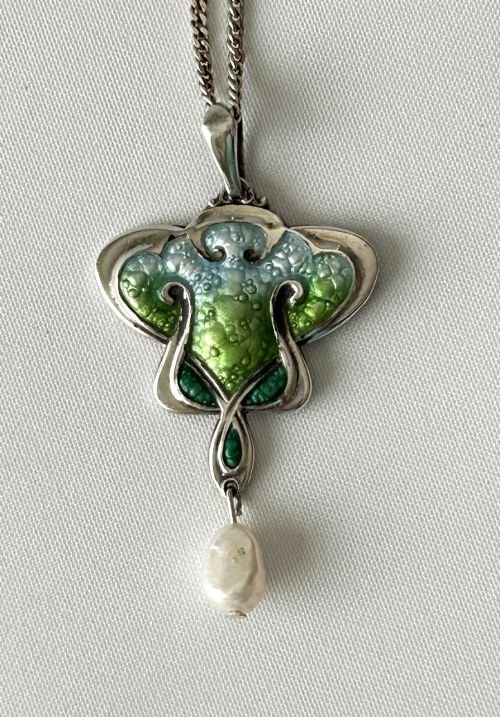
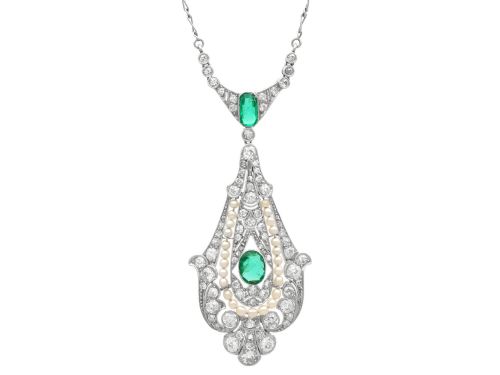
Beyond gold wirework, examples span silver enamel designs and heavier platinum mounts set with carved jade. The palette remains anchored in shades of green, ranging from yellow-olive peridot to deep emerald and translucent enamel.
Materials and Making
Goldsmiths of this era employed low and medium carat yellow gold alongside sterling silver, often backing silver onto gold to keep bright stones brilliant while retaining strong mounts. Metal was drawn into fine wire or cast into openwork garland frames that allowed light to pass through the stones.
Stones were cut primarily as step-cut peridots, cabochons, or old-cut diamonds, secured in collet settings or held by tiny seed pearls strung on silk threads. Enamel work, particularly plique-à-jour, created translucent windows of colour that resembled stained glass.
Edwardian Green Pendant Retail Price Guide 2026
Typical asking prices for edwardian green pendant among the pieces listed under this phrase on Sellingantiques today, from the lower quarter to the upper quarter. They describe what is for sale here now, not the wider market.
Listings demonstrate that peridot is the most frequently paired green stone with yellow gold and seed pearls in this category.
Judging Quality
Quality rests upon the fineness of the metalwork and the clarity of the central green stone. Finer examples display meticulous hand-pierced openwork rather than heavy cast metal, showing careful attention to the reverse as well as the front.
The choice of secondary stones alters the standing of a piece; matched seed pearls and well-cut diamonds elevate a simple peridot drop into a work of distinct artistry. Maker attribution, particularly to known workshops of the Arts and Crafts period, also marks out superior execution.
Murrle Bennett·Archibald Knox·Liberty and Co
The Edwardian Green Pendant Glossary
- Peridot
- A yellowish-green gemstone that forms the primary green centrepiece for many jewels of this era. Its characteristic olive hue defines the aesthetic of the period.
- Seed pearl
- A very small, natural or saltwater pearl used extensively as a delicate border or accent in Edwardian jewellery. These tiny pearls are often threaded individually onto thin wire or silk.
- Lavalier
- A pendant featuring a primary drop suspended from a smaller secondary stone or a fixed loop on the chain. This fluid drop form gained popularity during the late Victorian and Edwardian decades.
- Plique-à-jour
- An enamelling technique where enamel is applied within a wire framework without a backing, creating a translucent, stained-glass effect. It requires great skill to prevent the glass from cracking during firing.
- Garland style
- A decorative motif popular in Edwardian jewellery that imitates swags of flowers, ribbons, and classical wreaths. This design style relies on symmetrical arrangements of tiny stones and pierced metal.
Edwardian Green Pendant: Frequently Asked Questions
How do I care for an edwardian green pendant?
Clean these delicate pieces using a soft, dry cloth rather than liquid immersion, which can damage seed pearls and historical settings.
Store them separately in lined boxes to prevent the soft peridots from scratching against harder diamonds or metals.
Were these pendants worn on long chains?
Original chains were typically finer and shorter than modern standards, placing the pendant higher on the chest near the collarbone.
Many surviving pieces retain their original barrel clasps or spring rings, though chains are frequently replaced over time.
How do I distinguish Edwardian from Victorian pendants?
Edwardian pieces generally favour lighter, airier platinum and yellow gold mounts with openwork garland motifs, whereas Victorian work tends to be heavier and more solid.
Green stones like peridot appear in both eras, but the integration of delicate seed pearls and whiplash lines points firmly to the Edwardian decade.
Can I wear my pendant every day?
Because peridot and seed pearls are relatively soft compared to diamonds, daily wear requires caution against knocks and harsh chemicals.
Remove the jewellery before swimming, gardening, or sleeping to protect the fragile antique goldwork and delicate stone settings.