




Silver Fish Servers Set
These silver fish servers set pieces bring the elegance of formal dining to the table, offering a matched knife and fork designed specifically for serving fish.
Silver Fish Servers Set
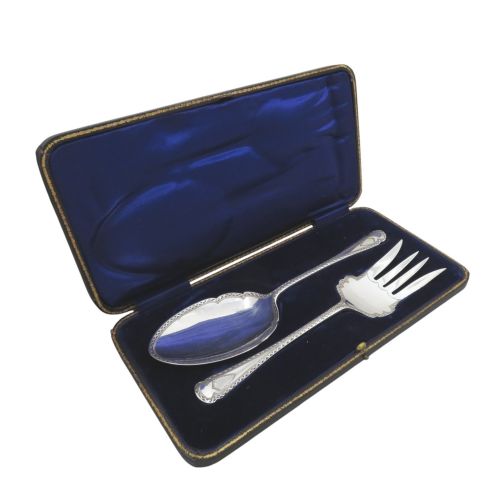
A silver fish servers set consists of a specialised knife and fork designed to navigate delicate fish courses cleanly without damaging the flesh. These implements appear frequently in Victorian and Edwardian guises, often housed in fitted presentation cases lined with silk and velvet.
Buyers seeking a silver fish servers set will encounter both solid sterling silver and silver-plated options. The forms range from plain polished blades to heavily engraved surfaces, occasionally accompanied by alternative handle materials.
The pieces on this page span the nineteenth and early twentieth centuries, reflecting the changing tastes of dining culture from the eighteen-seventies through to the Edwardian era. Originating as flatware for large dinner parties, these boxed sets survive as tactile examples of period craftsmanship.
Materials and construction
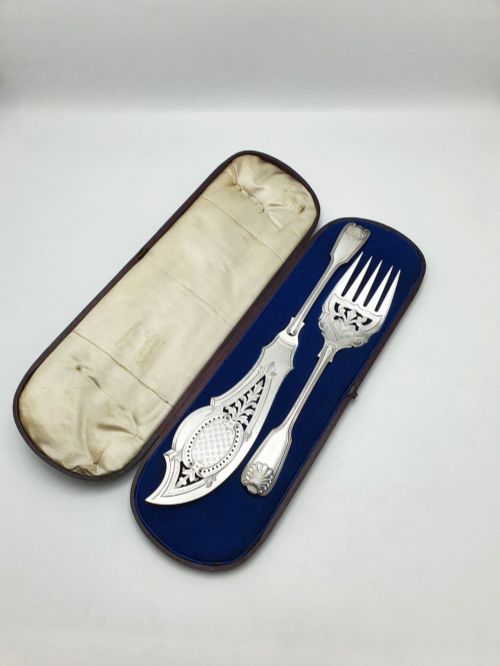
Makers utilised sterling silver and silver plate for the functional business ends of the blades and tines, ensuring durability and resistance to the natural acids in fish. These metallic surfaces frequently carry detailed chasing, piercing, and hunting or dog engravings characteristic of nineteenth-century metalwork.
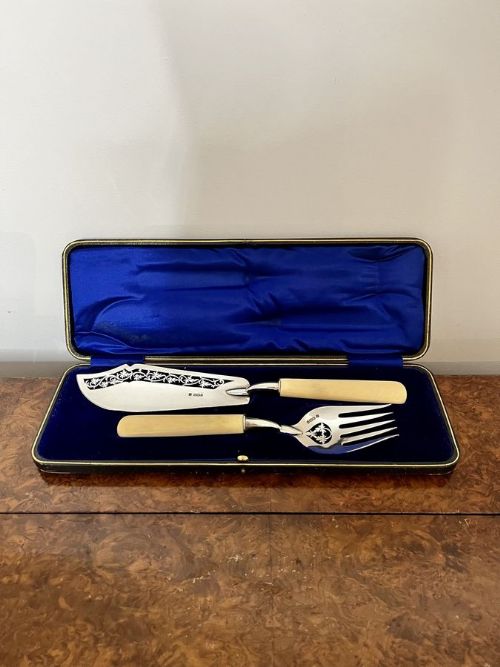
Handles provide a tactile contrast to the metalwork, incorporating organic materials such as bone, horn, mother-of-pearl, antler, and leatherette for exterior case coverings. The assembly relies on traditional pinning and mounting techniques to secure these diverse handles firmly to the metal shafts.
Listings feature items spanning the Victorian and Edwardian eras, utilising materials including sterling silver, bone, horn, and velvet.
Distinguishing quality
Quality in a silver fish servers set rests on the weight of the metal and the crispness of the engraved or pierced decoration upon the blade. Finer examples display deep, deliberate hand-engraving rather than shallow machine stamping, alongside balanced proportions between handle and blade.
The inclusion of an original fitted case lined with silk, velvet, or leatherette elevates the status of a set, particularly when the interior fittings remain intact and undamaged. Maker marks and hallmarks provide further distinction, separating standard production items from workshop outputs bearing recognised silversmith signatures.
Chawner and Co·Waring and Gillows
The Silver Fish Servers Set Glossary
- Sterling silver
- A silver alloy containing 92.5 percent pure silver by mass, valued for its durability and traditional use in British flatware.
- Silver plate
- A base metal substrate coated with a thin layer of pure silver, offering the appearance of solid silver at a different cost.
- Queens pattern
- A decorative nineteenth-century flatware pattern featuring a shell and scroll motif along the shaped border of the handle.
- Hallmark
- An official stamp applied to precious metals indicating the standard of purity, the assay office, and the date letter.
- Canteen
- A fitted box, chest, or cabinet designed specifically to store a matched set of cutlery and serving pieces.
Silver Fish Servers Set: Frequently Asked Questions
What is a silver fish servers set?
A silver fish servers set is a matched pair of a large knife and fork specifically proportioned for serving fish at the dining table. These implements feature broad blades designed to lift delicate portions intact.
They emerged as essential dining table accessories during the Victorian period, reflecting the formality of multi-course meals. Today, they survive both as functional tableware and collectible examples of period metalwork.
How do I date a silver fish servers set?
Dating relies primarily on hallmarks stamped into the metal, which indicate the exact year of assay, alongside stylistic clues in the engraving and handle design. Victorian pieces often display ornate piercing and naturalistic motifs.
Edwardian examples tend toward refined, lighter profiles. Cases and fitted boxes also offer stylistic evidence through their interior silk or velvet linings and exterior leatherette finishes.
Are these sets safe to use for dining?
Yes, sterling silver and silver plate are entirely suitable for food use, provided the pieces are cleaned gently after use. Hand washing with mild soap preserves the metal surfaces and protects organic handle materials like bone or horn.
Dishwashers should be avoided entirely, as the harsh heat and detergents damage both the metallic finish and the adhesives securing the handles.
Why do some sets have antler handles?
Antler and other organic materials like horn and bone were chosen for their robust texture and the secure grip they provided during carving. These natural handles added a rustic, sporting aesthetic that complemented nineteenth-century dining trends.
Engravings on the adjacent metal blades frequently mirrored this theme, featuring hunting scenes or dog motifs that tied the design of the serving set together.