



English Sterling Silver Knives
English sterling silver knives bring tactile weight and historic grace to the table, spanning Georgian formality through to Art Deco sharpness.
English Sterling Silver Knives
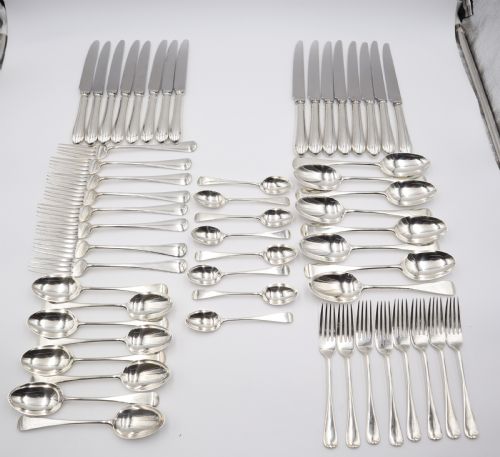
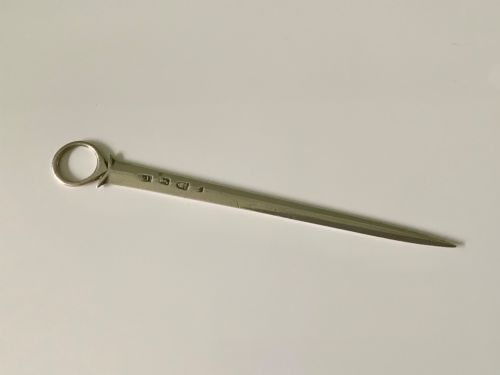
When you search for english sterling silver knives, you enter a diverse field of dining implements, serving pieces, and desk accessories spanning multiple centuries. The selection ranges from robust Georgian table knives and boxed sets of mother of pearl fruit knives to novelty letter openers and butter knives.
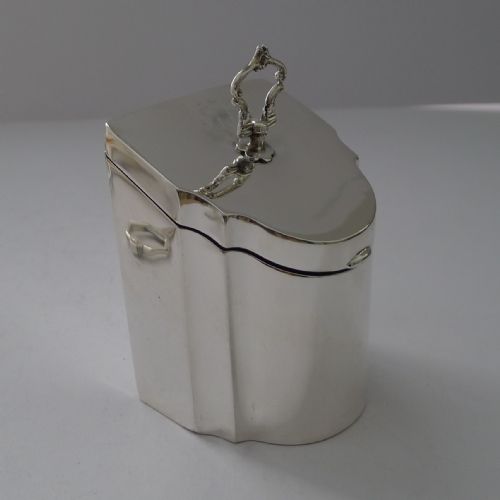
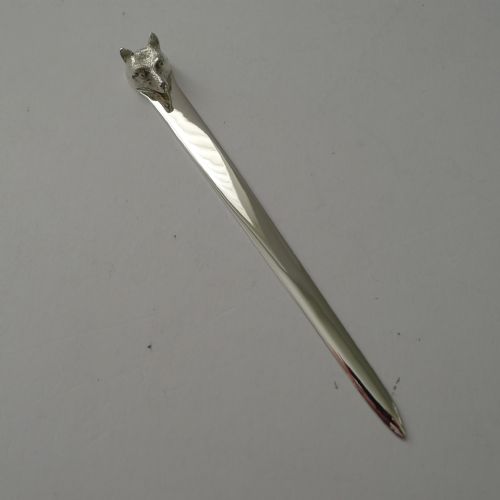
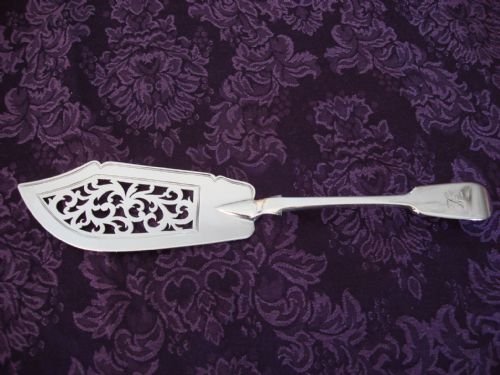
Victorian pieces dominate the common forms, particularly matched sets of fish knives and forks featuring intricate piercing and engraved blades. Alongside these standard dining forms, specialised iterations such as tea caddy knife boxes and novelty animal handles appear regularly across the inventory.
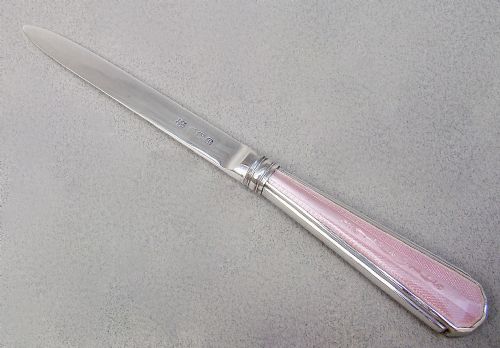
The materials paired with the silver define the specific sub-category, with mother of pearl and steel blades frequently appearing in Georgian and Victorian fruit sets. Enamel accents, velvet linings, and leather cases further distinguish the desk-bound letter openers from traditional dining cutlery.
Judging quality in silver cutlery
Quality rests upon the crispness of the original chasing and the integrity of the joins between handle and blade. Superior sets maintain matching hallmarks across every single component rather than assembled replacements.
The thickness of the gauge and the retention of original surface polish separate standard utility pieces from exhibition grade creations. Furthermore, specialised novelty details executed by notable workshops command distinct attention for their sculptural precision.
Silversmiths occasionally transformed greyhounds, foxes, and ducks into fierce desk sentinels by turning them into novelty letter openers.
The Barker Brothers·A. Barrett·Sampson Mordan and Co·Adie Brothers·George Adams
The English Sterling Silver Knives Glossary
- Sterling silver
- A silver alloy containing 92.5 percent pure silver and 7.5 percent other metals, usually copper. This standard guarantees the durability required for functional cutlery.
- Mother of pearl
- The iridescent internal layer of mollusc shells, carved into scales for knife handles. It offers a smooth, tactile grip highly prized in Victorian fruit sets.
- Ferrule
- The metal ring or cap that secures the handle of a knife to the blade. In quality pieces, this is constructed from solid sterling silver.
- Guilloche enamel
- A decorative technique where intricate geometric patterns are engraved beneath a translucent layer of coloured enamel. It appears on modernist and Art Deco desk accessories.
English Sterling Silver Knives: Frequently Asked Questions
How do I clean antique silver knives?
Use a specialised silver cloth and warm soapy water, avoiding harsh abrasive dips that strip aged patination.
Dry each piece thoroughly with a soft lint-free cloth immediately after washing to prevent water spotting.
Can I use these knives for daily dining?
Many Victorian and Georgian sets remain structurally robust enough for regular table use if handled with care.
Hand washing is mandatory, as modern dishwashers will ruin mother of pearl handles and pit delicate steel blades.
What is the difference between fruit knives and table knives?
Fruit knives are generally smaller, often featuring delicate mother of pearl scales and slender blades designed to slice acidic fruits without corrosion.
Table knives are heavier, built with substantial handles and steel or silver blades to manage standard main courses.
How do I read the hallmarks?
British hallmarks typically include a lion passating for sterling standard, a leopard head or city mark for the assay office, and a sequential date letter.
These tiny stamped symbols allow you to trace the exact year and town where the silversmith forged the piece.