


Engraved Silver Fish Knives
These engraved silver fish knives and servers bring Victorian dining elegance to the table, combining intricate blade work with practical service.
Engraved Silver Fish Knives
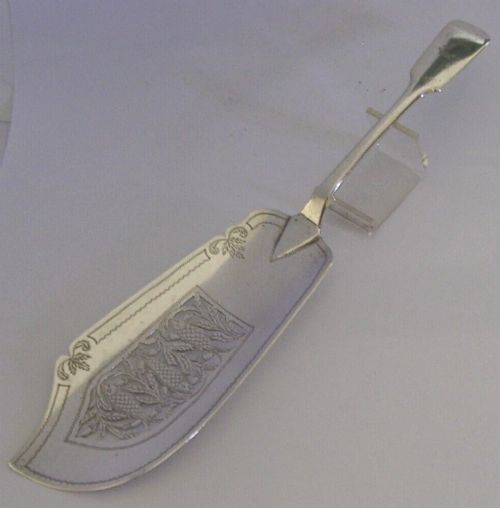
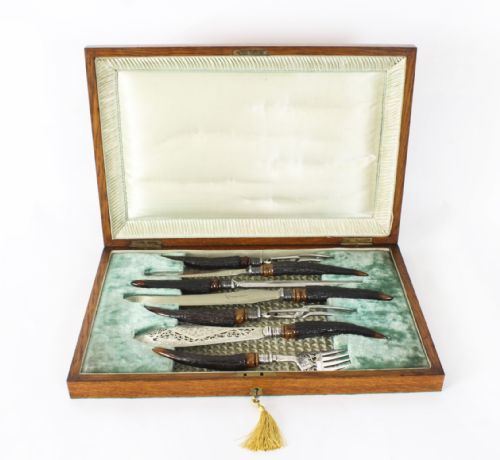
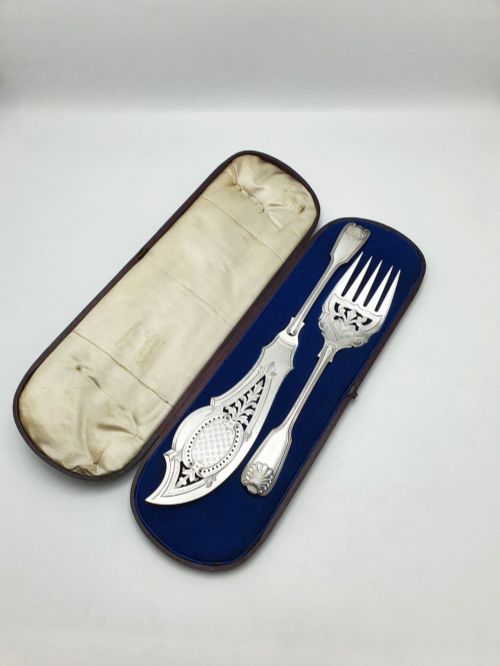
When you search for engraved silver fish knives, you are looking at nineteenth-century dining implements designed for the course, including single knives, pairs of servers, and complete sets. The items on this page span the Victorian era, the George IV period, and French Restoration design, featuring forms such as fish slices, carving sets, and boxed service pieces.
You are most likely to meet Victorian sterling silver or silver-plated sets, often presented in fitted cases with handles of mother-of-pearl, wood, horn, or stag antler. These range from single Irish fiddle pattern slices to cased pairs and sets of six, reflecting the formal dining habits of the nineteenth century.
How they were made
Makers shaped these utensils from sterling silver or silver plate, frequently pairing metallic blades with organic handles carved from mother-of-pearl, stag antler, horn, or wood. Steel also appears in specific cutting edges within carving sets.
Blades and slices carry hand engraving, piercing, and chased details, including family crests and hunting scenes with dog motifs. Cases lined with velvet housed many of these sets for presentation and preservation.
Hunting dogs chase across nineteenth-century blades, reminding modern diners that their fish knife once saw action after a day in the field.
What varies in quality
The distinction between standard service pieces and superior examples lies in the depth and execution of the blade engraving, such as detailed hunting motifs or crisp family crests. Piercing work on solid silver slices also indicates the level of artisan skill involved.
Material choice and presentation elevate certain sets, particularly those combining solid sterling silver rather than silver plate with intact fitted velvet cases and well-matched natural handles like mother-of-pearl or stag antler.
Charles Boyton
The Engraved Silver Fish Knives Glossary
- Sterling silver
- A silver alloy containing 92.5 percent pure silver by mass, ensuring durability for tableware. It forms the primary metal for high-grade nineteenth-century pieces.
- Silver plate
- A layer of silver applied to a base metal core, offering the appearance of solid silver at a different cost. This technique appears widely on Victorian serving sets.
- Fish slice
- A wide, flat utensil designed for serving portions of fish cleanly at the table. These often feature pierced decoration and hand engraving.
- Fiddle pattern
- A traditional cutlery handle shape featuring a narrow stem that broadens into a shoulder and flares at the terminal. It is common in nineteenth-century British silver.
- Stag antler
- Material harvested from deer used to create textured, tactile handles on cutlery and serving sets. It provides a robust grip and rustic contrast to polished metal.
Engraved Silver Fish Knives: Frequently Asked Questions
What were fish knives used for?
Victorian diners used fish knives alongside matching forks to separate delicate fish flesh from the bone without using a traditional steel blade that might react with the food. The wide, engraved blades helped lift portions neatly.
These utensils belonged to formal multi-course dinners where specific cutlery designated each dish, particularly during the middle and late nineteenth century.
Are these pieces sterling silver or plated?
The listings include both solid sterling silver and silver-plated items, depending on the specific piece and maker. Hallmarks on the metal usually confirm sterling standard.
Silver plate offered households a durable alternative during the Victorian era, maintaining the bright appearance of silver at a different cost.
How do I care for antique silver cutlery?
Gentle washing in warm soapy water with a soft cloth keeps silver clean, followed by thorough drying to prevent moisture spots. Avoid harsh abrasives that wear down engraving.
Storage in lined boxes or anti-tarnish rolls protects the metal surface and organic handles like mother-of-pearl or horn from environmental damage.
How do I identify a Victorian fish server?
Victorian servers often display characteristic hallmarks, ornate hand engraving such as foliage or hunting scenes, and specific handle materials like stag antler or mother-of-pearl. Forms tend to be decorative and substantial.
Comparing the style against known nineteenth-century design periods helps date the piece accurately, supported by maker marks where present.