


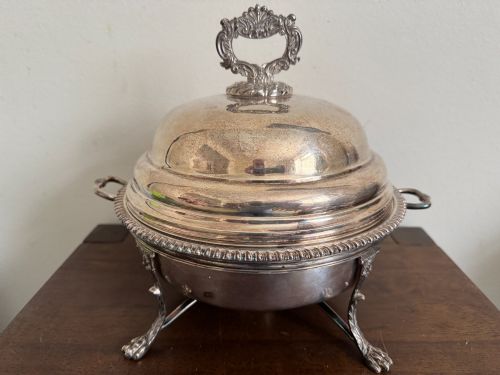


Silver Entree Dish
A silver entree dish brings formal dining history to the table, offering versatility and elegance for serving main courses.
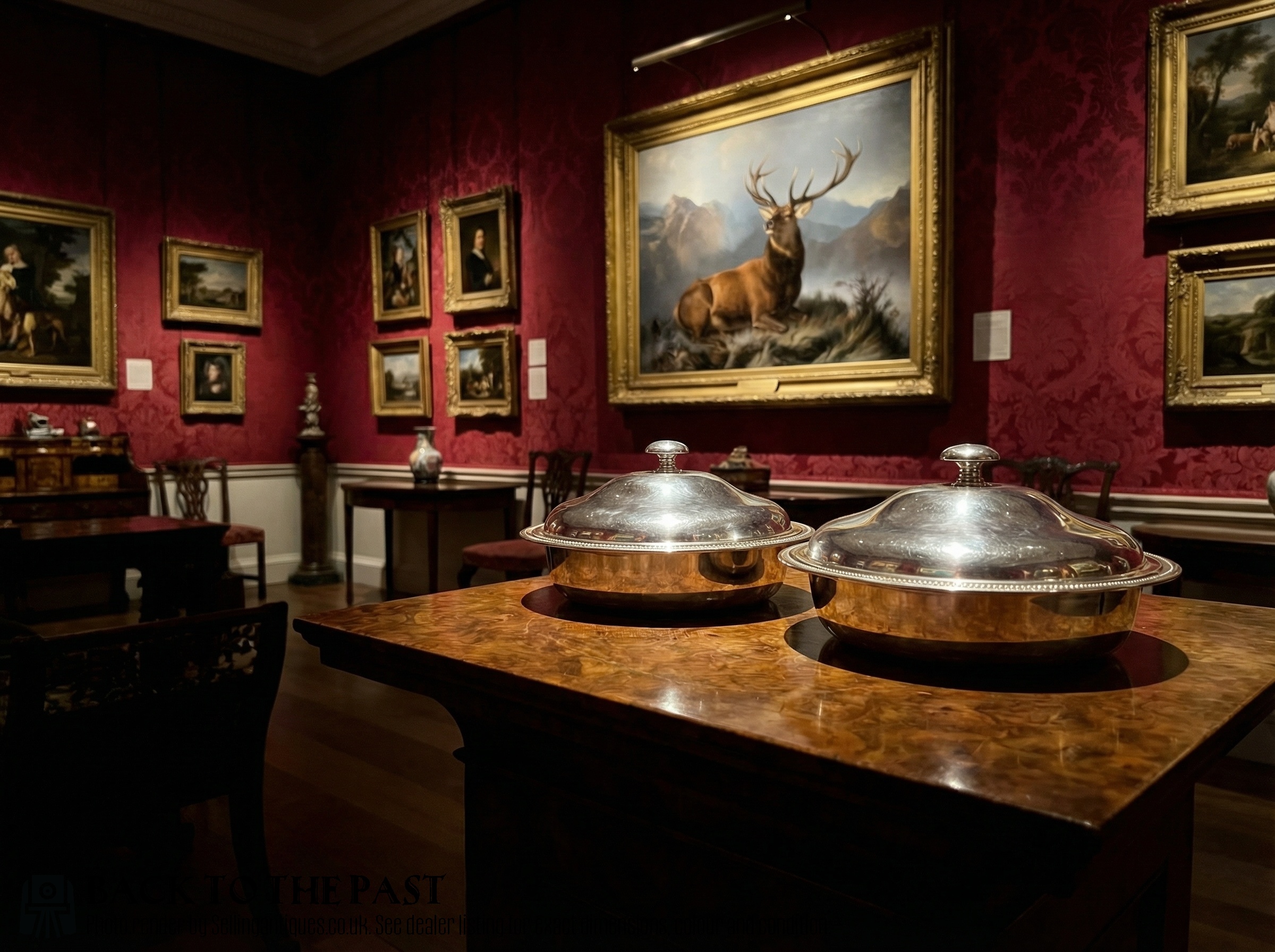
Silver Entree Dish
A silver entree dish is a covered serving vessel designed for presenting food at the dining table. The pieces found here include rectangular, oval and circular forms, often accompanied by lids and handles.
The selection ranges from single serving dishes to double versions and complete pairs. Many examples function as vegetabletureens or chafing dishes equipped with spirit burners for keeping food warm.
Most pieces seen on this page date from the nineteenth century and the Edwardian era. Silver plate and EPNS dominate the materials, alongside solid silver examples.
Materials and manufacture
Makers utilised solid silver and various forms of silver plate, including Old Sheffield Plate and electroplated nickel silver. Metal foundations provide the structural rigidity needed for heavy lids and decorative handles.
Smiths shaped the metal through forming and soldering, applying cast details such as Greek key borders or ornate crests. Lids often feature detachable handles to allow the base to serve separately as an open platter.
Silver Entree Dish Retail Price Guide 2026
Typical asking prices for silver entree dish among the pieces listed under this phrase on Sellingantiques today, from the lower quarter to the upper quarter. They describe what is for sale here now, not the wider market.
The site listings feature items spanning the Victorian, Edwardian, Regency and Art Deco styles, created from silver, silver plate, EPNS and metal.
Evaluating craftsmanship
Quality rests in the weight of the metal and the crispness of applied cast decoration such as borders and handles. Heavier gauge silver plate maintains its base metal integrity better through decades of polishing.
The distinction between standard production and fine workshop output appears in the balance of the lid, the secure fit of the cover, and the finesse of maker marks stamped into the base.
Matthew Linwood·William Hutton and Sons·Cresswick·Asprey London·James Dixon and Sons·Walker and Hall·Hawksworth Eyre and Co·Martin Hall and Co·Elkington·Finley and Taylor·Frank Cobb and Co·Paul Storr·W and G Sissons
The Silver Entree Dish Glossary
- Silver Plate
- A thin layer of pure silver bonded to a base metal such as copper or nickel. This technique allowed makers to produce impressive vessels at a lower cost than solid silver.
- EPNS
- Electroplated nickel silver, a common base material introduced in the nineteenth century for plated tableware. It provides a durable and bright surface for everyday dining use.
- Tureen
- A deep covered bowl designed for serving soups, vegetables or entrees. In this category, the terms entree dish and tureen often overlap.
- Old Sheffield Plate
- An early method of fusing a sheet of silver onto a copper core before shaping the metal. Pieces made this way show characteristic streaks of copper where the silver layer wore thin.
Silver Entree Dish: Frequently Asked Questions
What is a silver entree dish used for?
These vessels were designed to keep hot food covered and warm while moving from the kitchen to the formal dining table. They typically held portions of meat, vegetables or specific course components during large dinners.
Today, collectors utilise them for serving meals at dinner parties or as decorative display pieces on sideboards. Many function equally well as standalone serving bowls when the lid is removed.
How do I clean silver plate safely?
Gentle washing in warm soapy water using a soft cloth is recommended for removing everyday dust and residues. Avoid harsh abrasive cleaners that can wear away thin plating layers.
Specialist silver creams should be applied sparingly with minimal rubbing, particularly around engraved crests and raised edges. Proper storage in anti-tarnish wraps helps reduce the frequency of polishing.
Are these dishes safe for food use?
Most antique silver plated and solid silver pieces remain suitable for serving food provided the plating is intact. Inspect the interior surfaces to ensure the base metal does not show through extensively.
Acidic foods should not be left in plated vessels for extended periods to protect the metal finish. Modern users often line them with contemporary glass or ceramic inserts for practical dining.
How do I tell Victorian pieces apart from Edwardian ones?
Victorian designs tend to feature heavier ornamentation, elaborate cast borders and robust handles reflecting nineteenth-century tastes. Look for deep stamping and manufacturer marks associated with mid-Victorian silversmiths.
Edwardian pieces often display lighter proportions and refined neoclassical revival motifs such as Greek key patterns. The overall aesthetic shifts toward cleaner geometric lines leading into the Art Deco period.