




Silver Enamel Powder Jar
A silver enamel powder jar brings colour and crisp geometry to a dressing table, combining bright metal with translucent coloured glass or engine-turned metalwork.
Silver Enamel Powder Jar
A silver enamel powder jar is a dressing table container designed for cosmetics, featuring a precious metal mount and a decorated top. These pieces appear in forms such as vanity jars, dressing table jars, and lidded bowls, often paired with matching accessories.
Earlier pieces from the Edwardian and George V eras share space with later mid-century designs, showing how dressing table ware evolved over decades. The function remains consistent across periods, serving to hold loose powder or trinkets on a vanity.
Materials and construction
Makers combined sterling silver with glass and vitreous enamel to create these vanity items. Cut glass and cranberry glass bodies provide substantial weight and sparkling faceted surfaces beneath metal lids.
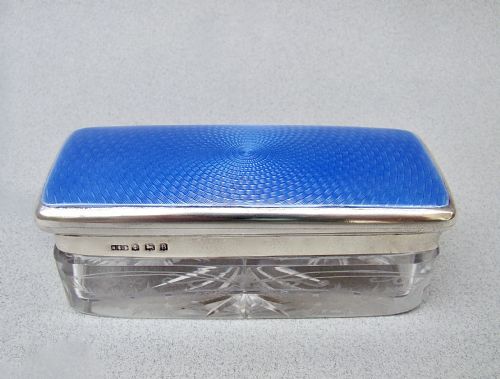
Guilloche enamel techniques involve engine-turning the silver base beneath translucent coloured enamel to produce geometric patterns. Enamellers fused powdered glass to the metal surface through high-temperature firing, resulting in durable glossy finishes in shades of blue, pink, and other tones.
Silver Enamel Powder Jar Retail Price Guide 2026
Typical asking prices for silver enamel powder jar among the pieces listed under this phrase on Sellingantiques today, from the lower quarter to the upper quarter. They describe what is for sale here now, not the wider market.
Listings feature sterling silver, cut glass, cranberry glass, and agate materials across Art Deco, Edwardian, and mid-century styles.
Assessing quality in powder jars
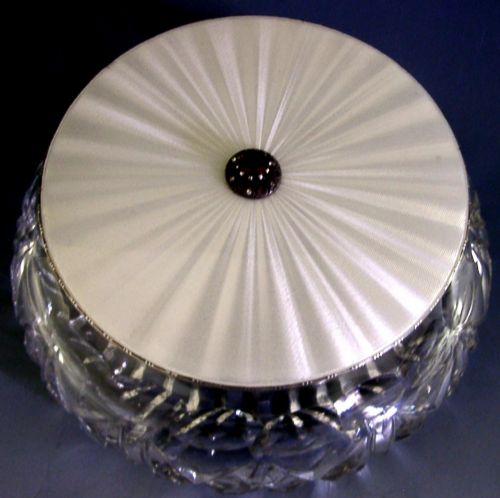
Quality rests in the crispness of the engine-turning and the clarity of the enamel work. Finer pieces display intricate guilloche patterns that catch the light evenly across the surface of the lid.
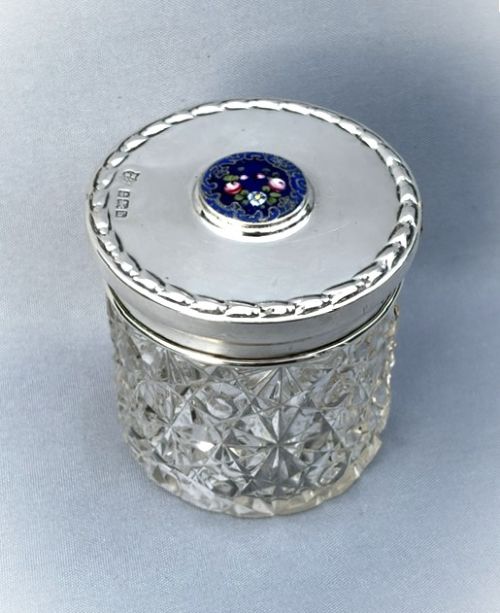
The weight and cut of the glass body also distinguish the work, with heavy cut glass and clear crystal bases marking superior examples. Well-preserved hallmarks on the sterling silver mount indicate proper assaying and origin.
Henry Clifford Davis·Elkington
The Silver Enamel Powder Jar Glossary
- Guilloche enamel
- A decorative technique where a metal surface is mechanically engraved with repetitive geometric patterns beneath translucent enamel. This method creates a shimmering moiré effect under the coloured glass surface.
- Sterling silver
- An alloy of silver containing 92.5% by mass of silver and 7.5% by mass of other metals, usually copper. This standard composition is marked with traditional hallmarks on British dressing table wares.
- Cranberry glass
- A type of red or pink glass created by adding gold chloride to the molten batch. It frequently forms the colourful body of lidded trinket boxes and powder jars.
- Cut glass
- Glassware decorated by grinding and polishing facets into the surface. This technique produces brilliant light refraction on the sides of vanity jars.
- Vanity jar
- A small lidded container used on a dressing table for cosmetics or small personal items. These pieces often feature precious metal lids paired with glass bases.
Silver Enamel Powder Jar: Frequently Asked Questions
What is a silver enamel powder jar?
A silver enamel powder jar is a dressing table container featuring a sterling silver mount and a coloured enamel lid, often paired with a glass or cut crystal base.
These vanity items were produced in large numbers during the early twentieth century for holding cosmetics and powder.
How do I date a silver enamel jar?
Dating relies on the hallmarks stamped into the sterling silver mount, which indicate the assay office, year letter, and maker's mark. Stylistic clues such as Art Deco geometric guilloche work or Edwardian motifs also point to specific decades.
The historical record shows these items appearing across the Edwardian, George V, and Art Deco periods, extending into the mid-century.
Were these jars only used for powder?
While primarily designed for face powder on a dressing table, many pieces served as general trinket boxes or lidded bowls for small personal effects.
The interchangeable nature of dressing table accessories meant owners often repurposed vanity jars for pins, rings, and other small valuables.
How should I clean the enamel and silver?
Cleaning requires gentle care to avoid scratching the delicate glass, enamel, and silver components. Warm water and mild soap on a soft cloth suffice for the exterior surfaces.
Harsh silver dips should be kept away from the enamel panels to prevent chemical damage to the fused glass surface.