


Sterling Glass Trinket Box
A sterling glass trinket box brings together the cool weight of silver and the refractive depth of worked glass to hold small treasures on a dressing table.
Sterling Glass Trinket Box
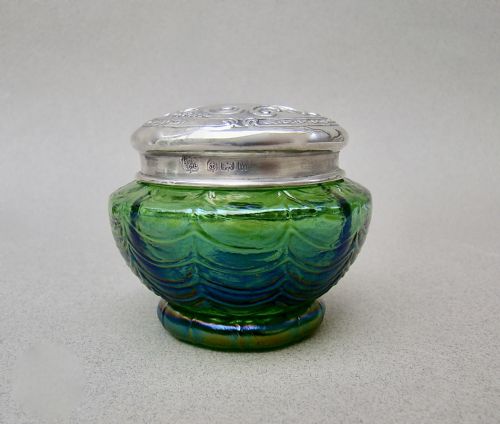
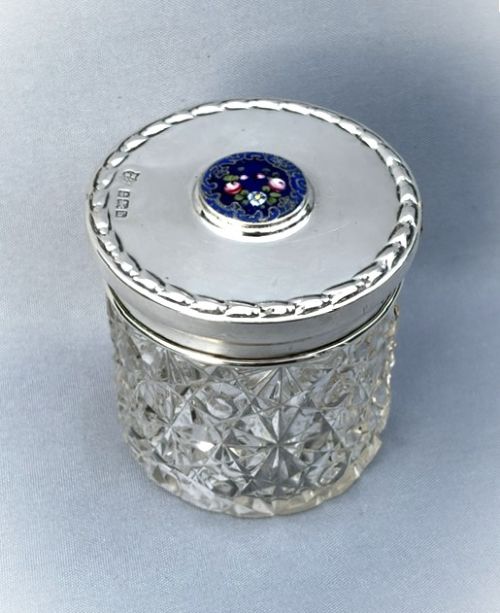
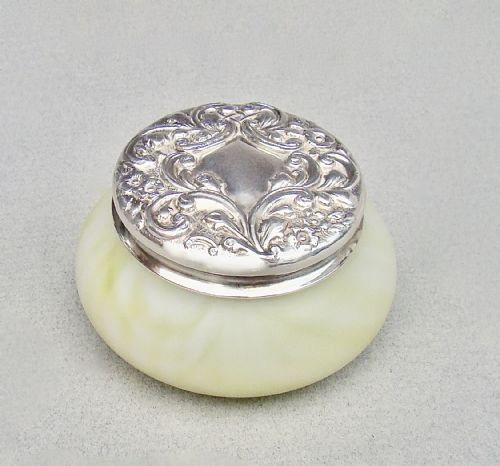
A sterling glass trinket box combines a solid silver lid or mount with a glass body, serving as a container for dressing table accessories and small personal items. When you search for a sterling glass trinket box, you encounter pieces that range from compact desktop jars to large heart-shaped containers.
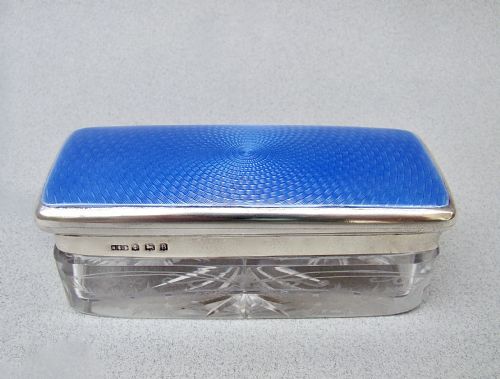
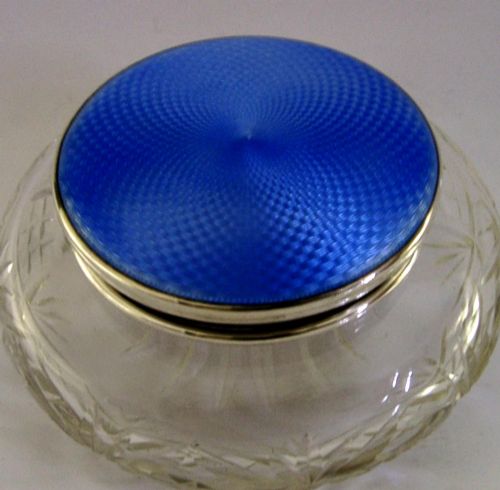
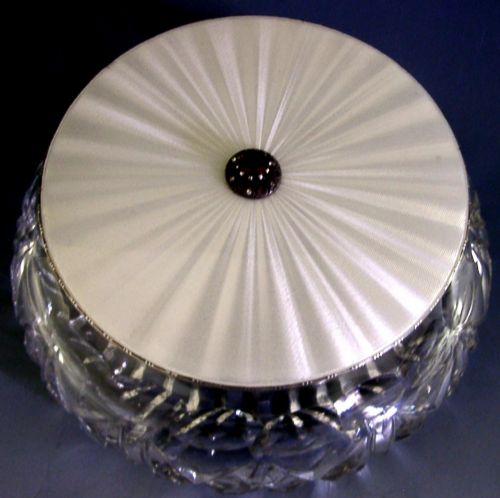
The pieces appearing here span multiple stylistic eras, from Georgian and Victorian designs through Edwardian work to Art Deco and Mid-Century Modern creations. Edwardian examples and Art Deco pieces featuring guilloche enamel surface frequently across the selection.
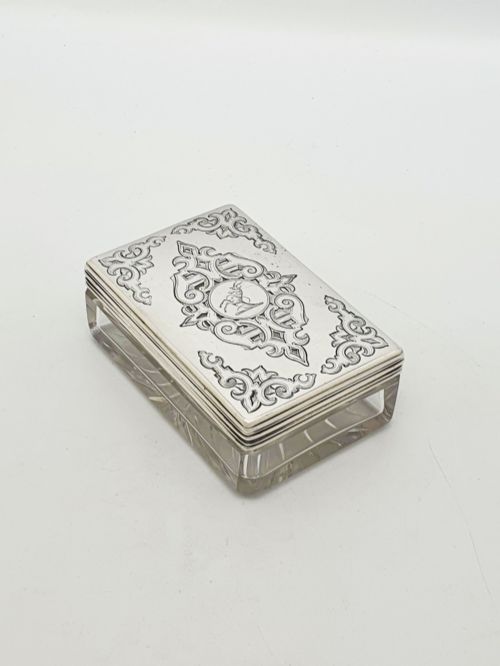
Makers and workshops across Birmingham and London produced these containers in diverse forms, including dressing table sets, vanity jars, and stamp boxes. The glass body often takes the form of cut glass, cut crystal, satin glass, or coloured glass such as cranberry.
Materials and construction
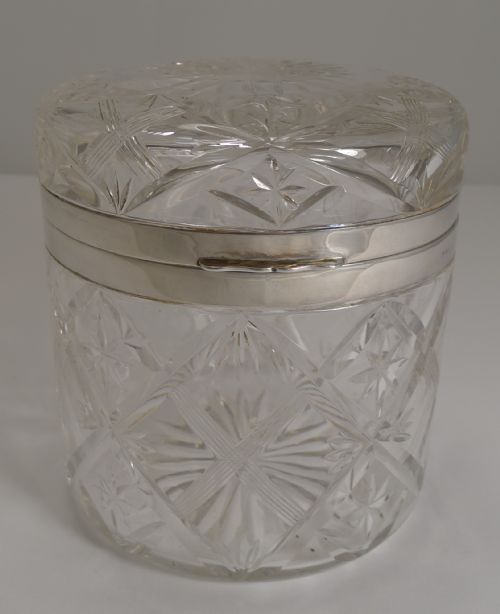
The bodies of these containers rely on glass, crystal, or satin glass, frequently shaped through heavy cutting or moulding to catch the light. Artisans then fitted these glass vessels with sterling silver mounts, collars, and hinged or lifting lids.
Surface decoration often incorporates enamel, guilloche enamel, or tortoiseshell set directly into the silver lid. Assay office hallmarks stamped into the silver provide precise markers of date and origin, frequently pointing to silversmiths working in Birmingham.
Listings feature sterling glass trinket boxes from the Georgian, Victorian, Edwardian, and Art Deco periods, alongside Mid-Century Modern examples.
Assessing quality and character
Quality in these pieces rests upon the crispness of the glass cutting and the weight of the sterling silver mount. Deeply faceted cut crystal and substantial gauge silver create a satisfying heft that lighter, pressed glass items lack.
The fineness of the enamel work further distinguishes the range, particularly where intricate guilloche patterns sit beneath translucent coloured layers. The precision of the silver hinge fitting and the crispness of the maker marks contribute to the overall execution.
A. J. Pepper & Co·Henry Clifford Davis·A. Bromet & Co·Jonathan Douglas
The Sterling Glass Trinket Box Glossary
- Guilloche enamel
- A decorative technique where a geometric pattern is engraved into the silver beneath a translucent layer of enamel. This method creates a shimmering, engine-turned effect popular in Art Deco pieces.
- Sterling silver
- An alloy consisting of silver and other metals, traditionally copper, standardised by weight to guarantee purity. British pieces display a lion passant hallmark to confirm this standard.
- Cut crystal
- High-clarity glass containing lead oxide, cut and polished with facets to maximise brilliance and weight. It forms the heavy, sparkling body of many dressing table jars.
- Satin glass
- Glass treated with an acid dip or fluoride vapour to produce a velvety, matte finish rather than a bright shine. It provides a soft contrast to polished silver mounts.
- Hallmark
- A series of official marks stamped on precious metals indicating the maker, assay office, and year of testing. These stamps allow collectors to date items accurately.
Sterling Glass Trinket Box: Frequently Asked Questions
How are these boxes dated?
Makers stamped official hallmarks directly into the sterling silver mounts, including a specific letter code that corresponds to the year of assay. Additional marks reveal the town of testing, such as the anchor for Birmingham or the leopard's head for London.
Matching these letters against standard hallmarking tables provides the exact year of manufacture for the silver lid, which typically dates the entire piece.
What is guilloche enamel?
Guilloche is a decorative technique where a machine cuts an intricate, repetitive geometric pattern into the silver surface. A translucent enamel layer is then applied over the engraving so the pattern shows through in rich colour.
This method was widely utilised during the Edwardian era and the Art Deco period on dressing table sets and small containers.
How do I care for silver and glass?
The glass body can be washed with warm soapy water, taking care to keep moisture away from any enamel or tortoiseshell panels on the lid. Silver portions benefit from gentle cleaning with a specialised microfibre cloth to remove tarnish without scratching.
Avoiding harsh liquid dips preserves the integrity of cemented joints and delicate enamel work.
Were these made as sets?
Many dressing table jars and trinket boxes originated as part of larger vanity or dressing table sets that included brushes, mirrors, and trays. Over time, individual pieces became separated and entered circulation on their own.
Some surviving groups remain intact, retaining matching crests or decorative motifs across multiple containers.