
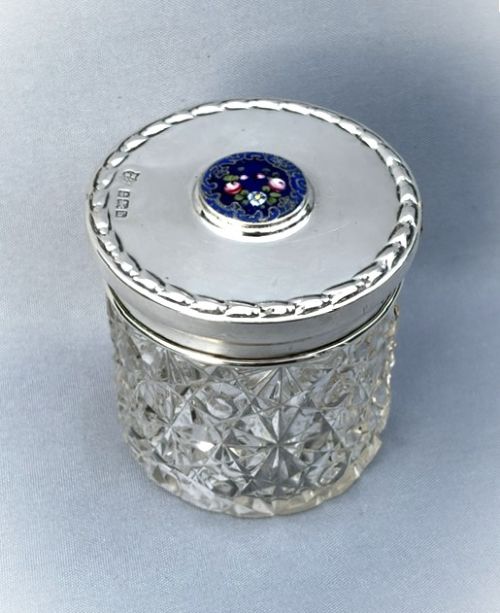
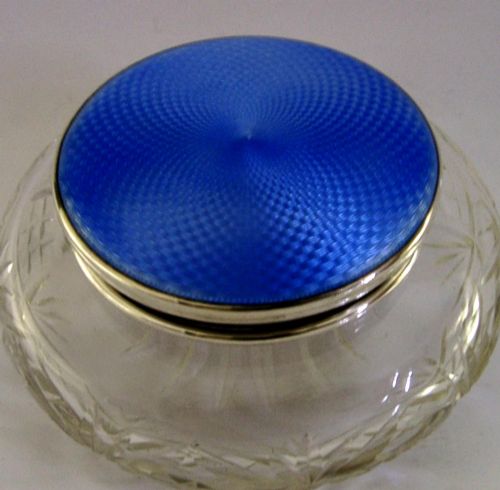
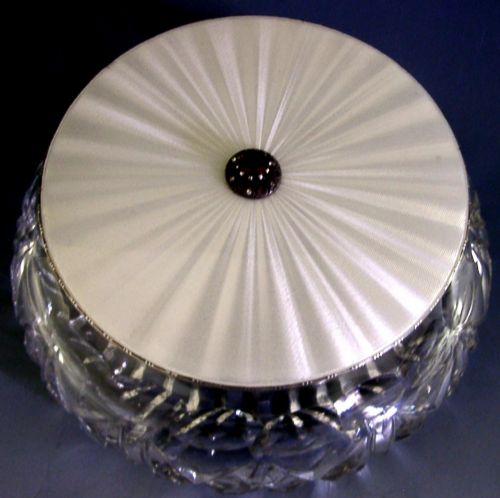
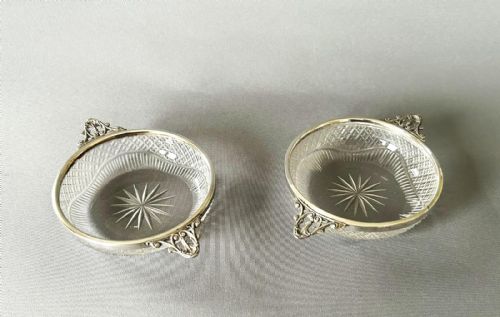


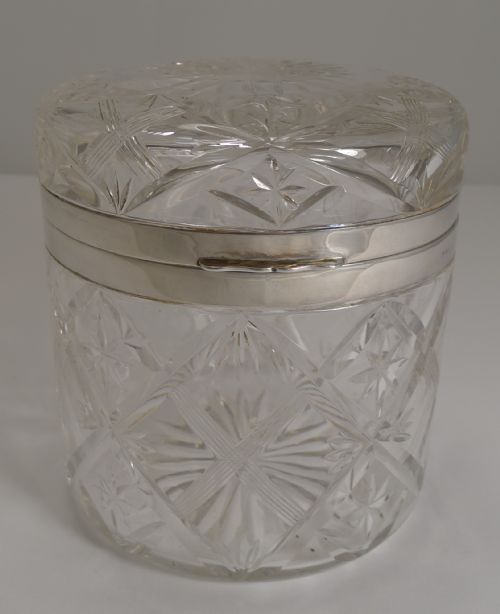


Cut Glass Vanity Bowl
A cut glass vanity bowl is a dressing table essential designed to hold powder, pins, or trinkets, combining heavy faceted glass with precious metal and enamel lids.
Cut Glass Vanity Bowl
A cut glass vanity bowl is a dressing table accessory designed to hold small personal items, powders, or pins during the Victorian, Edwardian, and mid-century periods. These lidded containers sit upon dressing tables and dressing chests as both functional vessels and decorative objects.
The pieces on this page span several decades, encompassing Victorian, Edwardian, Art Deco, and mid-century styles. You will frequently encounter heavy cut crystal and glass jars fitted with sterling silver or silver plate lids, occasionally enhanced with coloured enamel or tortoiseshell.
How they were made
The bodies of these vessels are formed from heavy glass or cut crystal, shaped by moulding or blowing before artisans cut geometric or floral patterns into the surface with rotating wheels. This heavy cutting gives the glass its characteristic weight and ability to refract light across the dressing table.
Lids and mounts are fashioned from sterling silver, often hallmarked for cities such as Birmingham, and frequently combined with vibrant enamel work or polished tortoiseshell. These metal components are engineered to fit snugly over the glass rims, securing the contents within.
The selection includes pieces from the Victorian, Edwardian, and Art Deco periods, incorporating sterling silver, tortoiseshell, and enamel.
What varies in quality
Quality in a cut glass vanity bowl rests upon the crispness of the glass cutting and the weight of the metal lid. Deeper, sharper facets on the crystal demonstrate superior craftsmanship, while thicker gauge sterling silver provides greater durability and a more substantial feel in the hand.
The inclusion of hand-painted enamel or genuine tortoiseshell elevates the piece, particularly where the colour remains vibrant and free from significant loss or heavy scratching. The precision of the fit between the silver mount and the glass body further distinguishes finer examples from standard production.
The Cut Glass Vanity Bowl Glossary
- Cut glass
- Glassware shaped and patterned by abrasive wheels, leaving sharp, light-catching facets across the surface. This technique creates the heavy, brilliant texture characteristic of dressing table jars.
- Sterling silver
- An alloy consisting of pure silver and other metals, typically copper, standardly marked to indicate its purity. It forms the primary metal for the lids and collars on higher-quality vanity boxes.
- Enamel
- A glassy substance fused to metal through firing to provide colourful decoration. It frequently appears on Art Deco and Edwardian silver lids in shades of blue, pink, and other tones.
- Tortoiseshell
- The mottled brown and amber shell of certain turtle species historically utilised for luxury box lids and vanity accessories. It is often paired with silver inlay or mounts.
- Hallmark
- A series of official marks stamped onto precious metal items to guarantee the metal standard, assay office, and year of manufacture. These marks help date the silver components of dressing table accessories.
Cut Glass Vanity Bowl: Frequently Asked Questions
What is a cut glass vanity bowl used for?
These vessels were created to sit upon a dressing table to hold loose powder, hairpins, trinkets, or small cosmetics.
Their heavy lidded design kept delicate personal items protected and contained while adding a decorative element to the dressing room.
How do I date a silver lidded glass jar?
Dating relies primarily upon the hallmarks stamped into the sterling silver lid or mount, which indicate the assay office and year letter.
Stylistic indicators such as geometric Art Deco enamel or elaborate Victorian ornamentation also help assign a period to the piece.
Are the lids removable?
The lids on these vanity bowls lift off freely from the glass body, allowing easy access to the interior contents.
Some examples feature a secure collar or hinge, but the majority rely on a precision fit between the silver rim and the glass.
How should I clean my vanity bowl?
The glass body can be washed gently in warm soapy water using a soft cloth to avoid scratching the polished facets.
Silver components require careful polishing with a specialised cloth, taking care to keep abrasive creams away from any enamel or tortoiseshell sections.