



Silver Dish Cover
A silver dish cover keeps roasts hot at the table and protects fine courses until serving.
Silver Dish Cover
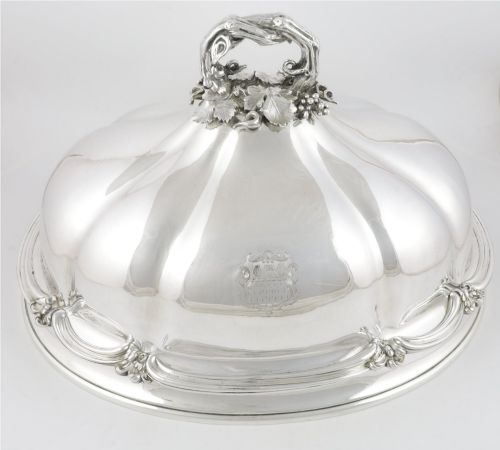
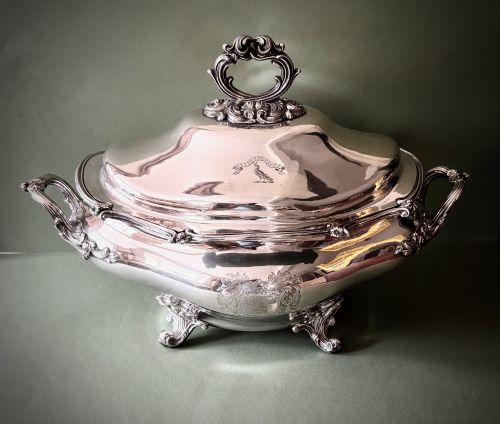
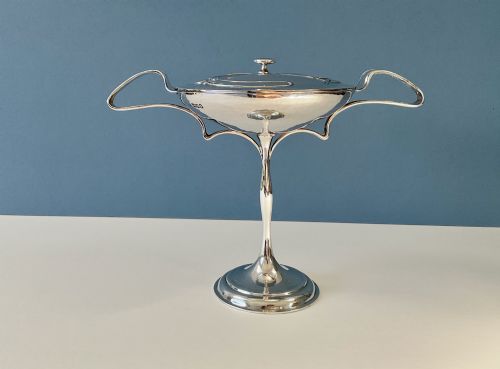
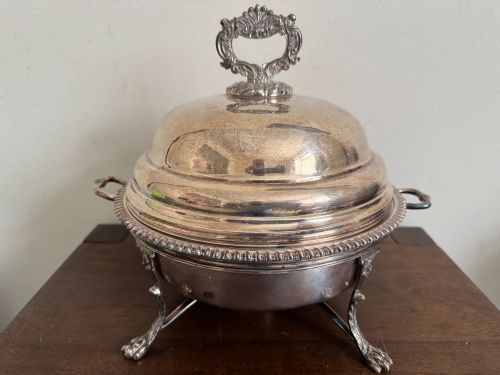
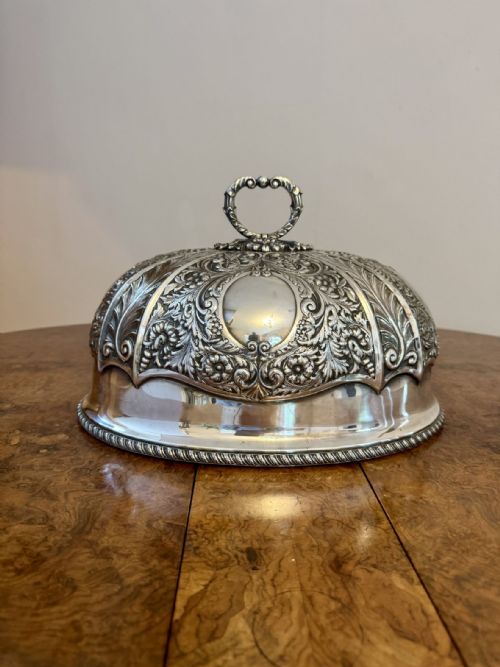
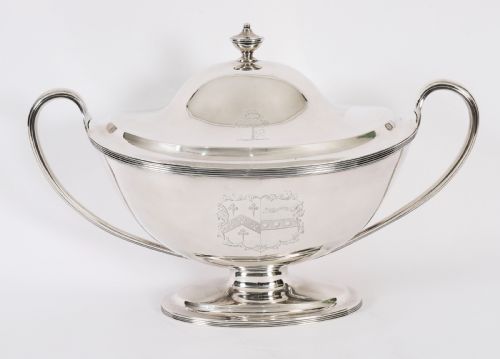
A silver dish cover protects prepared courses, roasts, and vegetables while bringing formality to dining tables. When searching for a silver dish cover, buyers encounter various forms including meat domes, entree dishes, vegetable tureens, and butter dishes.
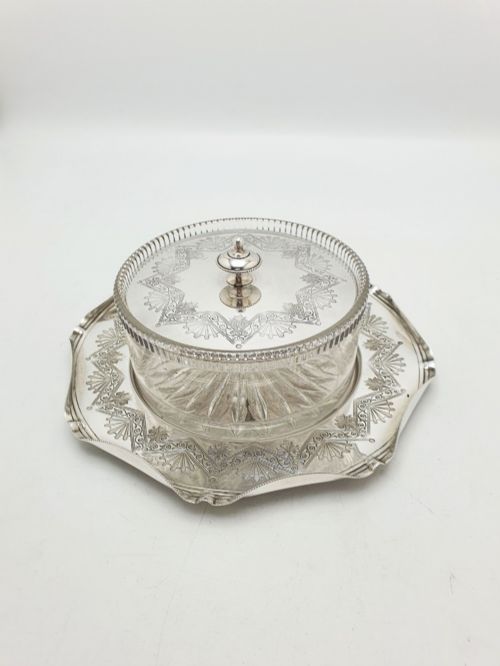
The pieces on this page span the Georgian, Victorian, and Edwardian periods, alongside later 20th-century items. Many examples incorporate liners of glass or blue glass, while others form part of larger matched sets with lampstands.
Domestic service relied heavily on these covers to transport food from kitchens to dining rooms without losing heat. Today, they function both as decorative dining accessories and practical serveware for traditional meals.
Materials and methods of construction
Silversmiths constructed solid pieces from sterling silver, hallmarked for towns such as London, while many utilitarian items utilised copper layered with silver through Old Sheffield Plate techniques. Later Victorian and Edwardian manufacturing introduced electroplated nickel silver, commonly known as EPNS or silver plate, which made substantial dome and tureen production more accessible.
Casting and raising formed the structural bodies of meat domes and entree dishes, often finished with applied decorative borders and cast handles. Piercing techniques appeared on specific fruit and butter dishes, occasionally paired with fitted glass liners.
Listings feature silver dish covers across multiple forms, including meat domes, vegetable tureens, entree dishes, and butter dishes with glass liners.
Indicators of quality
Quality rests in the weight of the metal, the crispness of cast handles, and the integrity of applied borders. Heavy-gauge sterling silver and thick Old Sheffield Plate retain their structure and plating better through centuries of polishing than thinner electroplated wares.
Maker marks from recognised silversmiths or firms indicate superior workshop standards, while matched pairs or complete sets with original lampstands and liners command greater attention from collectors.
Roberts Cadman·Henry Wilkinson·Mappin and Webb·William Grundy·Hamilton and Inches·Boulton·Daniel and Arter·Edward and John Barnard·Walker and Hall·Elkington·Finley and Taylor·Hukin and Heath·Atkin Brothers
The Silver Dish Cover Glossary
- Meat Dome
- A large, domed cover designed to fit over joints of meat on a serving platter. These pieces kept large roasts warm before carving at the table.
- Old Sheffield Plate
- An early composite material made by fusing a thin sheet of silver to a thicker copper base. This technique preceded modern electroplating.
- Entree Dish
- A shallow serving vessel with a removable lid, used for individual courses or side dishes. They frequently appear in matched pairs on dining tables.
- Tureen
- A deep, bowl-shaped vessel with a cover used for serving soups, vegetables, or sauces. Handles and matching ladles frequently accompany these forms.
- EPNS
- Electroplated nickel silver, a base metal coated in a layer of silver via an electrical process. This method became widespread during the Victorian era.
Silver Dish Cover: Frequently Asked Questions
How do I clean an antique silver dish cover?
Wash the piece gently in warm water using a mild, non-abrasive dish soap, then dry it immediately with a soft cloth. Avoid harsh chemical dips that strip away desirable patinas or damage older electroplated surfaces.
Store silver items in dry environments away from direct sunlight and rubber materials. Periodic light polishing with a specialised silver cloth maintains the surface shine without wearing down thin plating.
Can I use these covers for daily dining?
Many antique dish covers remain entirely functional for serving warm dishes during dinner parties or family meals. Solid silver and sturdy silver plate withstand regular use provided they receive proper cleaning and careful handling.
Pieces featuring delicate glass liners or thin Old Sheffield Plate benefit from more reserved handling. Using non-metal utensils prevents scratching the inner surfaces of serving dishes and tureens.
How do I distinguish Old Sheffield Plate from EPNS?
Old Sheffield Plate reveals a thin line of copper showing through where the silver layer has worn along sharp edges or high points. This fusion method creates a distinct tactile weight and appearance compared to later industrial plating.
Electroplated nickel silver usually exhibits a uniform silvery surface, and pieces often bear specific manufacturer stamps indicating electroplating. Examining the edges under magnification clarifies the underlying base metal.
What is the difference between a meat dome and an entree dish?
Meat domes feature tall, vaulted profiles designed to cover entire roasts or poultry resting on flat platters. They focus purely on heat retention and presentation for large centerpieces.
Entree dishes comprise a matching base container and lid meant for carrying specific portions of food to the table. They function as independent serving vessels rather than protective covers for separate platters.