


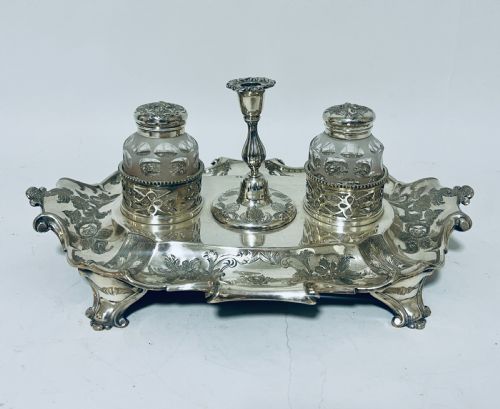


Silver Desk Tray Inkwell
A silver desk tray inkwell gathers ink bottles, pens and papers into one orderly metal or glass station on the writing table.
Silver Desk Tray Inkwell
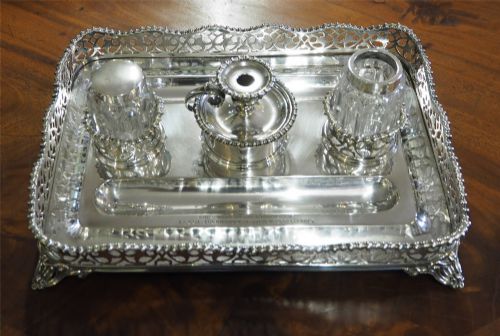
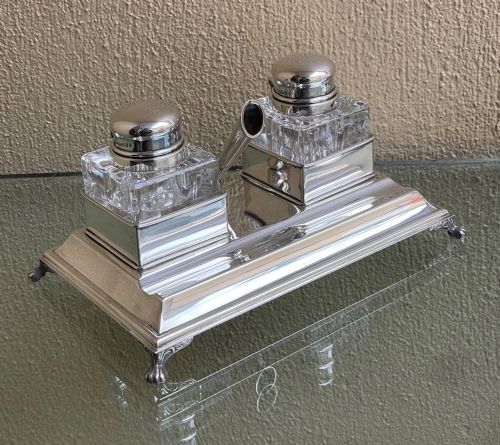
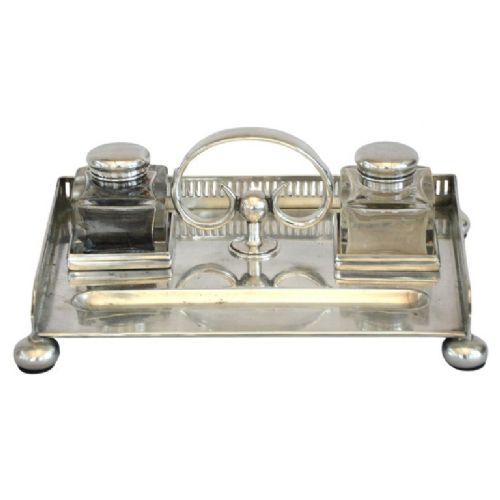
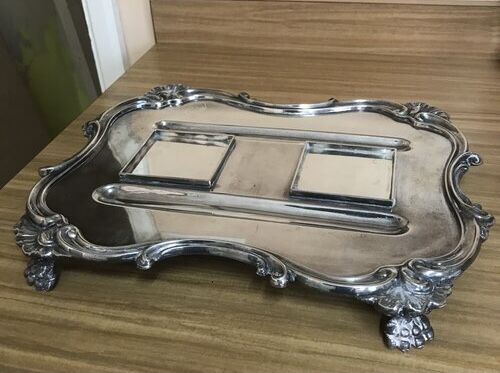
A silver desk tray inkwell brings together ink receptacles and pen rests upon a fitted base, appearing in forms from simple glass bottles mounted on silver to large desk sets with integrated chambersticks and stamp boxes. When you search for a silver desk tray inkwell, you encounter configurations designed for correspondence and ledger work, ranging from single lidded wells to double inkstands.
The pieces on this page span the Victorian and Edwardian eras alongside Regency designs, with sterling silver, silver plate, and Sheffield plate forming the principal bodies. Wood bases in oak or coromandel alongside onyx and lapis lazuli inlays also support the glass inkwells and silver mounts.
Victorian double inkstands and Elkington silver-plated desk sets represent the most frequent formats met here, often incorporating pen rests and cut glass bottles. Makers such as Robert Garrard and Daniel Holy appear among the English silversmiths and metalworkers who shaped these accessories.
Materials and construction
Silversmiths hammered and cast sterling silver or fused silver sheet onto copper bases for Sheffield plate, creating the trays, rims, and hinged lids that house the glass bottles. Cut glass and heavy moulded glass form the inkwell inserts, designed to hold fluid without leaking onto the desk surface.
Woodworkers fitted coromandel, satinwood, and oak bases with silver mounts and feet, while bronze and brass provided alternative foundations for Art Nouveau and novelty pieces such as owl figures with glass eyes.
Listings feature sterling silver, silver plate, Sheffield plate, brass, onyx, and cut glass across periods from the Regency era through to Elizabeth II.
Assessing the work
The distinction between standard commercial desk sets and exceptional pieces rests upon the weight of the metal, the clarity of the cut glass inserts, and the precision of the desk tray's joinery. Heavier gauge sterling silver and substantial Sheffield plate retain crisp chased detail and structural rigidity across feet, pen rests, and gallery rails.
Makers' marks provide a clear indicator of origin, with fully hallmarked pieces by documented firms such as Robert Garrard or Elkington demonstrating higher standards of craftsmanship than unmarked utilitarian items. The integration of decorative stones like onyx or lapis lazuli, alongside complex mechanisms for lidded wells, separates ambitious studio pieces from standard output.
Elkington·Walker And Hall·Harrods·Robert Garrard·Daniel Holy·Zimmermann·Maurice Dufrene
The Silver Desk Tray Inkwell Glossary
- Inkstand
- A complete desk accessory comprising a tray base, one or more inkwells, and often a pen rest or chamberstick. These larger pieces anchored the writing table in domestic studies and offices.
- Sheffield plate
- A material made by fusing a thin sheet of silver to a thicker copper core before rolling them together. This technique preceded modern electroplating.
- Chamberstick
- A short candlestick mounted directly onto the desk tray or inkstand. It provided the flame necessary to melt sealing wax for letters.
- Pen rest
- A shaped depression or raised bridge on the tray designed to hold quill pens or dip pens between uses. It kept wet nibs from staining the writing surface.
- Cut glass
- Glass decorated by cutting facets or patterns into the surface using a rotating wheel. It gave the inkwell inserts weight and sparkle.
Silver Desk Tray Inkwell: Frequently Asked Questions
What is the difference between an inkstand and an inkwell?
An inkwell is simply the small vessel that holds the ink, whereas an inkstand is the entire assembly that usually includes a tray, one or more inkwells, and a place to lay pens.
Inkstands provide a stable base for the writing desk, keeping the bottles from tipping and gathering related stationery items together in one spot.
How do I care for silver desk accessories?
Silver desk trays and inkwells require gentle cleaning with a soft cloth to remove dust and occasional tarnishing from the metal surfaces. Avoid abrasive polishes that can wear away thin silver plating or damage inlaid stone and wood.
Glass inserts should be removed and washed separately in warm soapy water to clear out dried ink residue before returning them to the silver mounts.
Why do some inkstands include a small candle holder?
The small candle holder, known as a chamberstick, was used to melt sealing wax when closing letters and documents. The flame provided an immediate source of heat right at the writing desk without requiring a trip to the fireplace.
These integrated candles are typically found on larger Victorian and Georgian desk stands intended for formal correspondence.
How can I tell Sheffield plate from solid silver?
Sheffield plate items lack silver hallmarks and may show faint traces of copper glowing through the silver layer where wear has occurred along high points. Solid silver pieces bear standard hallmarks indicating the town assay office, metal purity, and date letter.
Examining the underside or edges of the tray often reveals the base metal beneath plated surfaces.