



Cut Glass Silver Inkstand
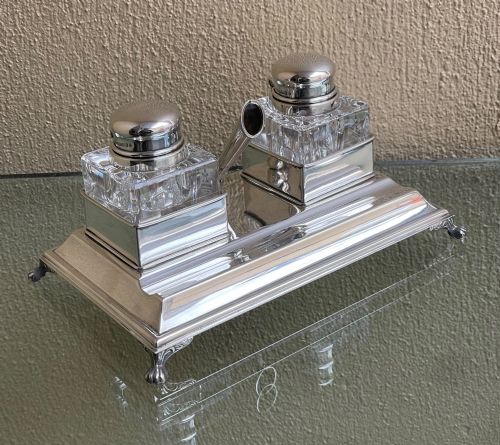
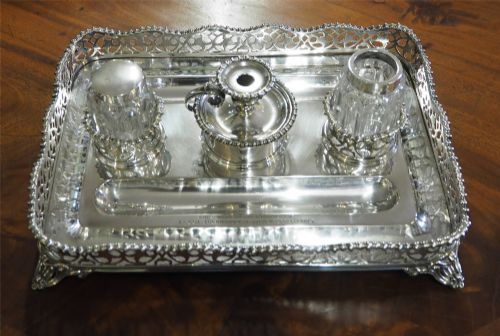
A cut glass silver inkstand combines heavy crystal bottles with precious metal mounts, offering both a functional writing accessory and a striking desk centrepiece.
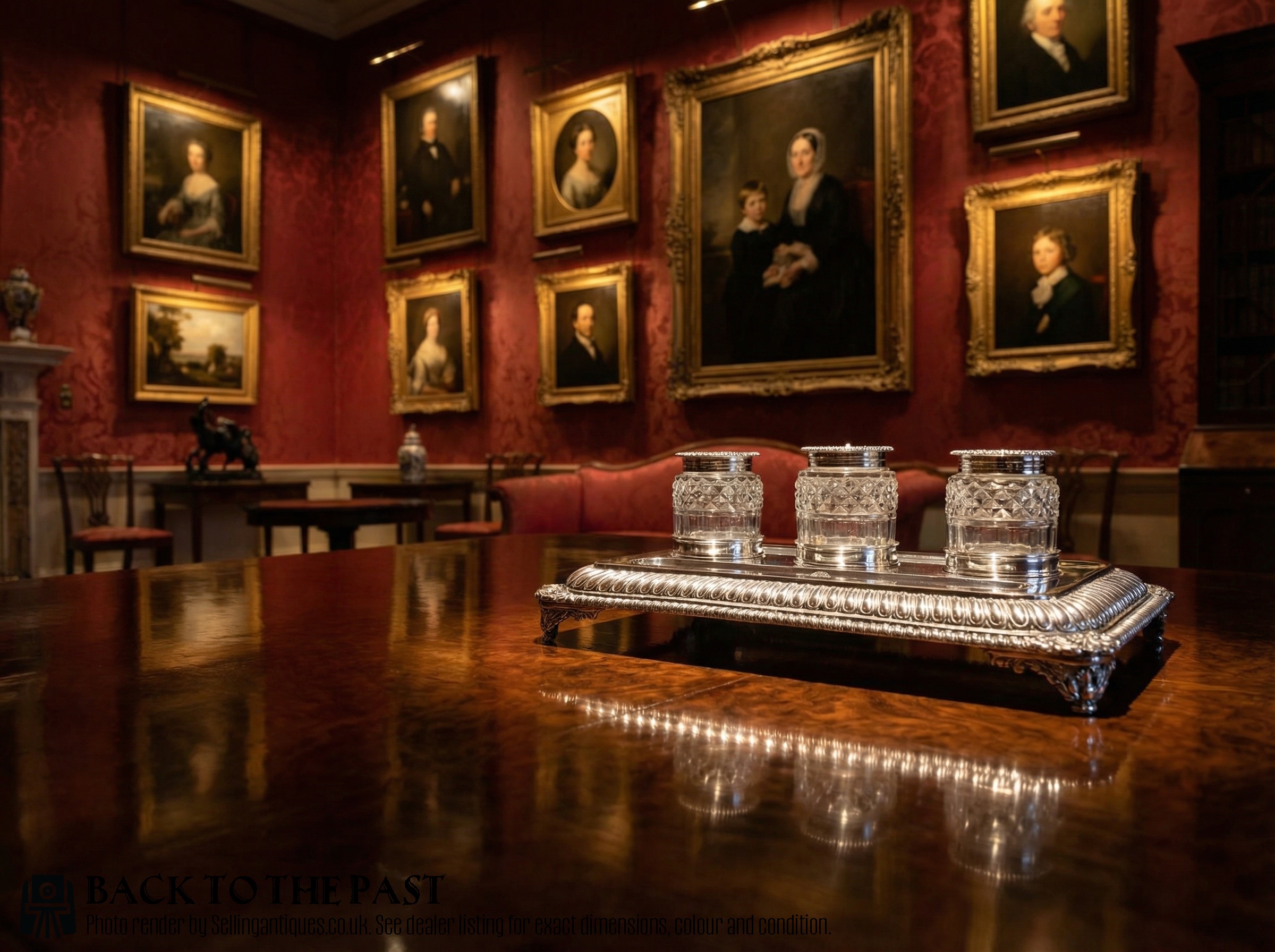
Cut Glass Silver Inkstand
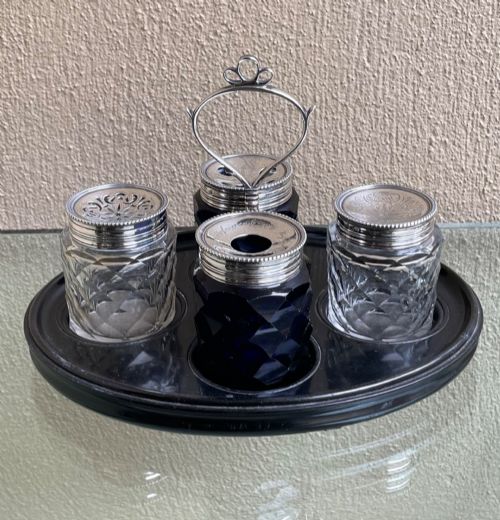
A cut glass silver inkstand serves as a desk accessory designed to hold ink and writing implements securely in place. When searching for a cut glass silver inkstand, buyers encounter various configurations, from single desktop inkwells to large stands accommodating multiple glass bottles and pen trays.
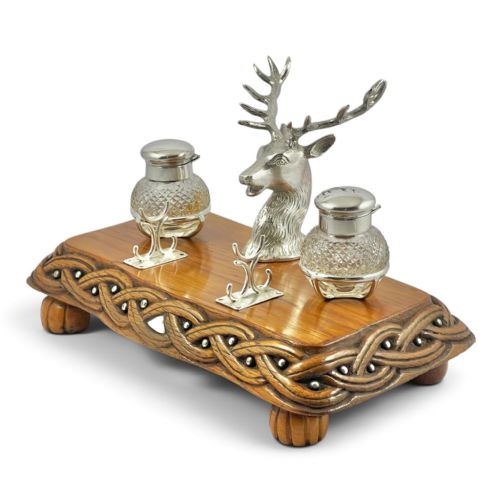
The pieces appearing on this page span several periods, with Victorian and Edwardian examples appearing frequently alongside Georgian designs and later Elizabeth II era pieces. Materials range from solid sterling silver and Sheffield plate to silver plate paired with cut glass, crystal, oak, coromandel, and ebony.
How They Were Made
Craftsmen utilised heavy glass, cutting facets into crystal inkwells and bottles to catch the light on the desktop. These glass reservoirs were then fitted with hinged sterling silver or silver-plated lids, collars, and mounts.
Bases were constructed from solid silver, Sheffield plate, or silver-plated metal, occasionally incorporating wooden elements such as oak, coromandel, and ebony for stability and contrast.
Cut Glass Silver Inkstand Retail Price Guide 2026
Typical asking prices for cut glass silver inkstand among the pieces listed under this phrase on Sellingantiques today, from the lower quarter to the upper quarter. They describe what is for sale here now, not the wider market.
Desk accessories occasionally took whimsical forms, including horn of plenty cornucopias and dolphin-footed stands.
What Varies in Quality
Quality in these pieces depends on the weight and depth of the glass cutting, alongside the thickness and purity of the silver mounts. Finer examples feature crisper facet cuts on the crystal bottles and robust, hallmarked silver components.
The overall design complexity also separates standard pieces from exceptional ones, with elaborate stands incorporating decorative elements like dolphin feet, cornucopia horns, or specialised pen trays by known makers.
Wilkinson Co·Tiffany Co·Daniel Holy·Peter Henderson Deere·Frederik Haberling
The Cut Glass Silver Inkstand Glossary
- Inkstand
- A desk stand designed to hold one or more inkwells, often including space for pens. These pieces formed an essential part of a gentleman or lady's writing desk.
- Sheffield plate
- A composite material made by fusing a thin sheet of silver to a thicker copper base. This technique preceded modern electroplating and appears on earlier desk stands.
- Standish
- An alternative historical term for a portable desk stand or inkstand. It frequently incorporates compartments for wafers, sand, and ink.
- Hallmark
- An official stamp applied to precious metals indicating the standard of purity, the assay office, and the year of manufacture. These marks help verify the age and origin of silver mounts.
- Silver plate
- A base metal coated with a thin layer of silver. Many Victorian and Edwardian desk sets utilised this method to achieve the appearance of solid silver at a lower cost.
Cut Glass Silver Inkstand: Frequently Asked Questions
What is a cut glass silver inkstand?
A cut glass silver inkstand is a desk accessory comprising heavy glass inkwells fitted with silver lids and set upon a matching metal, silver, or wooden tray. They were used to hold ink for fountain or dip pens in homes and offices.
These items ranged from simple single inkwells to elaborate double and triple desk stands with integrated pen troughs.
How were these inkstands used?
They sat upon writing desks to provide a ready supply of ink for correspondence and bookkeeping. The fitted glass bottles kept the ink contained while the metal lids helped prevent evaporation.
Many stands also featured built-in trays to rest dip pens when not in use during writing tasks.
How do I date an inkstand?
Dating is typically achieved by examining the hallmarks stamped onto the silver mounts, which indicate the assay office and year of production. Stylistic clues such as Victorian ornamentation or Edwardian proportions also help narrow down the period.
Material choices like Sheffield plate often point towards earlier nineteenth-century manufacturing techniques.
Can I still use an antique inkstand?
Many antique inkstands remain fully functional for daily use on a modern desk. Care should be taken when cleaning the glass and silver components to preserve their finish.
Some owners choose to display them as decorative items rather than filling them with modern inks.