

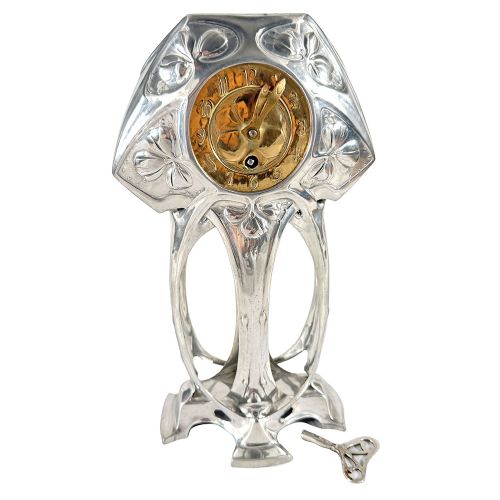
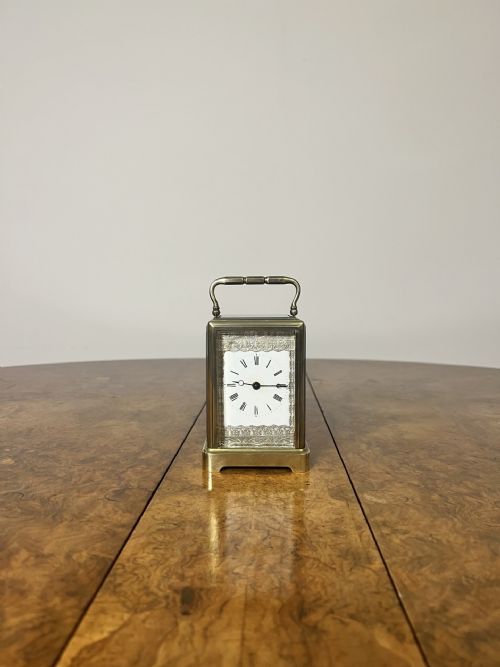

Silver Desk Clock
A silver desk clock brings refined timekeeping to a workspace, combining precious metal with practical engineering from periods such as the Edwardian era and the 1930s.
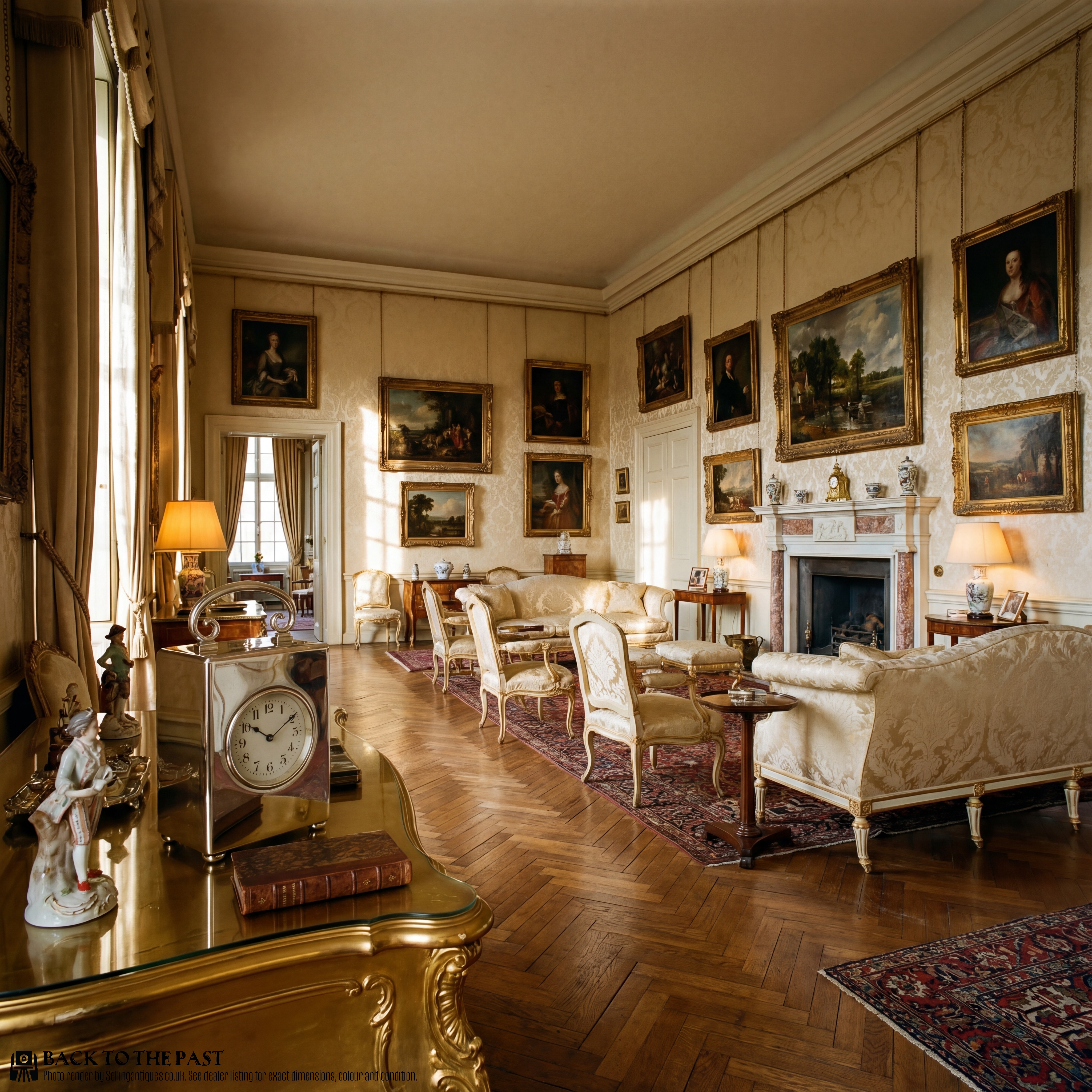
Silver Desk Clock
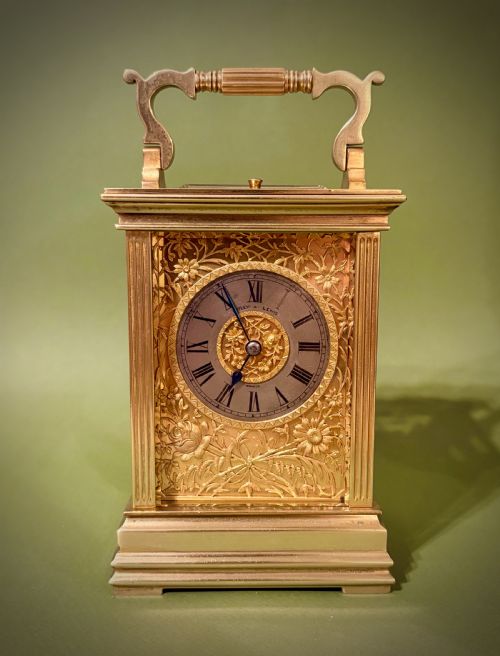
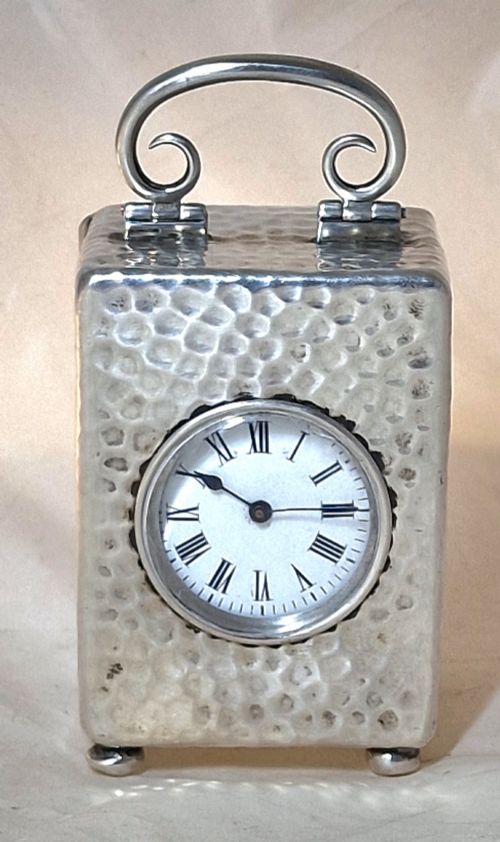
A silver desk clock is a portable timepiece designed for a study, bureau, or dressing table, frequently appearing in forms like miniature carriage clocks, easel-backed travel clocks, and solid silver cases.
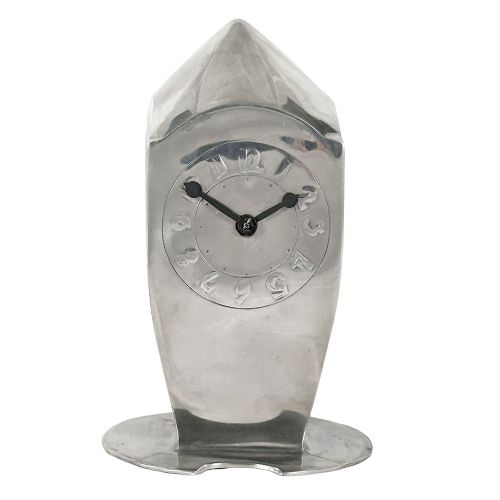
Buyers seeking this phrase encounter pieces dating from the Victorian and Edwardian periods through to Art Deco designs, with many examples originating from around 1900.
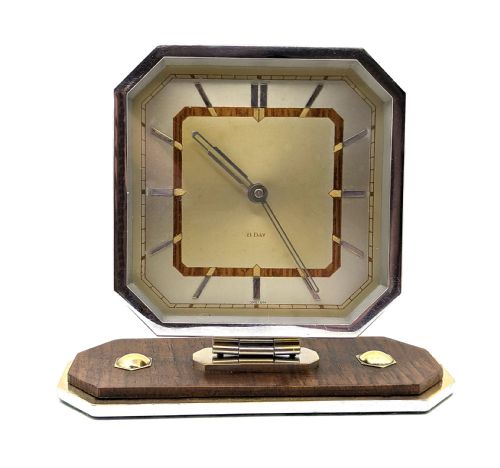
The format ranges from simple sterling silver fronted frames to complex travel clocks with eight-day movements, enclosed in housings of silver, glass, and enamel.
Materials and construction
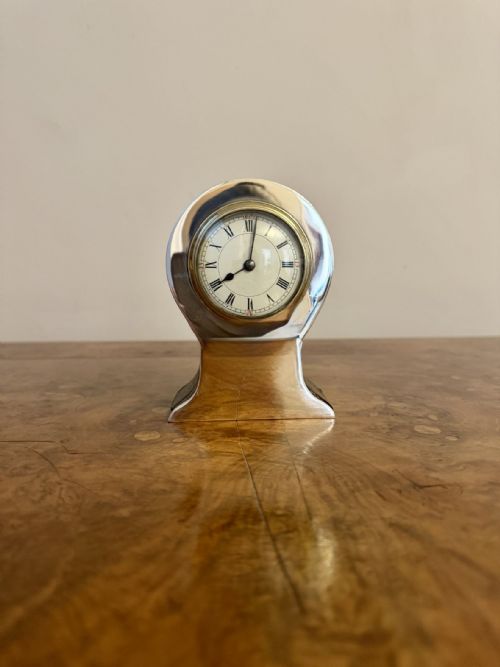
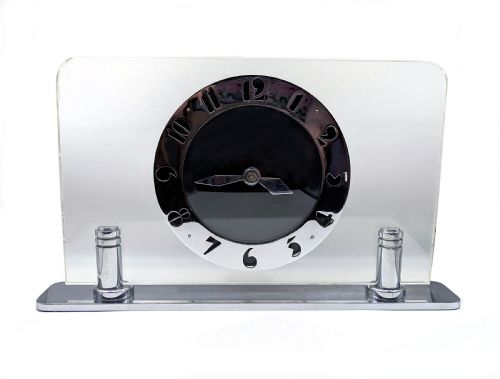
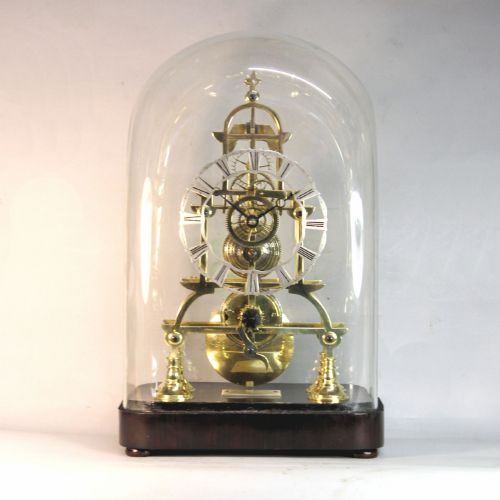
Makers constructed these clocks using solid sterling silver or silver-plated metal casings, frequently paired with bevelled glass panels to display the internal mechanism.
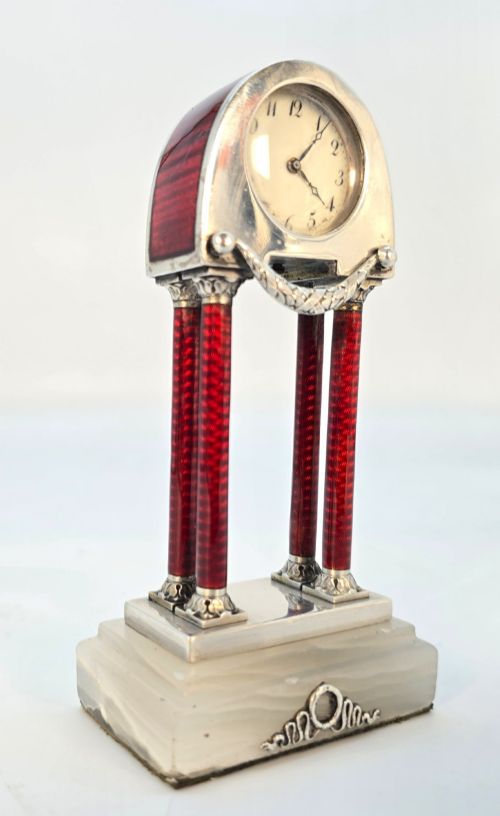
Decorative surfaces often incorporate vitreous enamel, guilloche work, or tortoiseshell inlays, particularly on pieces influenced by Art Nouveau and Art Deco aesthetics.
Silver Desk Clock Retail Price Guide 2026
Typical asking prices for silver desk clock among the pieces listed under this phrase on Sellingantiques today, from the lower quarter to the upper quarter. They describe what is for sale here now, not the wider market.
Some Edwardian desk clocks double as inkwells, ensuring a writer could check the hour while reaching for the nib.
Distinctions in quality
Quality rests in the weight and thickness of the silver casing, the crispness of hallmark stamps, and the complexity of the interior clockwork movement.
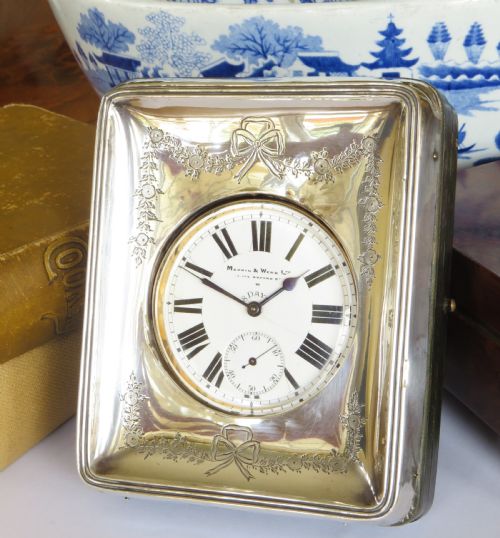
Finishing details such as hand-painted enamel dials, finely chased repousse decoration, and original fitted leather travel cases elevate a piece above standard mass-produced timepieces.
Mappin & Webb·William Comyns·Smiths Clockmakers·Archibald Knox for Liberty & Co
The Silver Desk Clock Glossary
- Carriage clock
- A small, portable spring-driven clock originally designed for travel, featuring a rectangular case with glass panels and a carrying handle on top.
- Guilloche
- An ornamental pattern produced on metal by a guilloche machine, which etches intricate geometric designs beneath a translucent layer of coloured enamel.
- Easel clock
- A timepiece supported by a hinged back prop or strut, allowing the clock face to rest securely at an angle on a flat desk surface.
- Goliath pocket watch
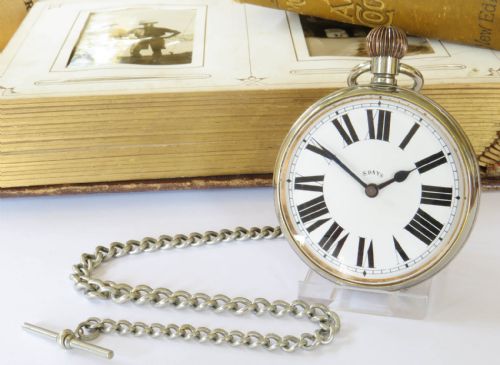
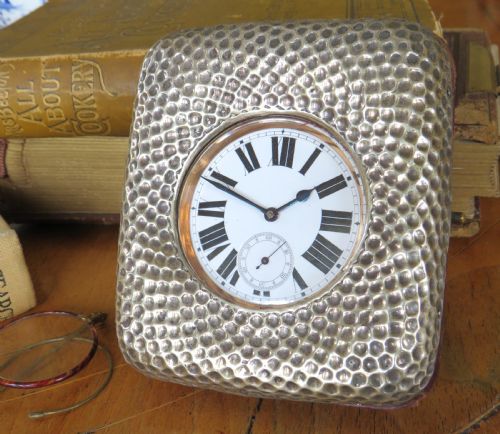
- An oversized pocket watch, often measuring several inches across, frequently housed in a dedicated silver travel case or desk stand.
- Repousse
- A metalworking technique where the silver is hammered from the reverse side to create a raised, decorative relief pattern on the front.
Silver Desk Clock: Frequently Asked Questions
How do I wind a vintage desk clock?
Most mechanical desk clocks require a small key or a manual twist of the bezel to tension the mainspring inside the movement. Care must be taken not to over-wind the mechanism, as this can strain the internal spring.
Eight-day movements need attention roughly once a week, while smaller travel clocks may require more frequent winding to keep accurate time throughout the working day.
Are silver desk clocks accurate?
Mechanical desk clocks from the Victorian, Edwardian, and Art Deco periods keep reasonable time for daily use, though they rarely match the precision of modern quartz timepieces. Regular servicing by a qualified horologist helps maintain steady timekeeping.
Variations of a few minutes per day are common in antique movements due to temperature changes and wear over the decades.
What is the difference between a travel clock and a carriage clock?
Carriage clocks generally feature a distinct handle and heavy bevelled glass casing designed for robust portability during 19th-century journeys. Travel clocks often fold into leather cases or use easel stands, emerging in various shapes during the early twentieth century.
Both types serve the same function of portable timekeeping, but their cabinetwork reflects the stylistic shifts from Victorian formality to Art Deco minimalism.