

Silver Cutlery Pair
A silver cutlery pair brings together matched implements designed for serving, resting, or dining, spanning centuries of craftsmanship from the Georgian era onwards.
Silver Cutlery Pair
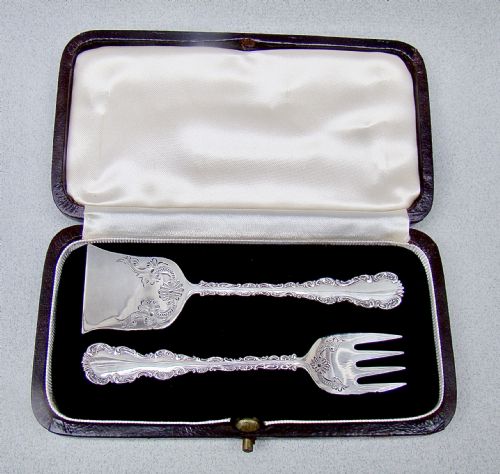
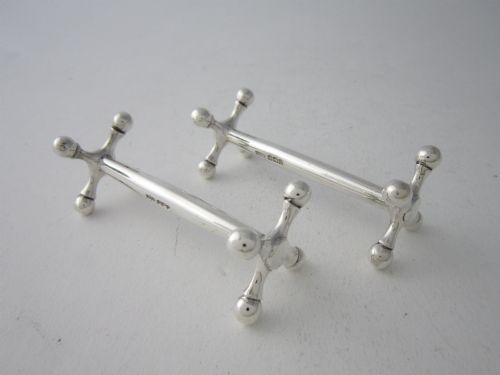
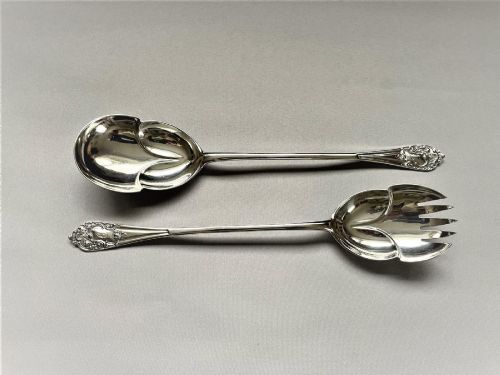
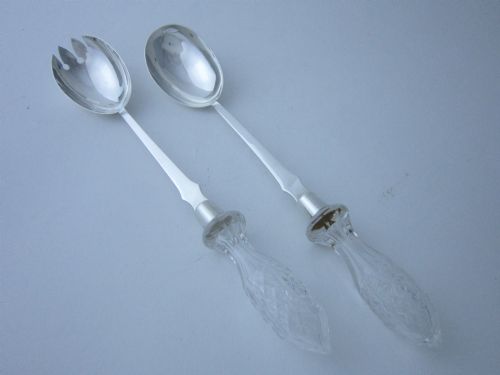
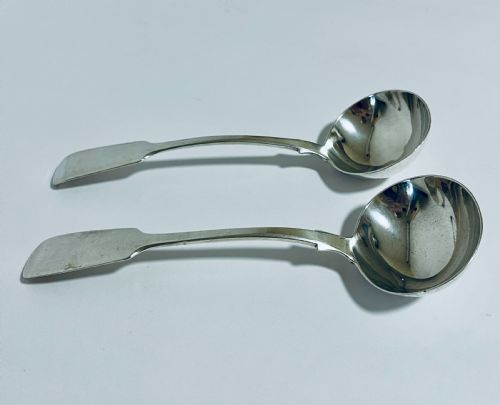
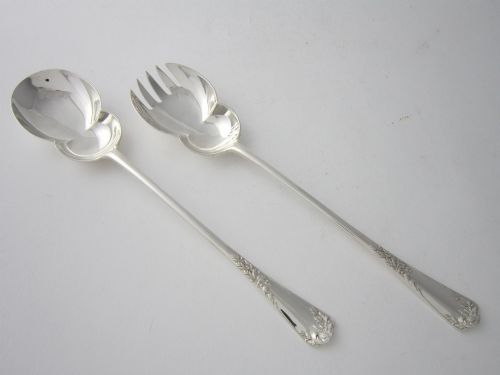
When searching for a silver cutlery pair, buyers encounter an array of matched implements intended for formal dining and serving. These selections frequently comprise serving spoons, fish servers, salad servers, fruit sets, and specialised items like knife rests or grape shears.
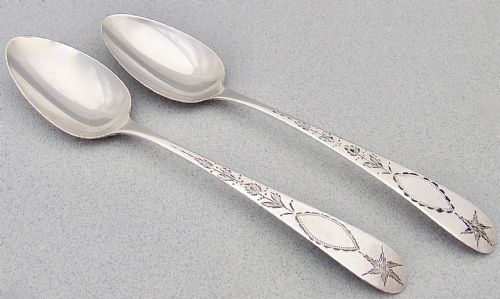
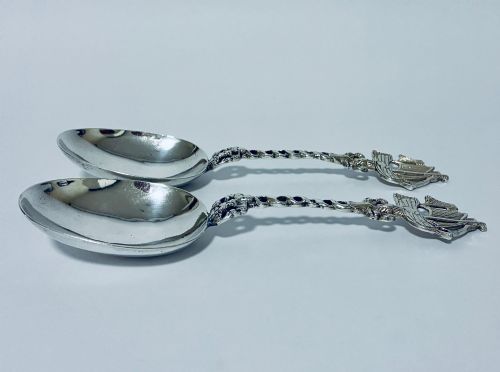
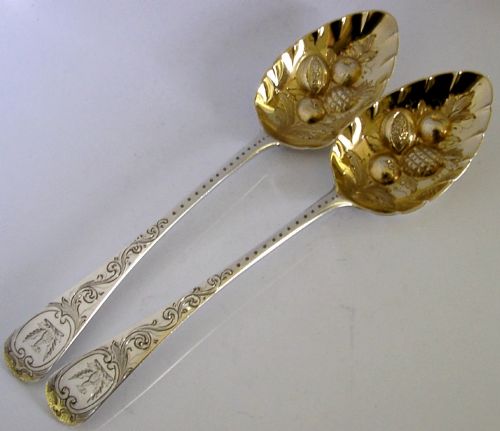
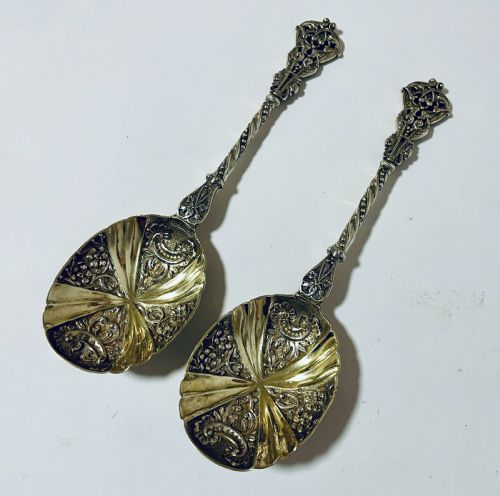
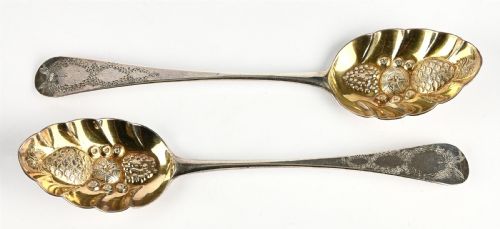
The objects on this page originate across various periods, running from late seventeenth-century tablespoons and eighteenth-century basting spoons to Victorian berry spoons and Edwardian salad servers. Dutch silver spoons and French Art Deco cake servers also appear among the offerings.
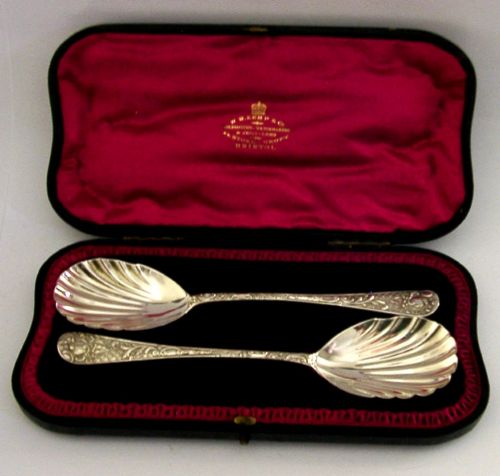
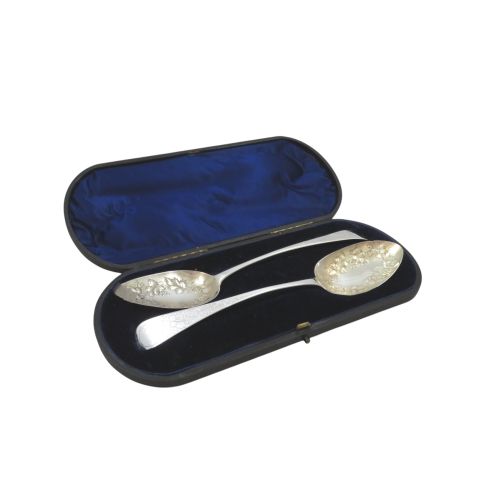
Many of these matched pairs survive alongside their original fitted cases lined in velvet, silk, satin, or leather. Such enclosures protect the metal and indicate the formal presentation typical of high-end domestic silver from the Victorian and Edwardian periods.
Materials and construction methods
Makers predominantly worked with sterling silver or silver plate, shaping the metal through casting, hammering, and hand-engraving. Regional assay offices in towns such as Sheffield, Dublin, and York applied hallmarks to verify the silver standard and year of production.
Handles introduce diverse natural textures into the manufacturing process, incorporating materials like stag antler, mother of pearl, and carved wood alongside solid metal. Specialised components such as glass bodies for knife rests or salad server bowls demonstrate combinations of cut glass and silver mounts.
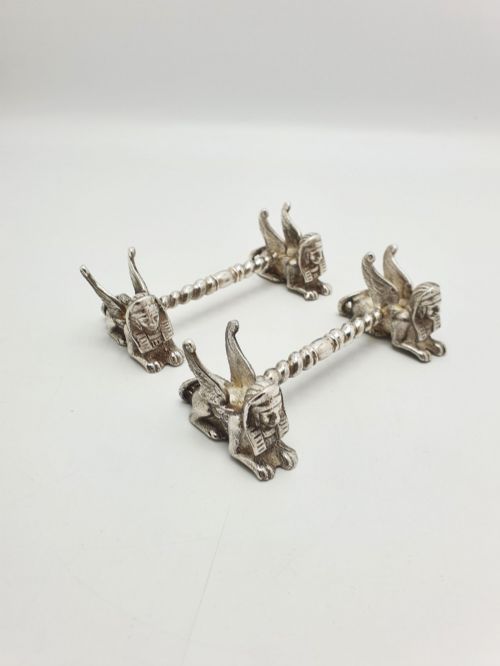
Dine alongside ancient mysteries with silver plated sphinx knife rests from eighteen-eighty.
Distinctions in craftsmanship and condition
Quality separates ordinary utility pieces from exceptional items through the crispness of chased ornamentation, engraved family crests, and sculptural details such as animal head motifs or Egyptian Revival themes. Superior examples retain deep relief work and well-balanced proportions without excessive wear to the underlying metal.
The survival of original fitted cases lined with silk or velvet significantly influences the desirability of a silver cutlery pair. Complete sets featuring matching hallmarks and intact maker marks achieve higher distinction than mismatched or heavily polished pairs.
Henry Wilkinson·John Pittar·Peter and Anne Bateman·James Tait·John Locker
The Silver Cutlery Pair Glossary
- Sterling silver
- A silver alloy containing 92.5 percent pure silver and 7.5 percent other metals, usually copper, to ensure durability. This standard metal appears across the majority of British cutlery pairs.
- Hallmark
- A series of official marks stamped onto precious metal items to indicate the maker, the assay office, the silver standard, and the date of manufacture. These symbols provide the primary method for dating antique silver.
- Rat tail
- A strengthening tongue of metal extending down the back of a spoon bowl from the handle, characteristic of late seventeenth and early eighteenth-century pieces. This feature derived from early manufacturing techniques to reinforce the joint.
- Berry spoon
- A serving spoon, often dating from the Georgian period, later retrofitted during the Victorian era with elaborate fruit and leaf chasing across the bowl. The handles frequently received additional engraving during this transformation.
Silver Cutlery Pair: Frequently Asked Questions
What is a silver cutlery pair?
A silver cutlery pair consists of two matched utensils designed for serving or dining, such as fish servers, salad spoons, or knife rests. They are usually found together in period cases.
These items range from eighteenth-century basting spoons to twentieth-century cake servers, reflecting changing dining customs across different eras.
Were all silver cutlery pairs originally cased?
Many fine serving pairs and knife rests were housed in fitted boxes lined with velvet, satin, silk, or leather to protect the metal during storage. Presentation boxes were particularly common for Victorian and Edwardian gifts.
Uncased pairs were also standard, often kept within larger household drawer canteens.
What are knife rests used for?
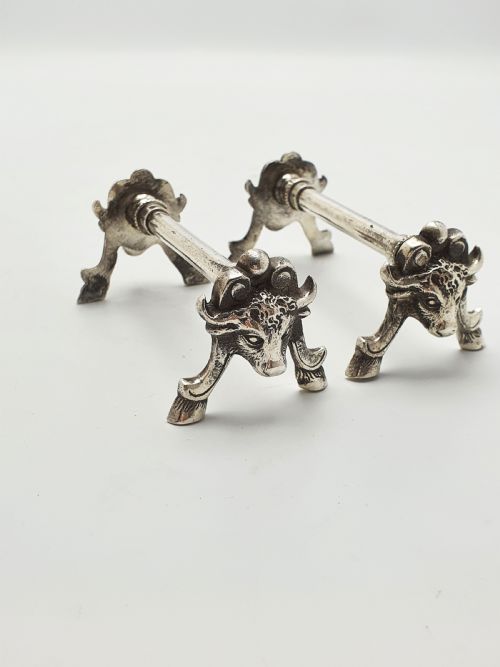
Knife rests keep carving knives and dining cutlery elevated off the tablecloth between courses to prevent staining. They sit neatly beside the plates during formal meals.
Victorian and Edwardian examples often feature decorative motifs like sphinxes, bull heads, or cut glass bars.