
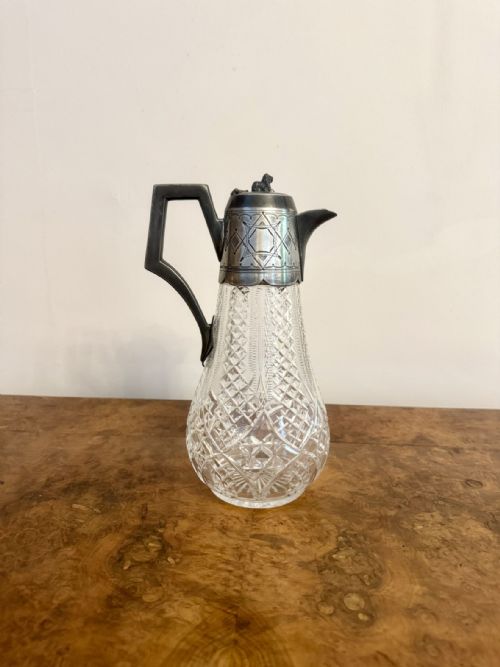
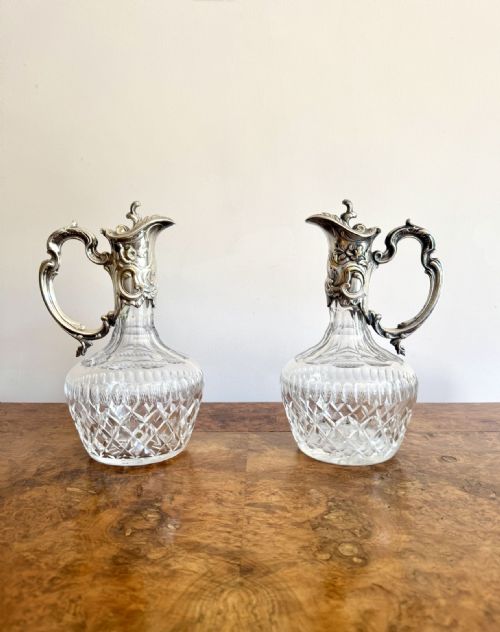


Silver Cut Crystal Jug
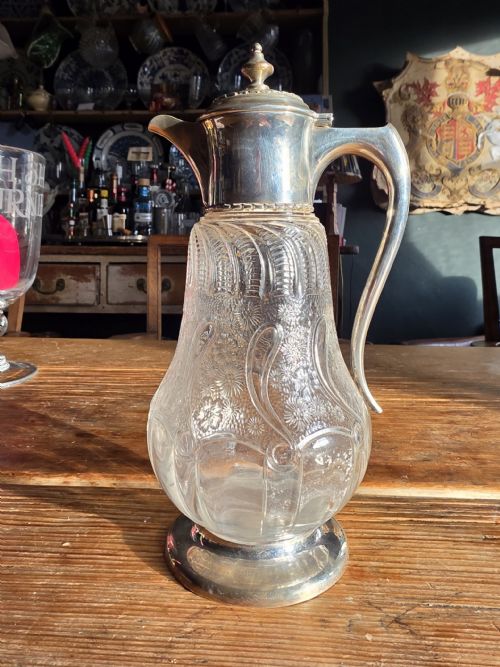
A silver cut crystal jug combines heavy, faceted glass with gleaming metal mounts to serve wine or water in style.
Silver Cut Crystal Jug
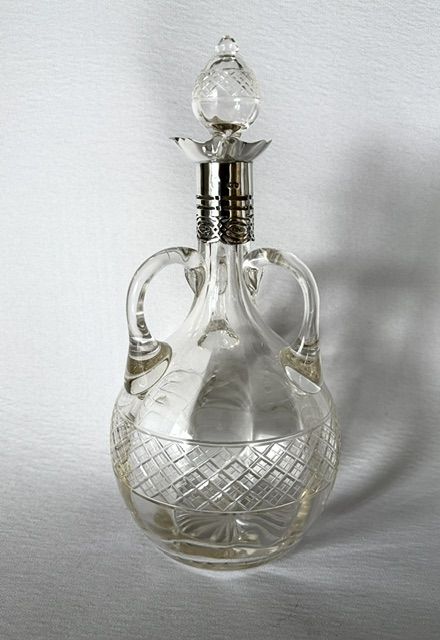
When searching for a silver cut crystal jug, buyers encounter heavy vessels designed for serving wine, claret, or water at the table. These serving pieces combine deep glass cutting with metallic mounts, handles, and hinged lids.
The most common versions on this page date from the Victorian and Edwardian eras, spanning the late nineteenth and early twentieth centuries. They appear in forms such as claret jugs, water pitchers, and cordials, reflecting formal dining traditions of the period.
Makers utilised both sterling silver and silver plate for the collars, lids, and mounts that top the glass bodies. Examples range from straightforward cylindrical wine jugs to elaborate novelty shapes like ducks.
Materials and construction
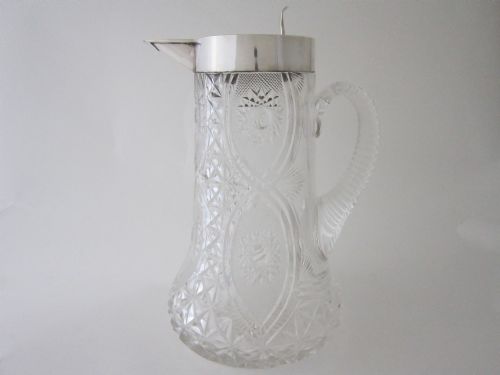
The glass bodies of these vessels were shaped by blowing or moulding before craftsmen applied deep wheel cuts or hobnail patterns to the exterior. This intensive cutting created facets that refract light and highlight the clarity of the crystal.
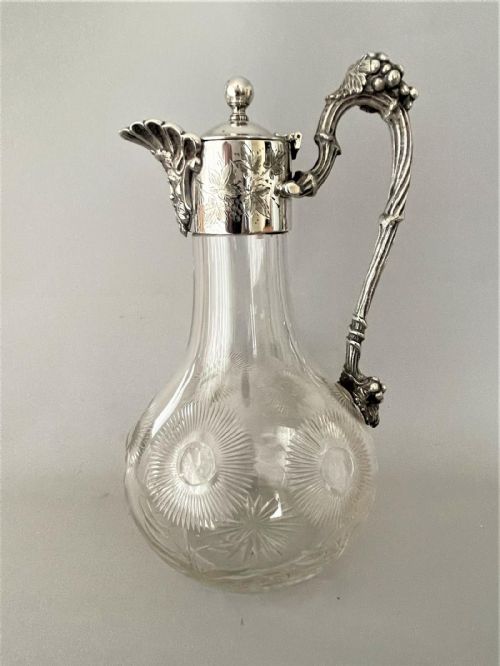
Silversmiths and metalworkers then fitted silver plate or sterling silver mounts around the necks and rims, securing hinged covers with thumbpieces. Hallmarks stamped into the metal components indicate the assay office, maker, and year of production.
A duck wearing a silver collar might pour your claret.
Factors determining quality
Quality rests heavily on the crispness and depth of the glass cutting, where sharper facets and intricate geometric patterns distinguish finer pieces from simpler moulded glass. The weight and clarity of the crystal body further contribute to the overall feel.
The execution of the metal mount also dictates value, with robust sterling silver and substantial silver plate showing superior craftsmanship over thin, pressed alternatives. Recognisable maker marks from prominent firms add distinction to the metalwork.
William Comyns·Hukin & Heath·Edgar Finley & Hugh Taylor·Elkington & Co·William Hutton·Fenton Brothers·Gorham·Tiffany
The Silver Cut Crystal Jug Glossary
- Claret jug
- A specialised vessel designed for serving red wine, typically featuring a pourer, handle, and hinged lid.
- Hobnail cut
- A raised, multi-faceted glass pattern resembling the hobnails used on traditional heavy boots.
- Hallmark
- A series of official marks stamped on precious metals indicating standard of purity, maker, and assay year.
- Silver plate
- A layer of silver fused to a base metal substrate, commonly utilised for mounts on Victorian and Edwardian serving vessels.
- Ewer
- A large pitcher with a wide spout and elaborate handle, historically used for pouring water or wine.
Silver Cut Crystal Jug: Frequently Asked Questions
What is a silver cut crystal jug used for?
These vessels were historically utilised for serving claret, dessert wine, or water during formal meals and gatherings.
The hinged lid and narrow spout helped control the pour while keeping the contents covered between uses on the dining table.
How do I clean a silver cut crystal jug?
Wash the glass body gently by hand using warm water and mild detergent, avoiding harsh abrasives that might scratch the surface.
Polish the silver mounts separately with a dedicated soft cloth and silver cream, taking care not to expose the crystal to harsh chemical dips.
How can I tell the period of a jug?
Examine the style of the glass cutting and the shape of the silver mounts, as Victorian examples often display heavy ornamentation while Edwardian pieces lean towards lighter proportions.
Assay office hallmarks stamped onto the silver components provide the most precise indication of the manufacturing date.
Are these jugs safe for serving wine?
Most antique jugs function adequately for serving wine or water, provided the interior glass remains clean and free of residue.
Buyers should inspect the vintage silver plate or sterling silver interior mounts to ensure they are suitable for holding liquids.