


Silver Creamer and Sugar
A silver creamer and sugar set brings proportion and grace to the table, pairing a matched jug and bowl for daily hospitality.
Silver Creamer and Sugar
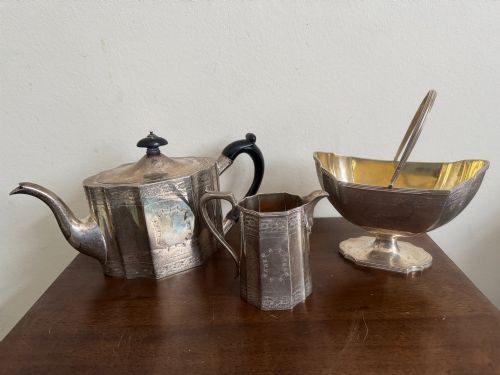
A silver creamer and sugar pairing unites a small jug for milk or cream with an open or handled bowl for sugar cubes or granules. These sets frequently appear as part of larger tea services or as matched pairs issued together for the table.
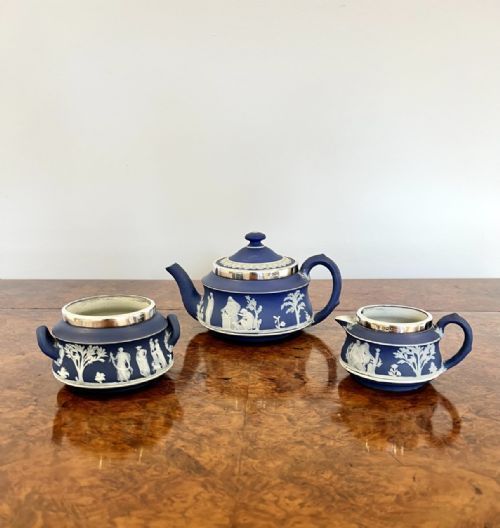
The pieces on this page emerge from several eras, ranging from early Georgian and William IV items to Victorian, Edwardian, and Art Deco designs. Makers combined sterling silver and silver plate with materials such as ebony handles and Jasperware bodies to create functional tableware.
How they were made
Silversmiths shaped sterling silver and silver plate through techniques involving hammering, casting, and soldering. Handles frequently incorporated non-conducting materials like ebony to prevent heat transfer during use.
Some composite examples integrate ceramic bodies such as Wedgwood Jasperware mounted in silver frames. Gilding appears as a thin layer of gold applied to the interior surfaces of bowls and jugs.
Some sugar bowls come paired with miniature silver tongs designed for delicate cube handling at the afternoon tea table.
What varies in quality
Subtlety of form and thickness of metal separate the finer sets from standard commercial production. Heavier gauge silver provides a solid weight in the hand and resists denting during everyday service.
Detailing in the chasing, engraving, or applied borders dictates the character of the set. Crisp casting on handles and feet shows the care taken by the original maker.
Rait·Wedgwood·Joseph Craddock·Mappin & Webb·Goldsmiths & Silversmiths Co·Robert Hennell
The Silver Creamer and Sugar Glossary
- Sterling silver
- An alloy containing 92.5 percent pure silver and 7.5 percent other metals, typically copper, chosen for durability. This standard has been used for centuries across British silver production.
- Silver plate
- A base metal, such as copper or Britannia metal, coated with a thin layer of pure silver. Techniques include Sheffield plating and electroplating.
- Jasperware
- A type of fine stoneware developed by Josiah Wedgwood, characterised by a matte unglazed surface often featuring white relief figures against a coloured ground. It frequently appears mounted in silver frames.
- Gold gilding
- The application of a thin layer of gold to the interior of silver cream jugs and sugar bowls. This process protects the silver from tarnishing when exposed to acidic contents.
- Sheffield plate
- An early method of fusing a sheet of silver to a copper ingot before rolling them into thin sheets for fabrication. Pieces made this way display characteristic sandwich edges under close inspection.
Silver Creamer and Sugar: Frequently Asked Questions
How do I clean a silver creamer and sugar?
Wash the pieces in warm soapy water using a soft cloth and dry them thoroughly with a lint-free towel. Avoid harsh abrasive dips that strip the patina from older surfaces.
Store them away from direct sunlight and damp environments to minimise tarnishing. Regular gentle wiping keeps the metal bright without wearing down the underlying silver layer.
Can I use these sets for daily tea service?
Sterling silver and sturdy silver-plated sets remain entirely functional for everyday use. Modern milk and sugar can be served directly from them just as they were a century ago.
Ensure that any pieces with ebony handles or gilt interiors are washed by hand rather than placed in a dishwasher. Careful handling preserves the joints and delicate mounts over time.
What is the difference between sterling and plated sets?
Sterling silver consists of solid precious metal marked with official assay office hallmarks indicating its purity. Silver plate applies a thin coating of silver over a base metal foundation.
Both materials yield robust tableware, but solid silver carries intrinsic metal value alongside its craftsmanship. Plated items offer the same visual elegance at a different tier of manufacture.
How do I identify the date of my set?
British sterling silver pieces generally bear hallmarks including a date letter, maker's mark, and standard purity symbols. Consulting assay office records reveals the exact year of testing.
Silver-plated items often carry manufacturer stamps or registry numbers rather than official hallmarks. Stylistic cues such as Art Deco geometric lines or Victorian floral chasing also point toward specific decades.