
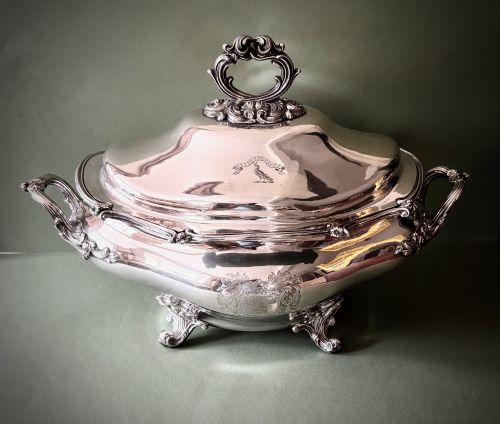
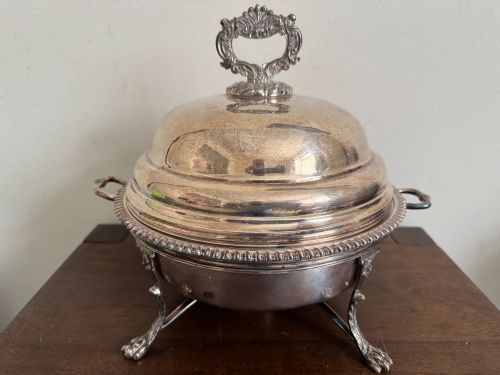


Silver Covered Vegetable Dish
A silver covered vegetable dish brings genuine presence to a dining table, offering the substantial weight and gleam that serious hosts look for.

Identifying a silver covered vegetable dish
When you search for a silver covered vegetable dish, you are looking at substantial serveware designed to keep food warm at the table. These pieces generally date from the Georgian period through to the Edwardian era and the nineteen-twenties.
The selections available here comprise rectangular and oval entree dishes alongside serving dishes and covers. You will also encounter paired serving vessels and occasional sauce tureens.
Most examples you meet on this page are silver plated, though sterling silver and nickel silver variations also appear. Styles span from George III designs to Victorian and Edwardian aesthetics.
Materials and construction
Makers utilised solid sterling silver for the finest examples, while the majority of pieces employ silver plate over a base metal. Nickel silver also appears as a durable substrate for plated serveware.
Craftsmen shaped these serving dishes and covers through careful metalworking techniques, forming heavy walls and fitted lids designed to retain heat. Handles and rims often feature applied decorative borders typical of their respective periods.
Retail Price Guide 2026
Typical UK retail prices for silver covered vegetable dish, calculated from the Sellingantiques database of over a million retail prices indexed since 2003. This retail price guide relies exclusively on Sellingantiques data; no external sources or auction records are used, so the figures do not describe the wider market.
Some covers feature removable handles so the lid can be flipped over to use as a second serving dish.
Assessing quality
The division between standard and superior pieces rests on the weight of the metal and the crispness of the applied decoration. Heavier walls and substantial covers indicate a higher grade of manufacture.
Quality also shows in the integrity of the silver plating and the precise fit of the lid upon the base. Pieces bearing clear maker marks and consistent period styling command greater appreciation.
William Grundy·Hukin and Heath
The Silver Covered Vegetable Dish Glossary
- Entrée dish
- A covered vessel designed specifically for serving side dishes or main courses at the dining table. These items usually feature a removable lid that can double as an auxiliary shallow dish.
- Silver plate
- A layer of silver bonded to a base metal such as copper or nickel silver. This method provided the rich appearance of solid silver at a more accessible cost.
- Sterling silver
- An alloy consisting of pure silver and other metals, usually copper, standardised for durability and fine silverware production. It represents the highest standard of material for these vessels.
- Nickel silver
- A copper alloy containing nickel and zinc, possessing a silvery appearance without containing actual silver. It served as a robust base metal for plated serveware.
Frequently Asked Questions
What is a silver covered vegetable dish used for?
These vessels were created to keep vegetables and other hot courses warm while presented at the dining table. The fitted cover traps heat and moisture until the food is served.
Today, they function both as practical serveware for formal dinners and as decorative display pieces on sideboards.
How do I clean a silver plated dish?
Use a specialised silver polish and a soft cloth to gently remove tarnish from the surface. Avoid harsh abrasives that can wear away the thin layer of silver plate.
Wash the dish in warm, soapy water immediately after use and dry it thoroughly with a soft lint-free towel.
How do I date an antique serving dish?
Dating relies on stylistic clues such as the form of the handles, the shape of the body, and any engraved decoration. George III, Victorian, and Edwardian designs each exhibit distinct decorative vocabularies.
Maker marks and registry numbers stamped into the metal provide further historical context for narrowing down the decade of production.