



Silver Covered Serving Dish
A silver covered serving dish brings heavy metal and gleaming plate to a formal table.
Silver Covered Serving Dish
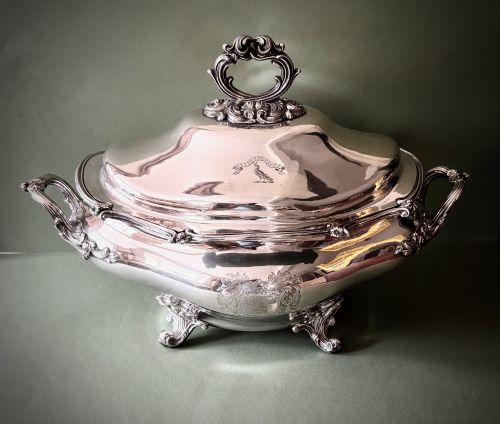
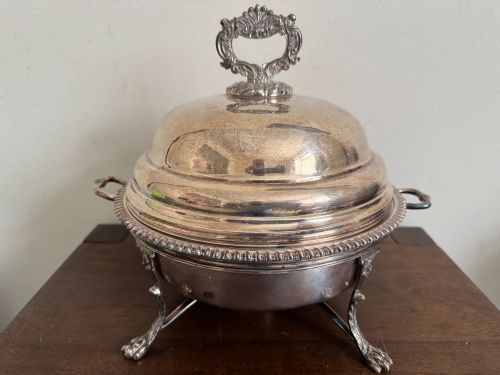
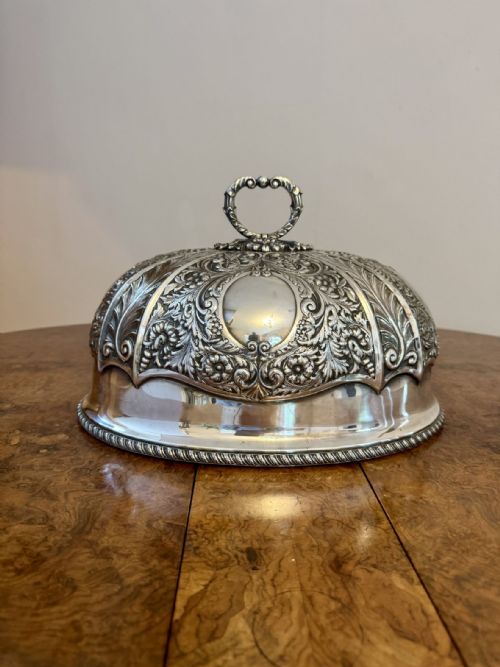
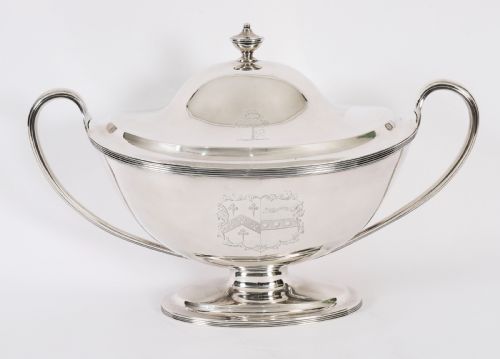
A silver covered serving dish provides a substantial vessel for bringing meat, vegetables, or soup to the table while keeping the contents warm beneath a fitted lid. These objects take the form of entree dishes, meat domes, cloches, warming dishes, and tureens spanning the Georgian, Victorian, and Edwardian periods.
The versions most commonly met on this page are silver plated rectangular and oval entree dishes from the Edwardian era, alongside Old Sheffield Plate tureens and meat domes from the nineteenth century. Sterling silver examples also appear, created by notable silversmiths for grand dining arrangements.
How they were made
Makers shaped these vessels from sterling silver, copper, Old Sheffield Plate, and various silver-plated metals including electroplated nickel silver and EPNS. Old Sheffield Plate fuses a thin layer of silver to a thicker copper core, a method visible along cut edges where the base metal shows through.
Silversmiths hammered, cast, and soldered components to build handles, lids, and bodies, employing techniques that allowed heavy metal to withstand the heat of formal dining. Silver plating later utilised electrical currents or mechanical fusion to bond the precious metal to base alloys.
Silver Covered Serving Dish Retail Price Guide 2026
Typical asking prices for silver covered serving dish among the pieces listed under this phrase on Sellingantiques today, from the lower quarter to the upper quarter. They describe what is for sale here now, not the wider market.
The listings span the Georgian, Victorian, Edwardian, and Art Deco periods, utilising materials from sterling silver to Old Sheffield Plate and EPNS.
What varies in quality
The weight of the metal and the integrity of the plating separate the better examples from ordinary utility items. Thicker silver plate resists wear from polishing and retains its reflective surface across decades of use.
Quality rests in the crispness of cast handle details, the balanced fit of the lid upon the base, and the proportional harmony of feet and borders. Maker marks stamped into the metal indicate workshops that maintained higher standards of design and construction.
William Bennett·Henry Wilkinson·Mappin and Webb·Hamilton and Inches·Daniel and Arter·Edward and John Barnard·Walker and Hall·Elkington·Matthew Linwood·William Hutton and Sons·Cresswick·Dan Holy·Christofle Gallia
The Silver Covered Serving Dish Glossary
- Entree dish
- A shallow container with a removable cover, designed for serving individual courses at a formal meal. These pieces frequently feature detachable handles so the lid can double as a second serving dish.
- Old Sheffield Plate
- An early method of fusing silver to copper before electroplating was invented. Pieces made this way show a thin silver layer over a base metal core.
- Cloche
- A bell-shaped dome cover used to keep individual plates or serving dishes warm at the table. They often include a ring handle on top for lifting.
- Tureen
- A deep, large bowl with a lid used for serving soups, stews, or boiled dishes. Many include two side handles and rest upon an integrated base or stand.
- EPNS
- Electroplated nickel silver, a common base metal composition coated in a thin layer of silver through an electrical bath. This technique became widespread during the Victorian period.
Silver Covered Serving Dish: Frequently Asked Questions
How do I clean my silver covered serving dish?
Use a soft cloth and a gentle silver polish designed to preserve thin plate or sterling surfaces. Avoid harsh abrasives that wear away the outer layer of silver.
Rinse the dish in warm water and dry it immediately with a clean cotton towel to prevent water spots from forming on the metal.
Can I use these dishes for hot food?
These vessels were originally made for keeping cooked food warm at the dining table. Many include warming compartments or hot water bases for this purpose.
Exercise caution with antique Old Sheffield Plate to avoid exposing the metal to sudden and extreme temperature shifts that could strain soldered joints.
What is the difference between sterling and plated dishes?
Sterling silver consists of solid precious metal marked with assay office stamps indicating purity. Plated pieces use a base metal core covered by a thin coating of silver.
Old Sheffield Plate uses fused copper and silver, whereas EPNS uses an electrical process to bond silver over nickel silver.
How do I identify the date of a piece?
Sterling silver items usually carry hallmarks indicating the city of assay, the maker, and a specific date letter. Silver plated pieces rely on maker marks and stylistic clues from periods like Regency or Edwardian.
Examining the manufacturing technique, such as fused copper edges or electroplated surfaces, provides a reliable timeframe for unmarked wares.