


Silver Collared Walking Stick
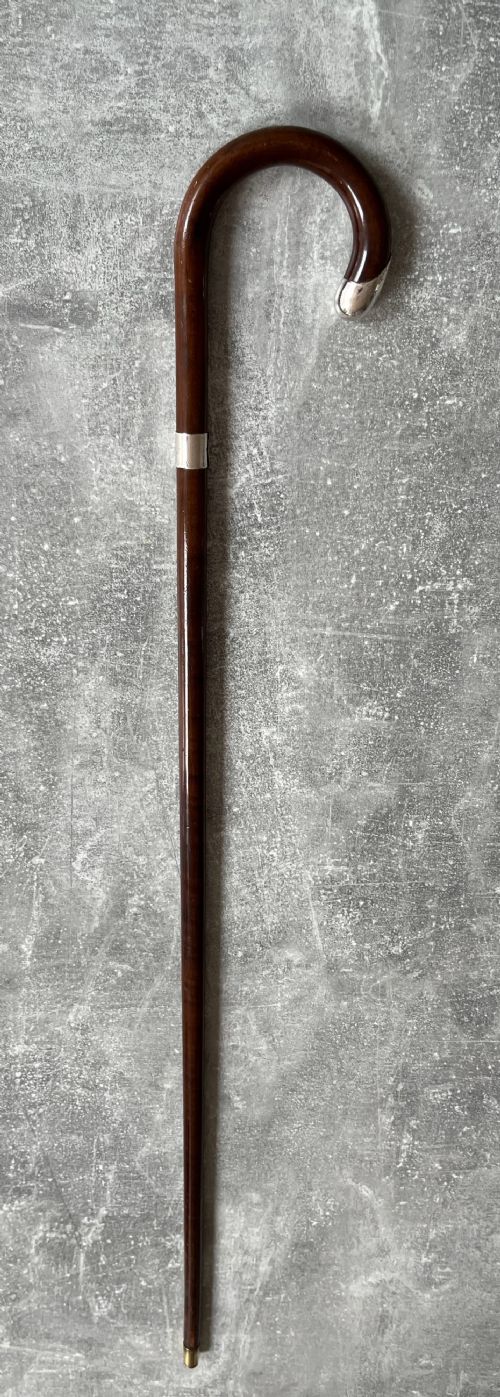
A silver collared walking stick brings together a sturdy shaft of wood or cane and a decorative metal band, offering both practical support and distinct character.
Silver Collared Walking Stick
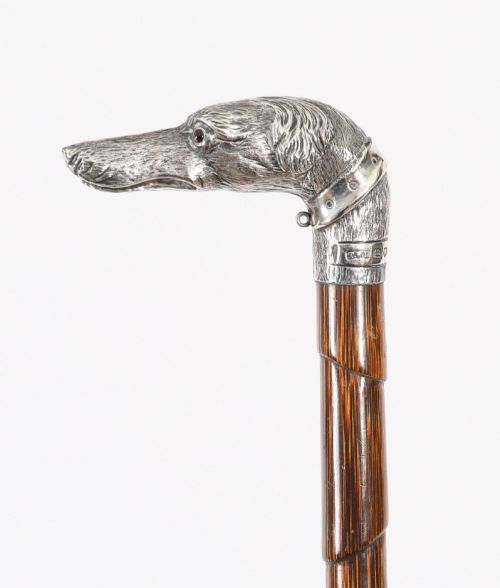
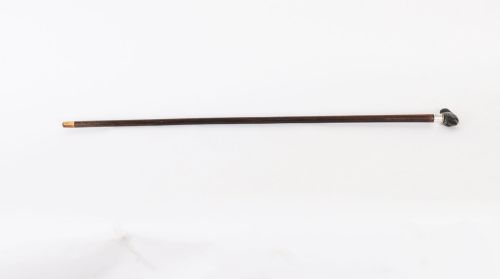
A silver collared walking stick combines functional support with decorative metalwork, frequently appearing in nineteenth-century and early twentieth-century examples. These pieces serve as both daily aids and gentlemanly accessories, incorporating shafts of hardwood, palm wood, or malacca cane.
Makers utilised various natural materials for the shafts, pairing bamboo, chestnut, ebonised wood, and hazel with silver collars that range from plain bands to inscribed mounts. The resulting objects reflect the social habits and craftsmanship of the eighteen-nineties and nineteen-twenties.
Materials and Construction
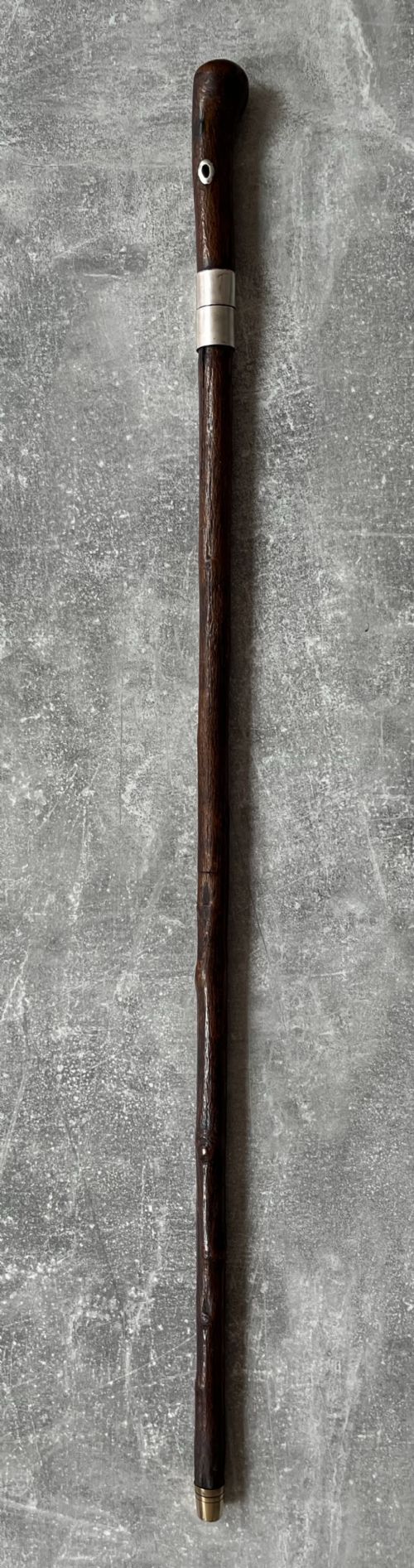
Makers constructed the shafts from dense hardwoods, bamboo, malacca cane, and palm wood, shaping each piece to ensure balance and durability during use. These shafts were frequently ebonised, polished, or left with a natural root ball and bark finish.
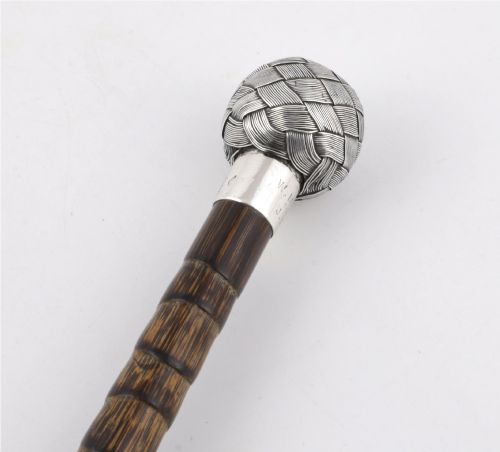
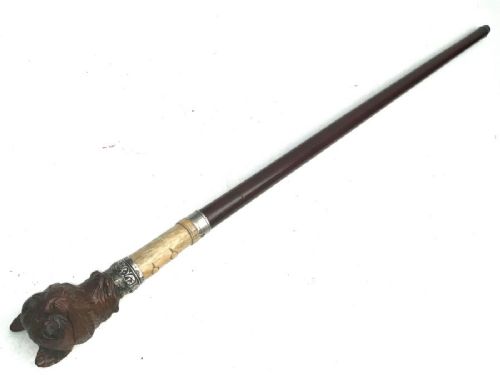
The silver collars were formed as thin bands of metal, wrapped and soldered around the upper section of the shaft to secure the handle and reinforce the timber against splitting. Silversmiths often added hallmarks, engravings, or decorative wire work to these mounts.
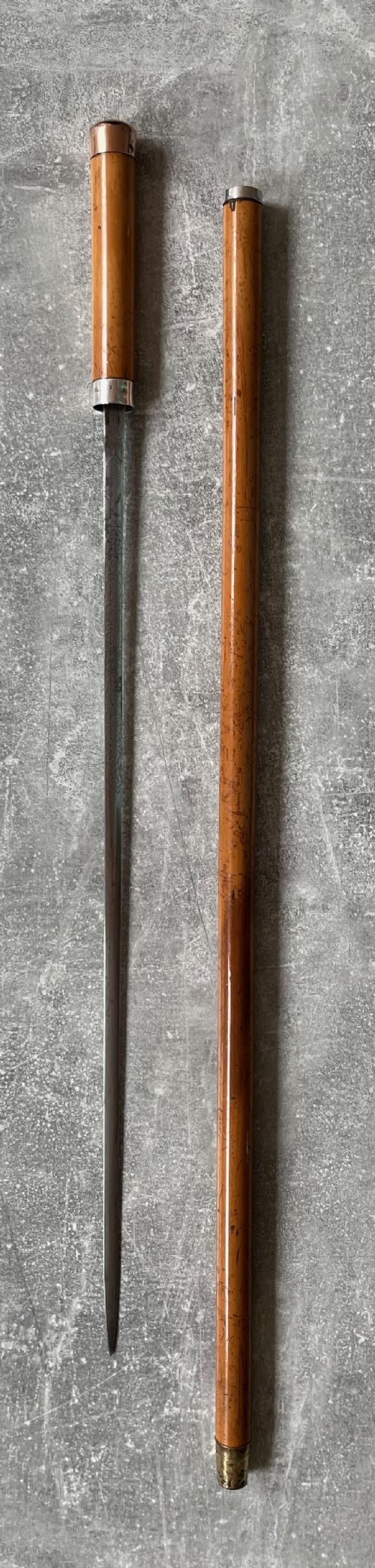
Handles were carved from horn, bone, antler, or wood, and occasionally shaped into novelty animal heads like greyhounds, parrots, or boars. Specialised canes incorporated concealed steel blades, Wilkinson blades, Toledo blades, or hidden compartments such as snuff boxes and corkscrews.
The inventory includes specialised gadget canes fitted with concealed Wilkinson blades, Toledo blades, snuff boxes, and hidden corkscrews.
Distinctions in Quality
Quality rests in the precision of the joinery between the handle, the silver collar, and the wooden shaft. Superior examples show seamless integration of the metal mount with no looseness in the fit, whereas lesser pieces display gaps or poor alignment.
The refinement of the handle carving and the substance of the silver collar differentiate standard utility pieces from high-end commissions. Detailed figural handles, crisp hallmarks, and substantial silver gauge mark the upper tier of the range.
Henry Borlase Stevens
The Silver Collared Walking Stick Glossary
- Silver collar
- A metal band of silver fitted around the upper shaft of a walking stick, often bearing hallmarks or engraved decoration. It reinforces the wood beneath the handle.
- Malacca cane
- A resilient yellowish-brown cane derived from the rattan palm, prized for its flexibility and strength. It forms the shaft in many nineteenth-century walking sticks.
- Sword stick
- A walking stick with a concealed metal blade housed inside the wooden shaft. These pieces often feature a locking mechanism or screw joint.
- Knop
- A rounded knob or ornamental handle fitted to the top of a walking stick. They are frequently carved from horn, bone, or antler.
- Ebonised
- Wood treated with a dark stain or finish to imitate ebony. This technique provides a uniform black appearance on the shaft.
Silver Collared Walking Stick: Frequently Asked Questions
What is a silver collared walking stick?
A silver collared walking stick is a functional walking aid featuring a decorative band of silver positioned directly below the handle. The silver mount serves to secure the handle to the shaft while adding a refined finish.
These pieces were produced in great numbers during the Victorian and Edwardian eras, utilising various timbers and cane types alongside horn or metal handles.
How were sword sticks concealed?
Sword sticks conceal a steel blade entirely within the hollowed interior of the wooden shaft. The handle acts as the grip for the blade when drawn.
Many examples include a threaded screw fitting or a friction catch to keep the blade secure during standard use as a walking aid.
What woods were used for the shafts?
Makers selected dense and resilient timbers capable of bearing weight and withstanding daily wear. Common choices include palm wood, rosewood, chestnut, hazel, and ebonised hardwood.
In addition to timber, malacca cane and bamboo appear frequently, valued for their natural flexibility and lightweight strength.
How do you identify Edwardian examples?
Edwardian walking sticks generally date from the early twentieth century and often display lighter mount designs and distinct hallmarking conventions. Stylistic shifts during this period also incorporated Art Deco influences in later years.
Examining the silver hallmarks provides a reliable method for dating the metal mounts to specific assay offices and years.