


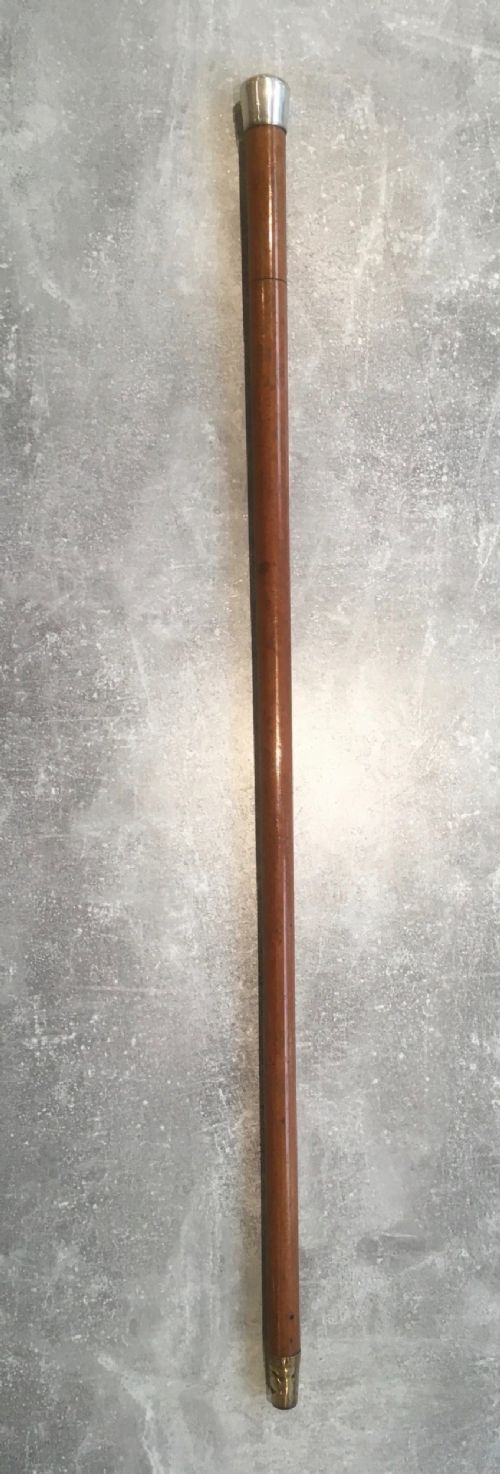
Malacca Cane Sword Stick
A malacca cane sword stick combines a sturdy walking aid with a concealed steel blade, offering discretion and Victorian craftsmanship.
Malacca Cane Sword Stick
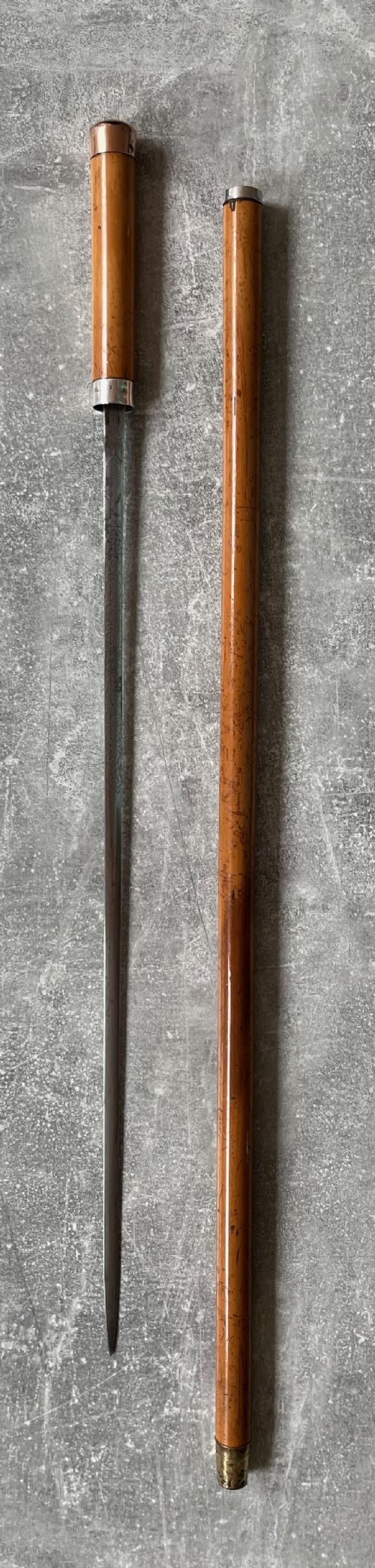
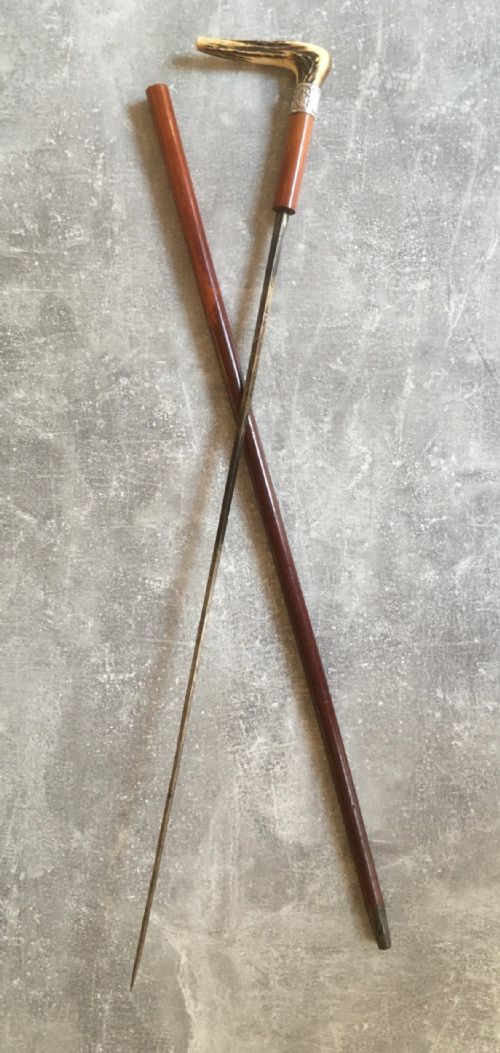
A malacca cane sword stick serves primarily as a walking aid while housing a hidden steel blade within its shaft. These pieces date across the nineteenth and early twentieth centuries, spanning the Victorian and Edwardian eras.
Makers utilised imported timber for the distinctive mottled shaft, pairing it with functional steel blades. Collectors find these pieces representing a specific period of personal defence and gentlemanly accessory design.
How they were made
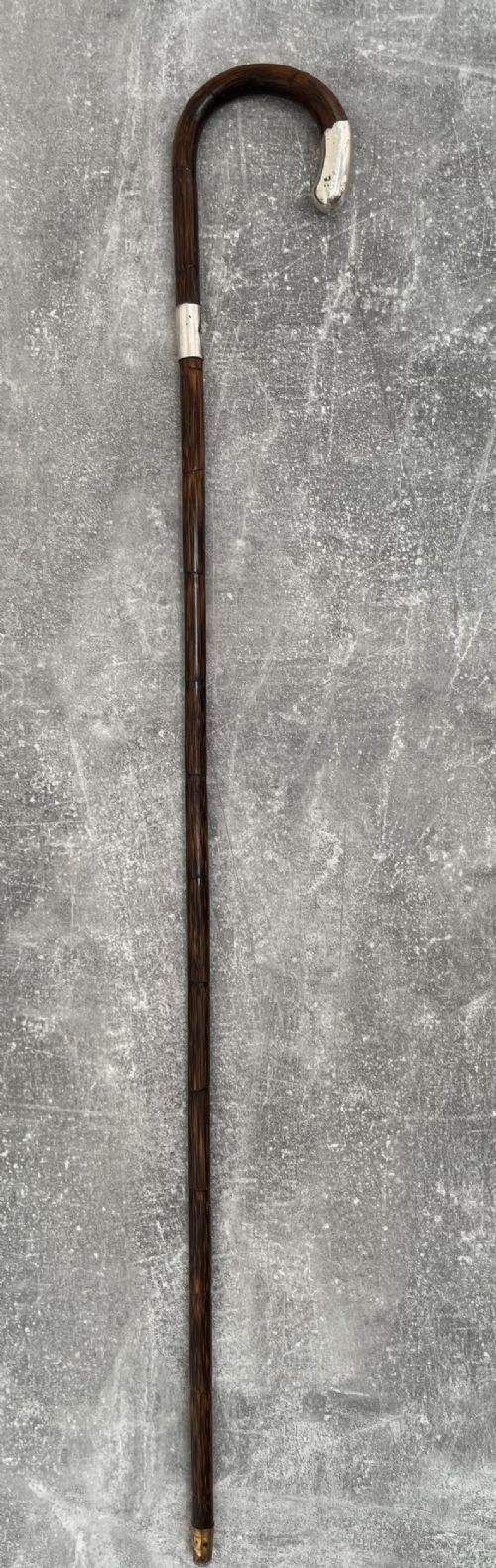
The shafts utilise natural malacca cane, recognised by its distinct node rings and mottled brown finish. Craftsmen fitted internal wooden scabbards to house the steel blades securely within the hollow bamboo.
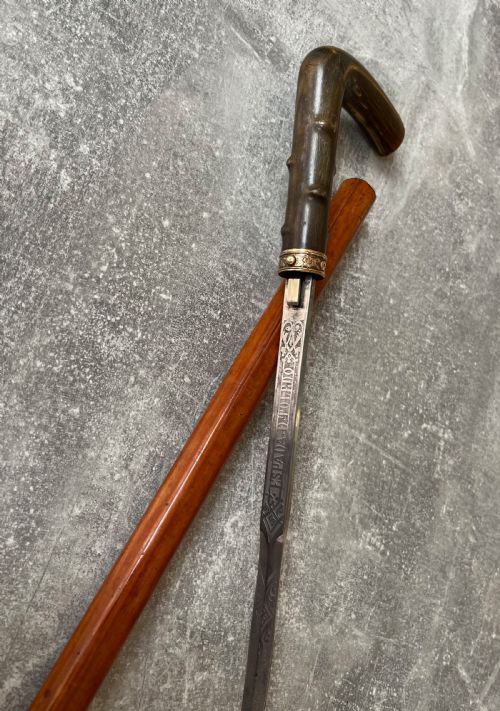
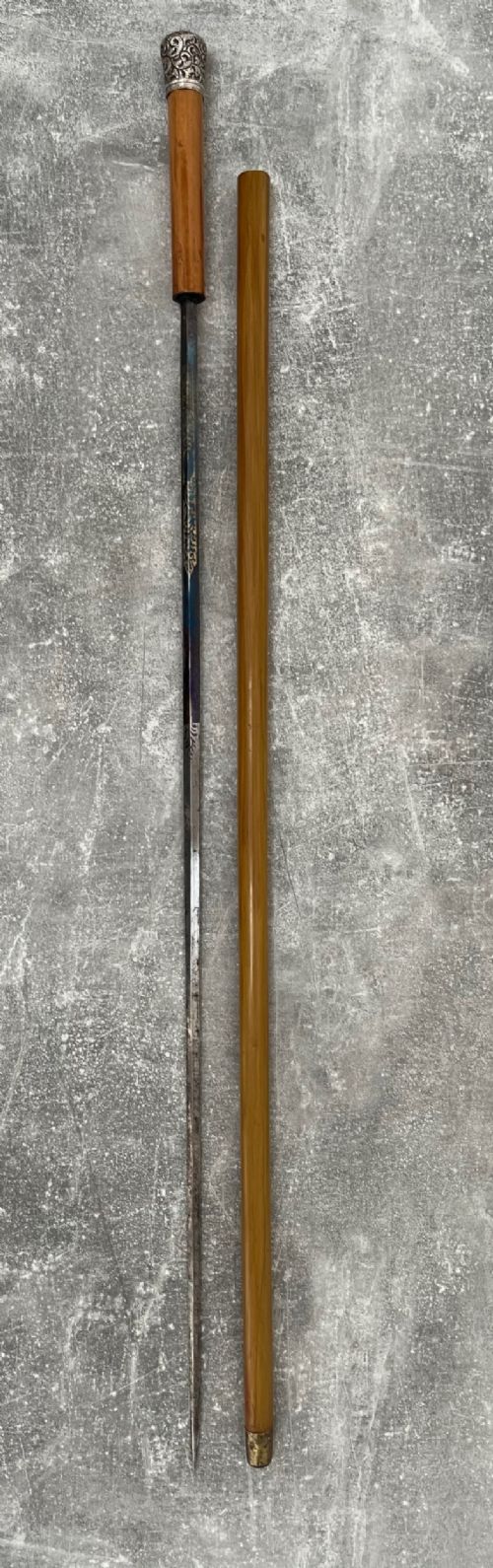
Blades forged from steel often carry etched Toledo patterns or bear maker inscriptions such as Wilkinson. Mounts and collars fashioned from silver, brass, or gold provide reinforcement at the stress points below the handle.
Handles carved from horn, bone, antler, or silver are attached to the upper section using internal pins or screws. Button release mechanisms are integrated into the collar assembly to lock the blade safely inside the cane.
A discreet button release transforms an ordinary afternoon stroll into an unexpected encounter with Victorian espionage gear.
What varies in quality
Quality rests heavily upon the origin and execution of the steel blade housed within the shaft. Etched Toledo blades or signed Wilkinson examples demonstrate superior forge work compared to unmarked counterparts.
The choice of handle material and metal mounts dictates the refinement of the piece. Solid silver repousse knops and gold components elevate an ordinary walking aid into a decorative luxury item.
The condition and straightness of the malacca cane itself affect the overall integrity. Seamless closure between the handle collar and the shaft indicates careful historical assembly.
Wilkinson
The Malacca Cane Sword Stick Glossary
- Malacca
- A type of rattan cane originating from Southeast Asia, prized for its strength and mottled brown skin. It forms the flexible yet sturdy body of the stick.
- Toledo blade
- A steel blade produced in Toledo, Spain, renowned historically for its tempering and flexibility. These blades frequently feature fine etched ornamentation.
- Knop
- A rounded handle or ornamental knob at the top of a walking stick. They are commonly formed from horn, bone, or silver.
- Repoussé
- A metalworking technique where the silver or gold mount is hammered into relief from the reverse side. This creates decorative floral or geometric patterns around the collar.
- Collar
- A metal band fitted immediately below the handle to prevent the cane from splitting. It often conceals the release button for the hidden blade.
Malacca Cane Sword Stick: Frequently Asked Questions
How do you release the hidden blade?
Most examples utilise a concealed button release mechanism located near the collar just beneath the handle. Pressing this internal catch disengages the locking mechanism, allowing the blade to slide smoothly out of the cane shaft.
Owners should handle the release with care to avoid sudden movement, ensuring the blade remains secure during everyday walking use.
What materials make up the handles?
Handles are fashioned from a variety of natural substances including horn, bone, antler, and solid silver. Crook shapes and rounded knops are the most common configurations found on these pieces.
Metal mounts in silver or gold are frequently added to reinforce the junction where the handle meets the malacca shaft.
How can you date a sword stick?
Dating relies heavily on hallmarks stamped onto silver collars, along with specific construction styles associated with the Victorian and Edwardian periods. Pieces marked with London assay stamps or specific years provide a precise timeline.
Blade etchings and the choice of handle materials also offer strong chronological clues for distinguishing nineteenth-century examples from later ones.
Were these used for self defence?
Gentlemen during the Victorian era carried these items primarily as fashionable walking aids that offered personal protection in urban environments. The concealed steel blade provided a discreet deterrent against potential threats.
Over time, the dual purpose evolved into a collector interest, blending utilitarian defence items with fine decorative craftsmanship.