
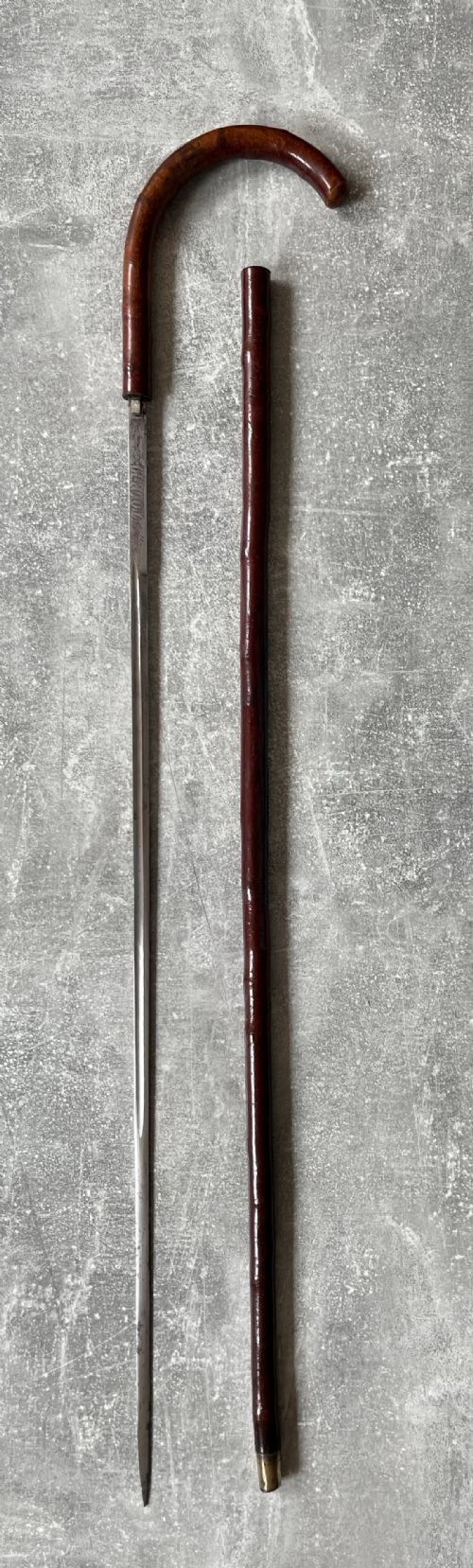
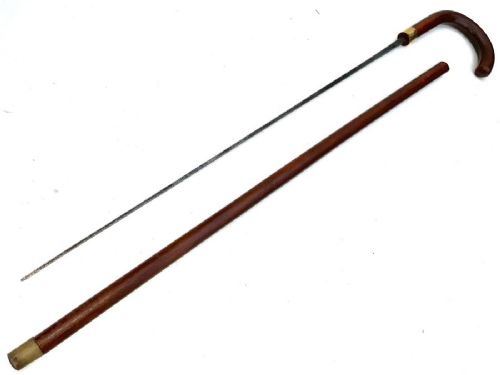
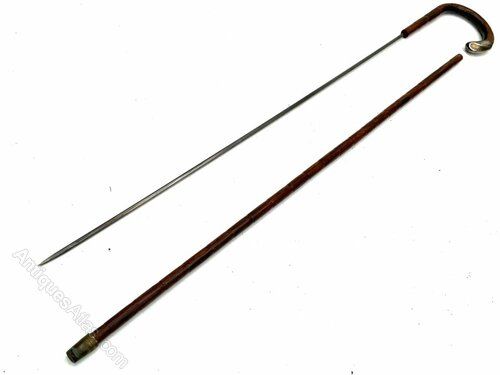
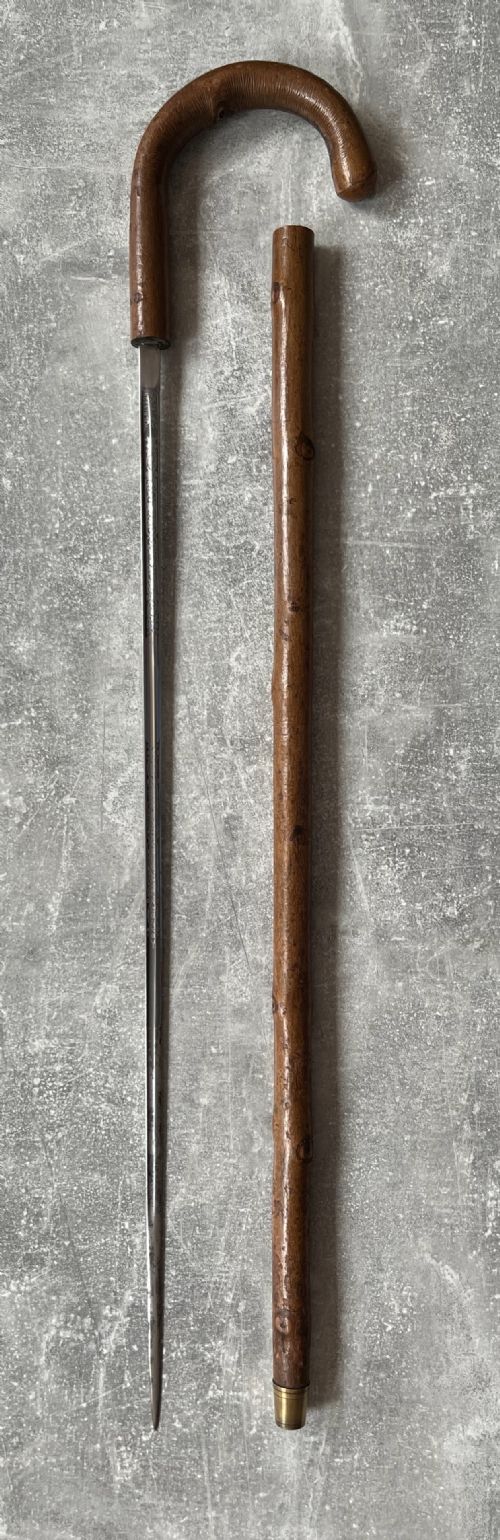
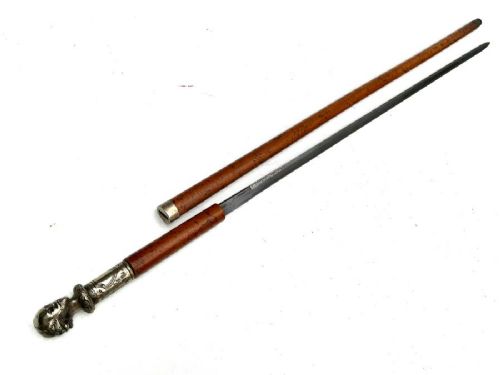
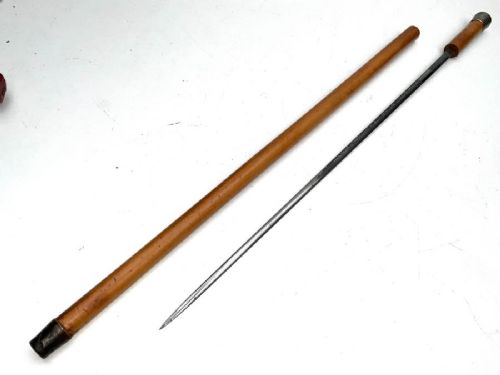
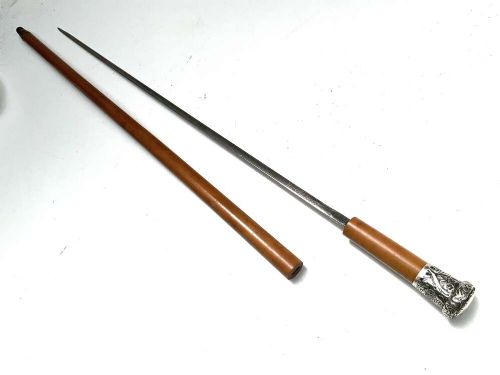


Brown Wooden Sword Cane
A brown wooden sword cane is a discreet personal defence weapon hidden inside a walking stick, combining utility with gentlemanly style.
Brown Wooden Sword Cane
A brown wooden sword cane is a functional walking aid concealing a sharp steel blade within its shaft. These pieces appear in forms such as military officers' swagger sticks, crook-handled walking sticks, and gentleman's canes from the nineteenth and early twentieth centuries.
The versions most commonly met on this page date from the Victorian, Edwardian, and 1920s periods, often featuring natural wood shafts paired with horn, antler, or silver collars. Originating as practical items for urban protection or military dress, they served both walking support and covert defence.
Materials and construction
Makers fashioned the outer shafts from dense timbers such as cherrywood, partridge wood, hazel, rosewood, and malacca cane, providing the rigidity required to house a blade safely. Natural additions like horn, antler, and brass or silver collars reinforced the handles and joints.
Hidden steel blades, including notable examples by Toledo and Wilkinson, were fitted tightly within the wooden channels to ensure the stick functioned securely as a walking aid without revealing its concealed weapon.
The inventory spans the Victorian, Edwardian, and 1920s periods, including military and civilian styles.
Distinctions in quality
The standard of a brown wooden sword cane rests on the precision of the join between the handle and the shaft, where superior examples close flush without a visible seam. The quality of the internal steel blade and the finish of natural materials like horn or malacca further separate basic utilitarian items from finer gentleman's accessories.
The Brown Wooden Sword Cane Glossary
- Swagger stick
- A short walking stick traditionally carried by military officers as a sign of authority. These often concealed slim blades.
- Malacca cane
- A mottled, durable rattan stem imported from Southeast Asia and prized for strength. It forms a lightweight yet resilient shaft for walking sticks.
- Collar
- A metal band, frequently brass or silver, fitted around the neck of the cane where the handle meets the shaft. It adds structural reinforcement and decorative detail.
- Toledo blade
- A steel blade forged in the Spanish city renowned for weapon-making. These blades indicate a high standard of metalworking.
Brown Wooden Sword Cane: Frequently Asked Questions
What is a brown wooden sword cane?
A brown wooden sword cane is a walking stick designed with a hollow wooden shaft that conceals a steel blade inside. They were carried by gentlemen and military officers for support and personal defence.
These pieces date primarily from the late nineteenth and early twentieth centuries, reflecting the fashion and security needs of the period.
How do you release the blade?
The blade is typically secured by a friction fit, a screw mechanism, or a catch release hidden beneath the handle. Pulling the handle straight out from the shaft reveals the concealed steel.
Owners tested the fit to ensure the cane stayed firmly closed while walking yet released smoothly when needed.
Were these used by the military?
Yes, many examples were carried by military officers as part of their walking dress or swagger stick tradition. Officers often utilised pieces featuring specific regimental connections or maker-marked blades.
These military pieces range from plain service items to decorated canes with silver collars.
How do you care for the wood and blade?
Keep the wooden shaft conditioned with appropriate wax or oil to prevent drying and cracking. The internal steel blade should be kept clean and lightly oiled to prevent rust within the wooden channel.
Store the cane in a dry environment away from extreme temperature changes to protect both the timber and the metal.