
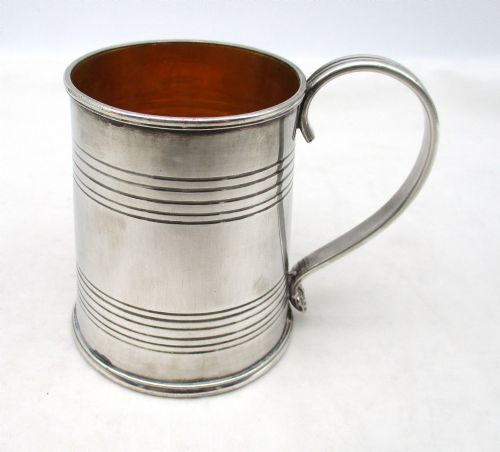
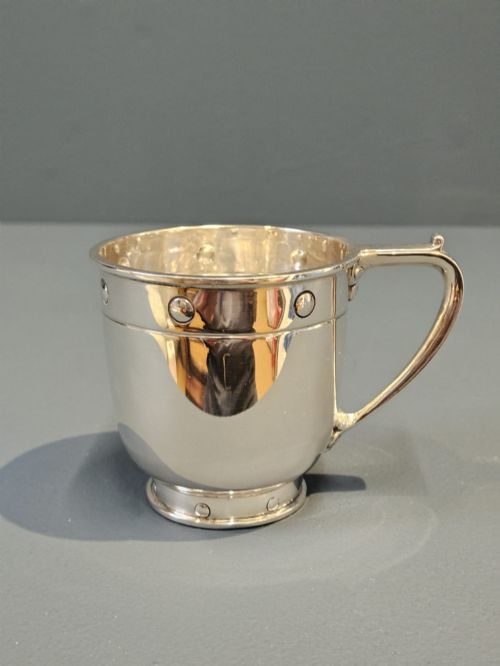
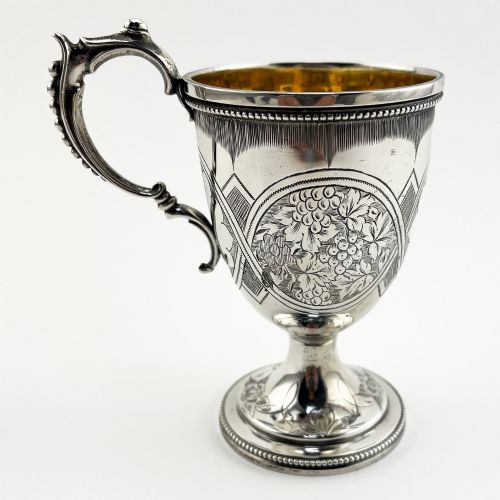
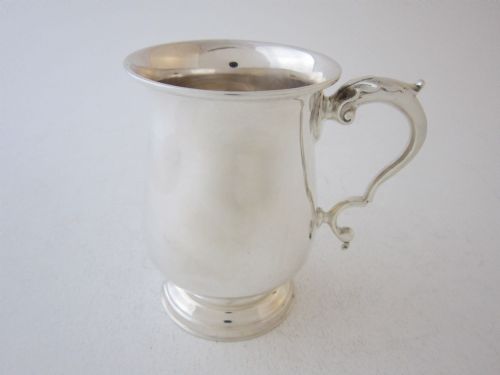
Silver Christening Tankard
A silver christening tankard marks an early milestone with enduring metalwork from the Georgian, Victorian, and later periods.
Silver Christening Tankard
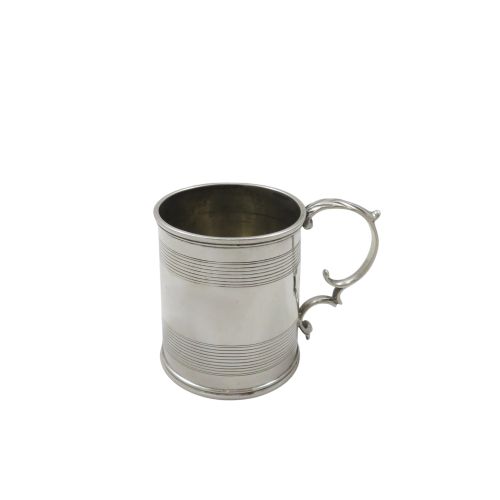
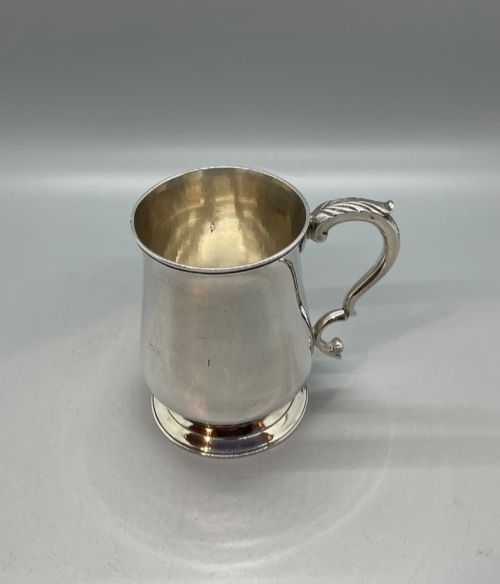
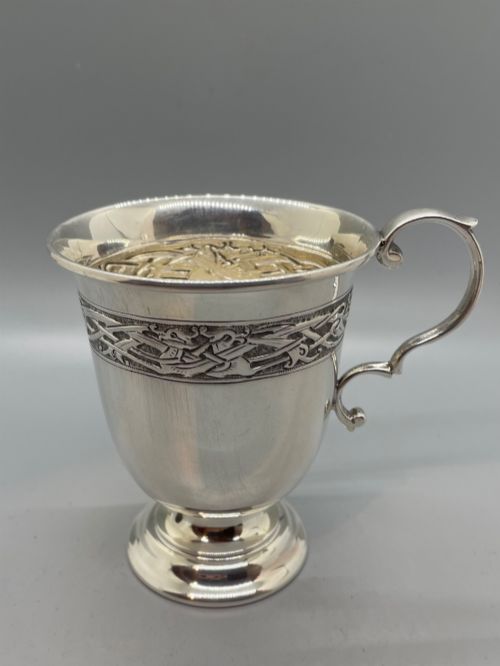
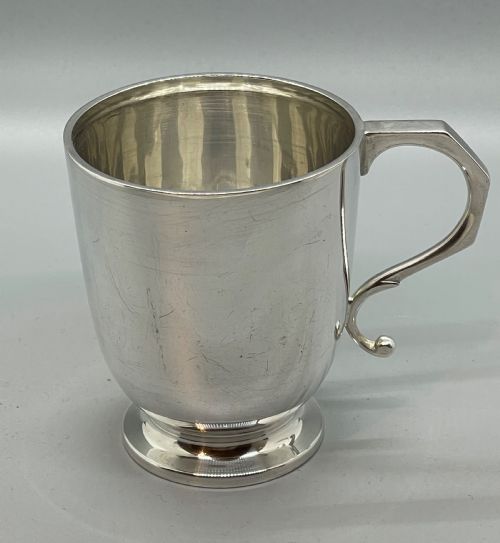
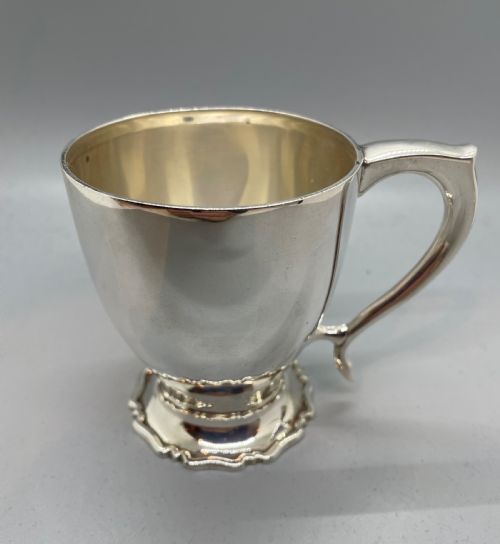
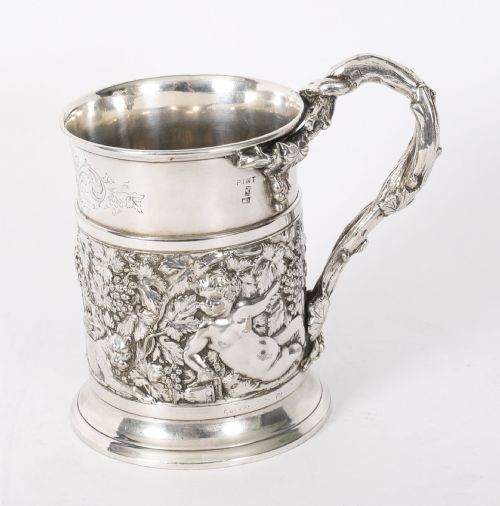
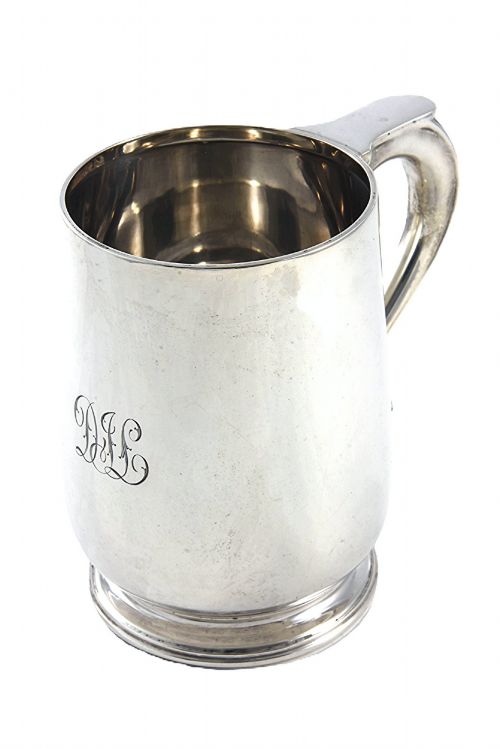
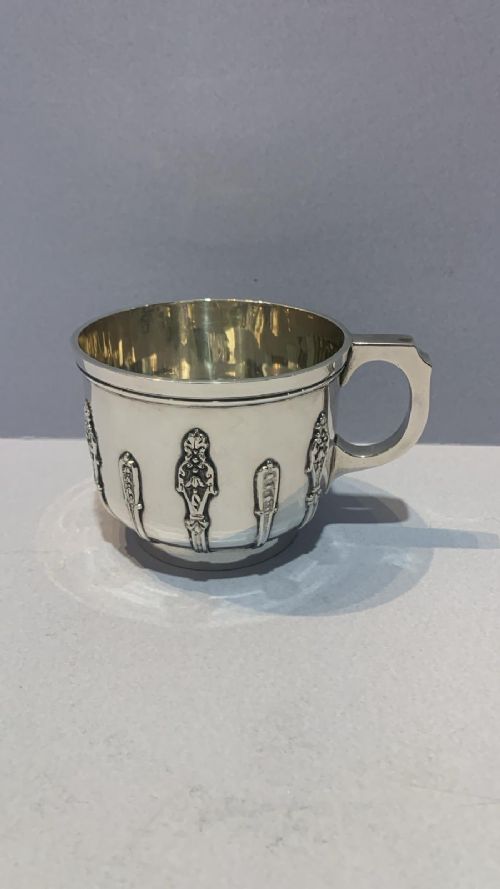
A silver christening tankard is a small commemorative vessel intended to celebrate a birth or baptism. These pieces appear primarily as diminutive mugs, cups, and tankards produced across the Georgian, Victorian, Edwardian, and George V eras.
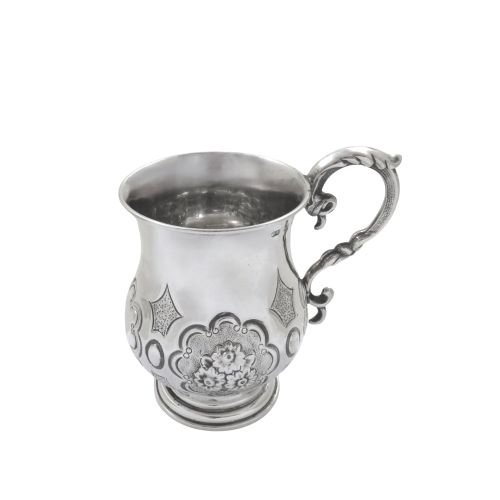
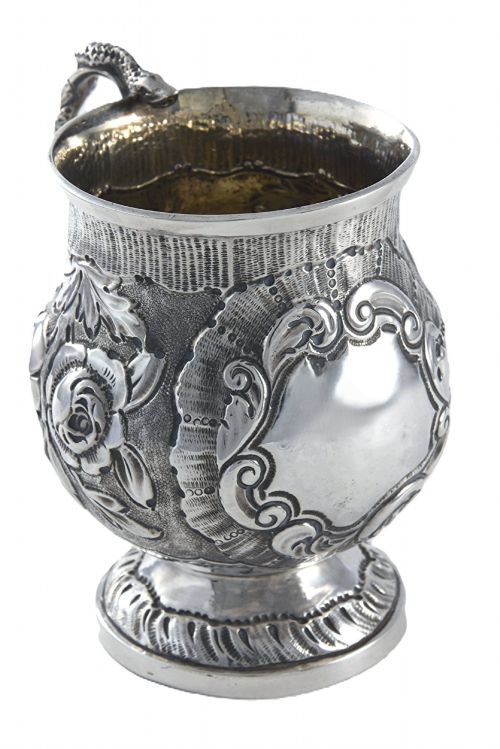
The objects span solid sterling silver, silver gilt, and silver plate, reflecting the shifting domestic tastes of the nineteenth and twentieth centuries. Makers across London, Birmingham, Sheffield, and Chester shaped these vessels into plain cylindrical forms, embossed floral motifs, and baluster profiles.
Buyers encountering this selection will find domestic silver that bridges functional drinking vessels and decorative keepsakes. The forms range from simple mid-century pint mugs to heavily chased Victorian presentation pieces.
How They Were Made
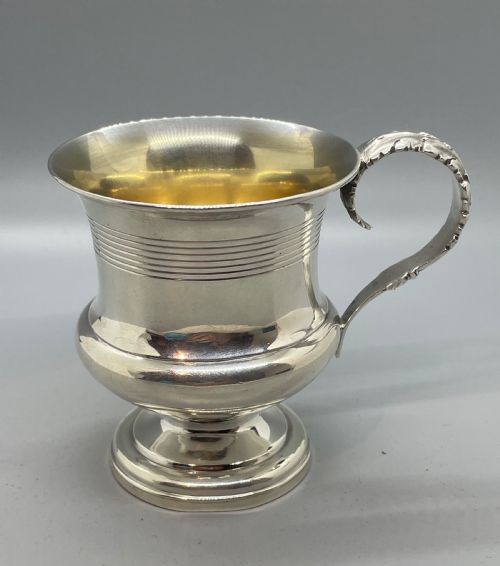
Silversmiths utilised sterling silver and Old Sheffield plate, forming bodies by hammering sheet metal over stakes or casting thicker handles separately. Soldered joints attach scroll handles and rims to the main cylinder, while interior gilding provides a decorative gold wash known as silver gilt.
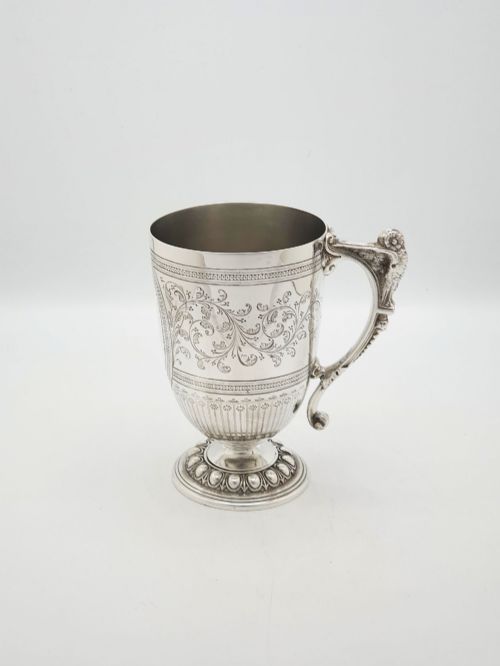
Decoration relied on hand engraving, repoussé embossing, and chased detailing to create floral panels and heraldic cartouches. Makers marked their output with standard hallmarks indicating assay offices, purity, and date letters.
Materials recorded across current and archived items include solid sterling silver, Old Sheffield plate, copper, and gold gilt accents.
What Varies in Quality
Quality rests upon the weight of the metal and the crispness of the applied decoration. Substantial gauge silver provides a rigid structure that resists denting, whereas thinner walls feel fragile in the hand.
Execution of detail separates standard commercial output from superior silversmithing. Crisp, deeply chased foliage and well-balanced scroll handles demonstrate higher workshop competence than shallow, machine-pressed patterns.
Barker Bros·G R Collis·R E Stone·William Bateman·Atkin Bros·Josiah Williams And Sons·Mappin And Webb
The Silver Christening Tankard Glossary
- Sterling silver
- A silver alloy containing 92.5 percent pure silver and 7.5 percent other metals, usually copper, to increase durability. This standard has served as the foundation of British silversmithing for centuries.
- Old Sheffield plate
- An early form of composite metal made by fusing a thin sheet of silver to a thicker copper base. Pieces produced this way often reveal faint traces of copper along high-wear edges.
- Silver gilt
- Sterling silver that has been coated with a thin layer of gold through a chemical or electrochemical process. This treatment protects the interior surface from tarnishing when exposed to acidic liquids.
- Repoussé
- A metalworking technique where the artisan hammers the design from the reverse side to form raised relief on the front. This method creates tactile floral and figural scenes across the vessel wall.
- Baluster form
- A vertical architectural profile characterised by a swelling lower body tapering toward a narrow neck. This curving silhouette appears frequently on eighteenth and nineteenth-century drinking vessels.
- Hallmark
- An official stamp applied by an assay office to certify the purity of precious metal. These marks typically include symbols for the maker, city, and year of manufacture.
Silver Christening Tankard: Frequently Asked Questions
How can I tell the date of a silver tankard?
British silver relies on official assay office hallmarks stamped directly onto the metal surface. A specific letter punch within these marks corresponds to the exact year the piece was tested and entered the market.
Stylistic cues also help narrow down the period of manufacture. Rococo scrolls indicate mid-Victorian revival work, while clean geometric lines point toward mid-century production.
Were these pieces actually used for drinking?
Most christening vessels functioned primarily as decorative keepsakes rather than everyday tableware. Families preserved them in fitted cases to mark a child's early entrance into society.
Some examples show light interior wear consistent with occasional ceremonial use. However, their survival in fine condition suggests careful preservation by generations of owners.
Why do some interiors have a gold colour?
The golden finish inside many period mugs is silver gilt, created by applying a thin layer of gold over the sterling silver. Silversmiths added this coating to prevent metallic tastes and protect the metal from tarnishing.
This treatment was standard practice for vessels intended to hold liquids or display precious craftsmanship. It remains a hallmark of careful finishing across Georgian and Victorian workshops.