
Silver Casing Timepiece
A silver casing timepiece unites horological utility with precious metal, spanning pocket watches, wristwatches and domestic clocks.
Silver Casing Timepiece
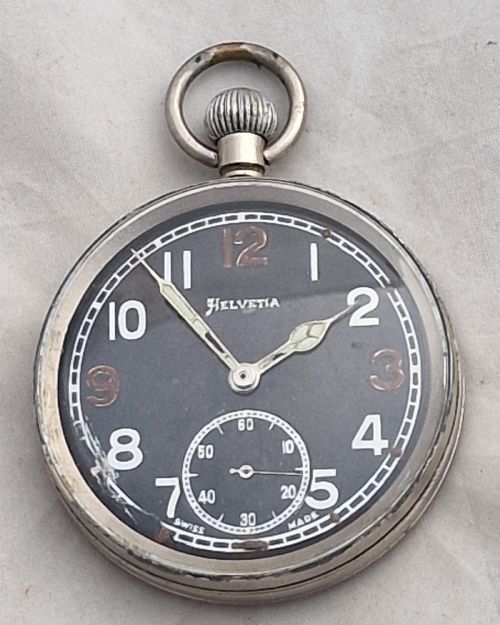
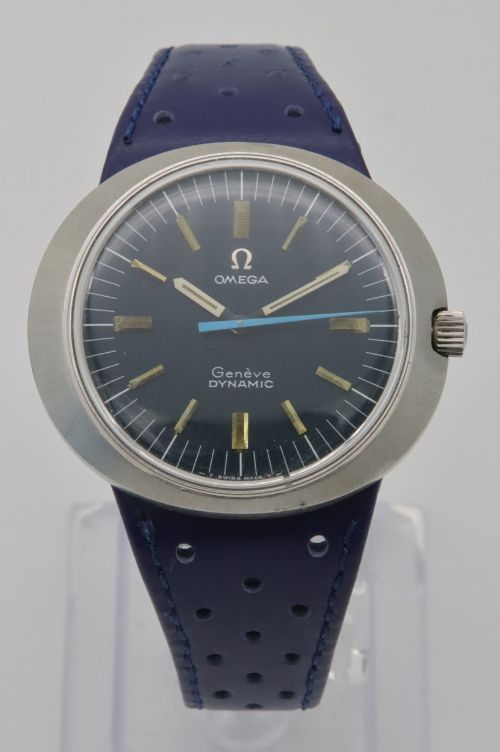
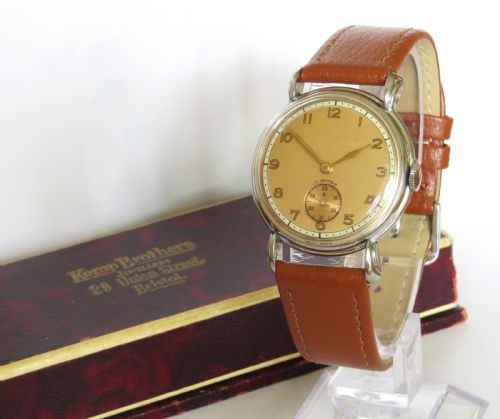
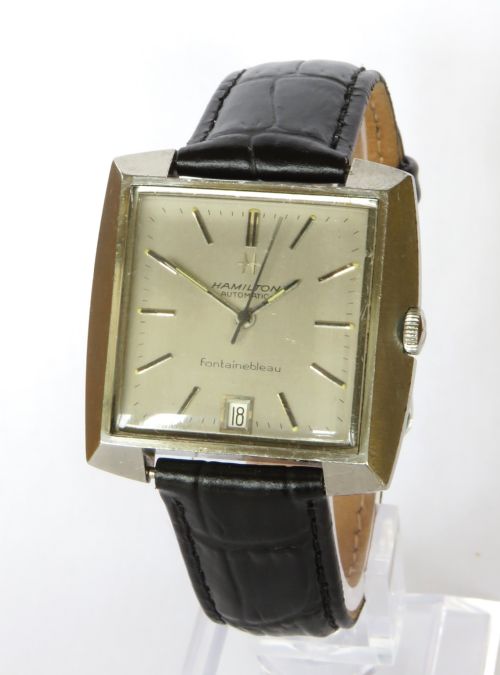
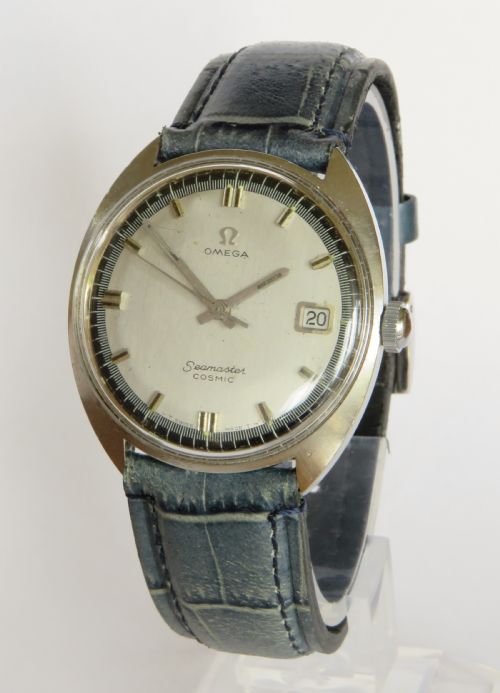
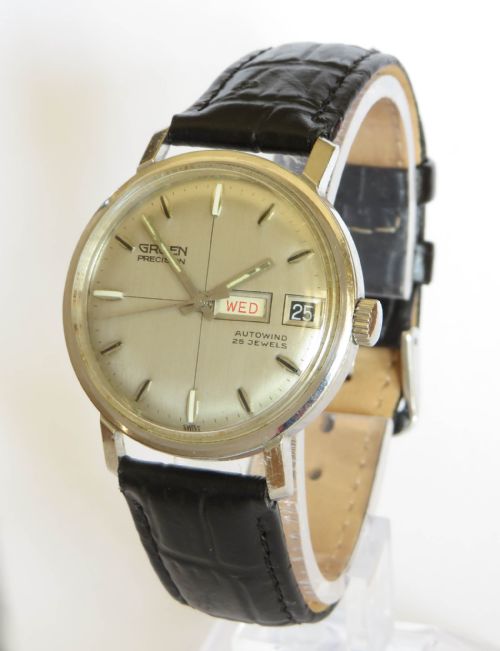
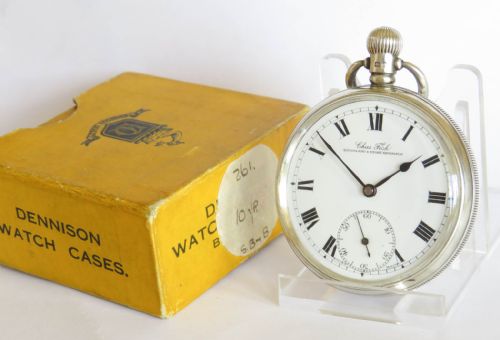
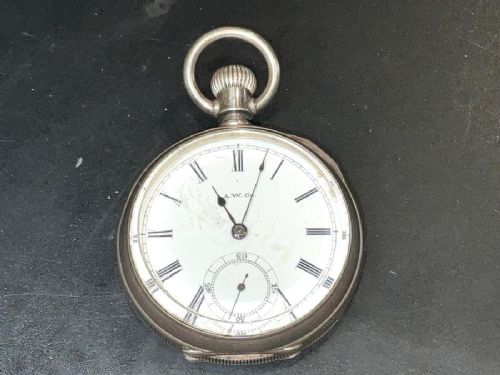
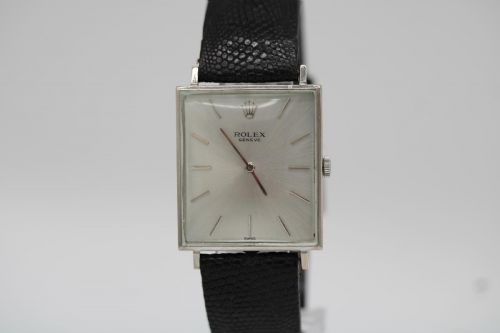
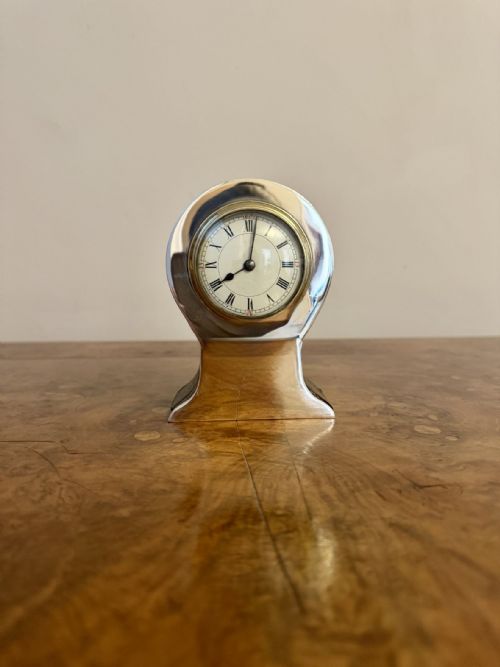
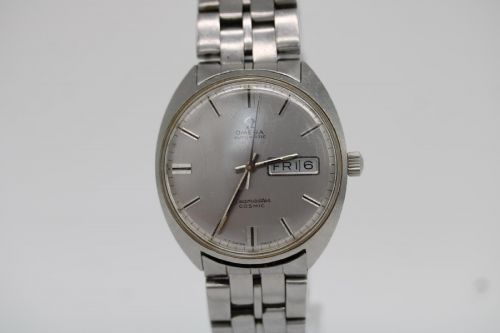
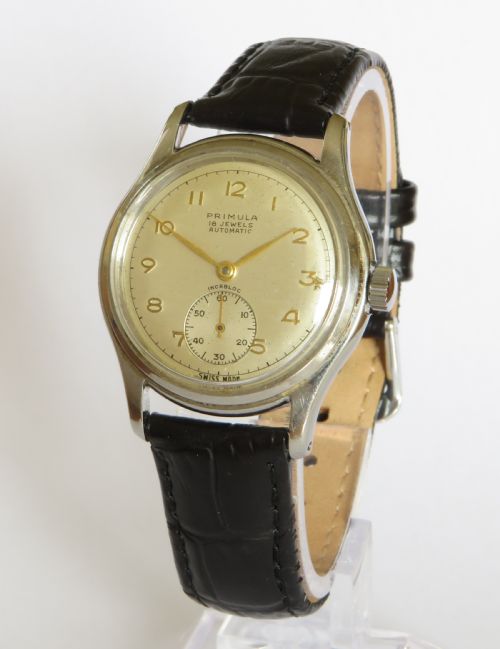
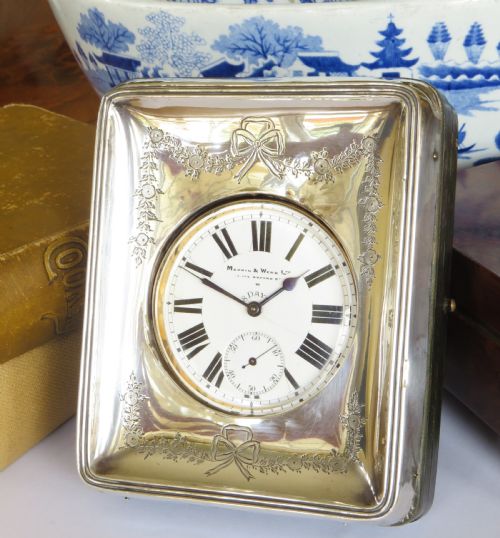
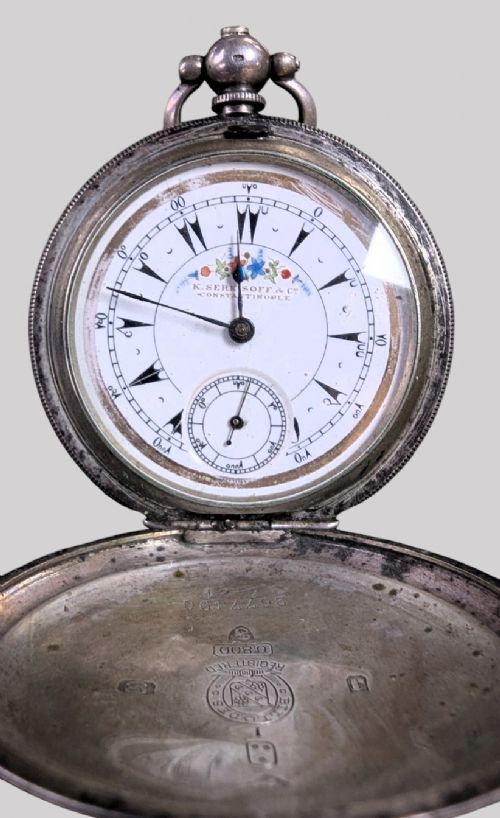
A silver casing timepiece encompasses a diverse array of portable and domestic horology housed in silver or silver-plated housings, ranging from early pair-cased pocket watches to mid-century wristwatches and boudoir clocks. Buyers searching for a silver casing timepiece will encounter pocket watches, wristwatches, travel clocks and desk clocks spanning the eighteenth century through the twentieth century. The selection leans heavily toward pocket watches and wristwatches from the Victorian, Edwardian and mid-century periods, alongside desktop travel clocks and mantel pieces.
The objects originate from notable European and British makers, utilising materials such as silver, glass, leather, brass and enamel across styles including Victorian, Edwardian, Art Deco and Mid-Century Modern. Pocket watches with hinged hunter or full hunter cases sit alongside wristwatch conversions and automatic wristwatches by firms like Omega, Rolex and Waltham. Desk and travel clocks in silver cases offer alternative formats for domestic spaces and travel use.
Materials and construction
The construction of a silver casing timepiece relies on solid silver or silver plating shaped into protective outer shells, paired with internal brass and steel movements. Cases were often hallmarked to denote silver purity, whilst dials incorporated enamel, champlevé work or simple metal finishes protected by glass crystals.
Makers integrated leather, chrome, brass and tortoise shell as secondary materials for travel cases and specialist desk models like Masonic clocks or carriage clocks. Movements evolved from early verge mechanisms to automatic and manual-wind Swiss and English calibres housed securely within the metal housings.
Listings feature silver casing timepieces spanning the eighteenth century through to the 1970s, incorporating brass, leather, enamel and glass.
Markers of quality
Quality in a silver casing timepiece rests on the precision and complexity of the movement, the integrity of the silver hallmarks and the crispness of any chased or engraved case decoration. Finer examples exhibit unpolished cases with sharp edges, intact enamel dials free from hairlines and sophisticated mechanical movements from recognised makers.
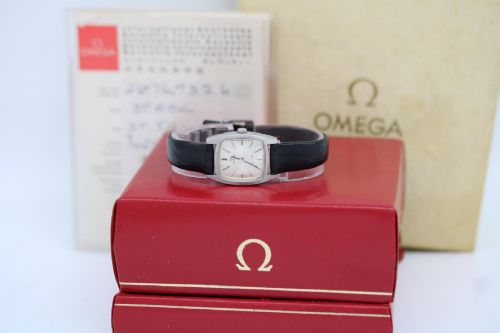
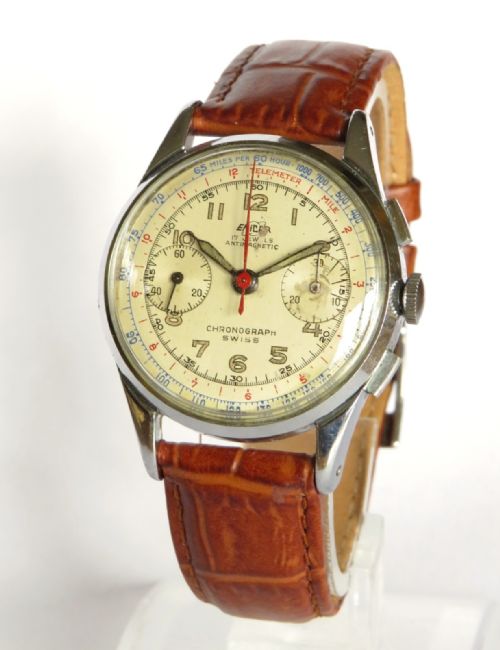
The standard of finishing extends to the condition of the glass crystal, the original state of the dial and the inclusion of original fitted boxes or associated papers. Heavy gauge silver cases and complex complications such as chronographs or calendar functions elevate the horological significance of the piece.
Omega·Rolex·Waltham·Cyma·Mappin & Webb
The Silver Casing Timepiece Glossary
- Full hunter pocket watch
- A pocket watch featuring a spring-loaded metal cover that protects the dial from damage. The lid springs open via a crown-mounted pusher.
- Pair cased
- An older pocket watch design utilising two separate cases, where the inner movement container fits snugly inside an outer protective shell.
- Champlevé
- An enamelling technique where troughs are carved into the metal surface and filled with vitreous enamel before firing and polishing.
- Verge escapement
- An early mechanical escapement type utilising a crown wheel and a vertical rod with pallets to regulate the gear train.
- Carriage clock
- A small, portable spring-driven clock developed for travelling, typically fitted with a carrying handle and glass panels to view the movement.
Silver Casing Timepiece: Frequently Asked Questions
How do I wind an antique pocket watch?
Most pocket watches wind via the crown at the top, though older key-wound models require a dedicated small key applied to a square arbor on the back plate or dial.
Care must be taken not to overwind the mainspring, stopping as soon as resistance is felt to preserve the vintage internal mechanism.
Were silver travel clocks used for journeys?
Travel clocks encased in silver with leather travelling outer cases were designed specifically for carriage, train and hotel use during the late nineteenth and early twentieth centuries.
Their robust housings protected delicate escapements from the vibrations associated with historical transit.
How do I identify the period of a silver timepiece?
The period is usually determined by a combination of case style, dial typography and British silver hallmarks which record the exact assay office and year letter.
Stylistic cues such as Art Deco geometric lines or Victorian chased floral motifs further narrow down the decade of manufacture.
Can I wear a vintage silver wristwatch daily?
Many vintage wristwatches tolerate daily wear if they have been recently serviced by a professional horologist to ensure lubrication and accurate timekeeping.
However, older non-waterproof silver cases require protection from moisture, rain and heavy impacts during regular use.