
Silver Candlestick Holders
Silver candlestick holders bring light and proportion to a room, ranging from simple Georgian columns to ornate Victorian branch candelabras.
Silver Candlestick Holders
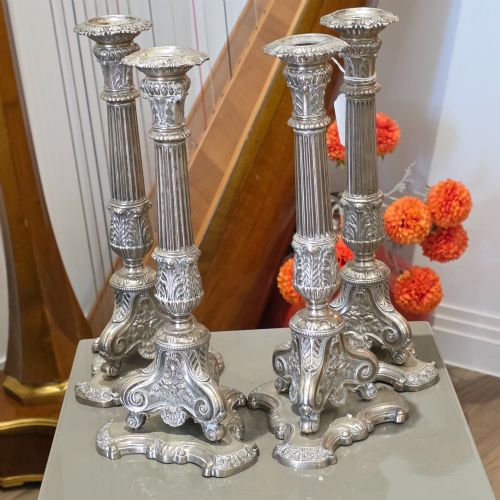
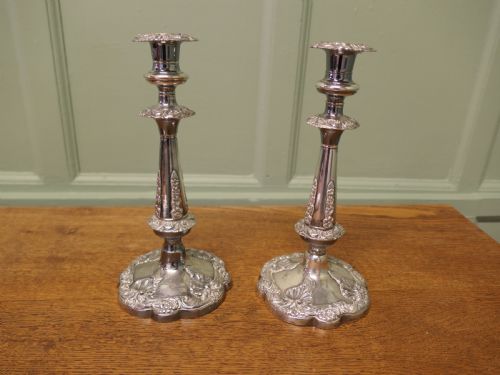
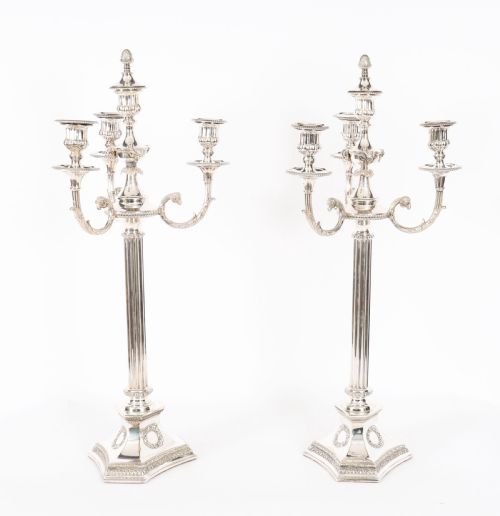
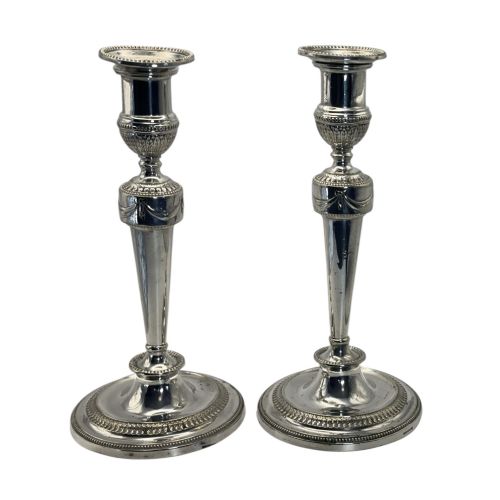
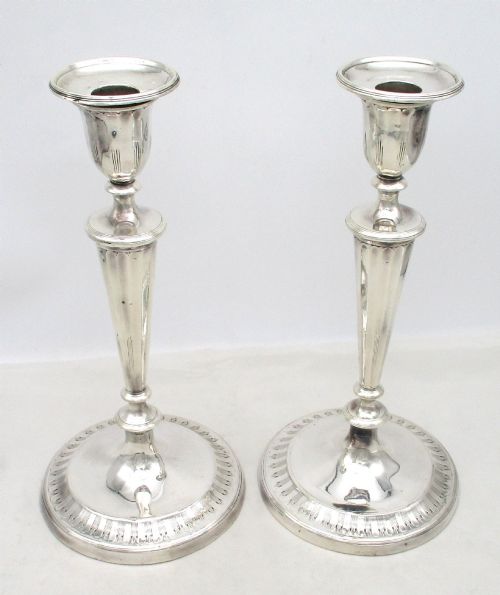
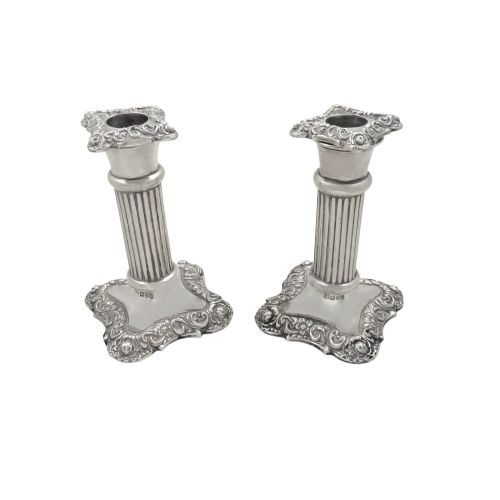
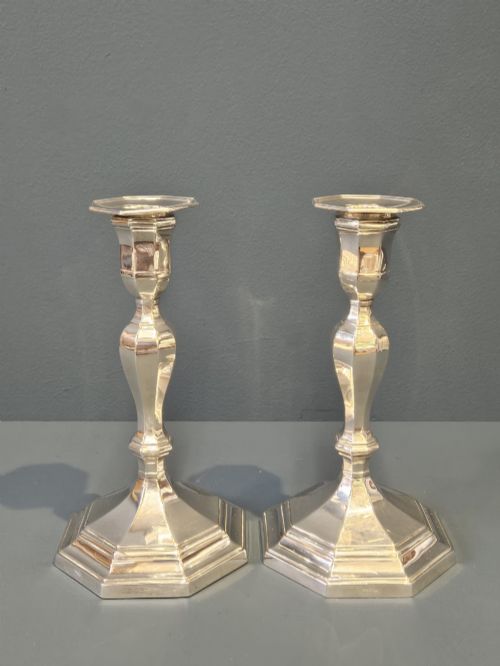
Silver candlestick holders appear across these listings in forms spanning the eighteenth century to the mid twentieth century, with Victorian and Edwardian examples forming the largest share. Buyers encounter heavy sterling silver items alongside silver plated copper, electroplated nickel silver, pewter and Old Sheffield plate.
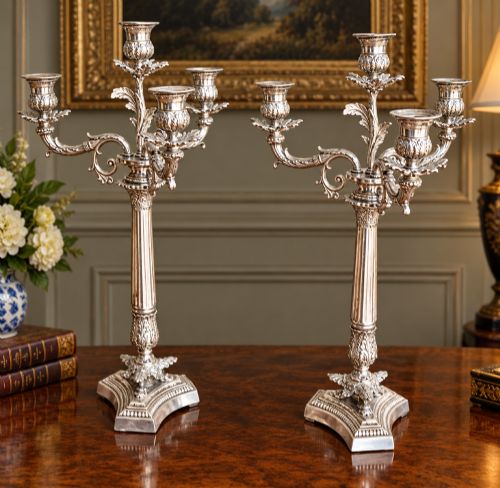
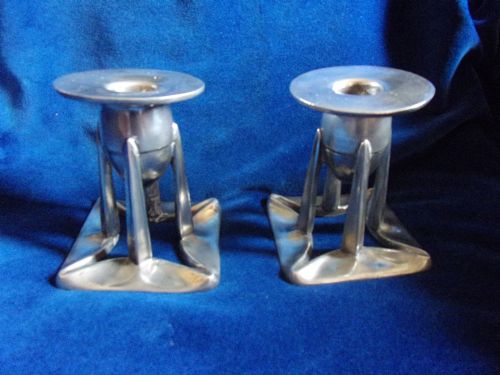
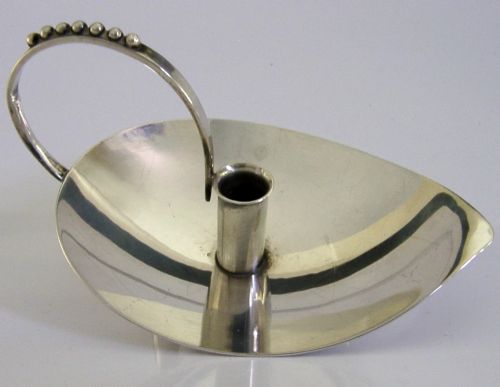
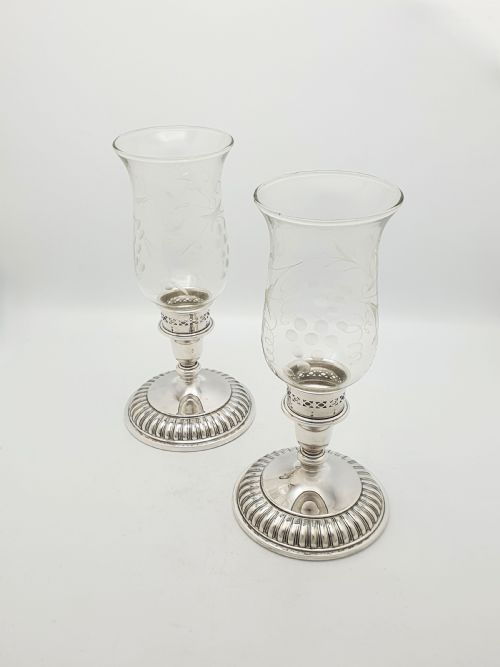
The objects themselves range from single table candlesticks and dwarf pairs to multi branch candelabras, chambersticks with handle pans, and conversion hurricane lamps with glass shades. Styles move from restrained Georgian neoclassical columns to exuberant Victorian rococo revival scrolls and organic Arts and Crafts pewter forms.
Materials and construction
Makers produced these pieces using sterling silver or by applying thin layers of silver onto base metals such as copper or nickel silver through plating or fusion methods like Old Sheffield plate. Pewter also appears, particularly in Arts and Crafts pieces shaped with hammered textures or organic motifs.
Many hollow formed candlesticks required weighted internal bases using resin, plaster or wooden inserts to provide stability when holding tall candles. Assembly often involved soldered joints connecting nozzle, stem and foot plates.
Silver Candlestick Holders Retail Price Guide 2026
Typical asking prices for silver candlestick holders among the pieces listed under this phrase on Sellingantiques today, from the lower quarter to the upper quarter. They describe what is for sale here now, not the wider market.
The listings span eight distinct periods, with Victorian and Edwardian examples making up the majority of surviving silver candlestick holders.
Distinctions in execution
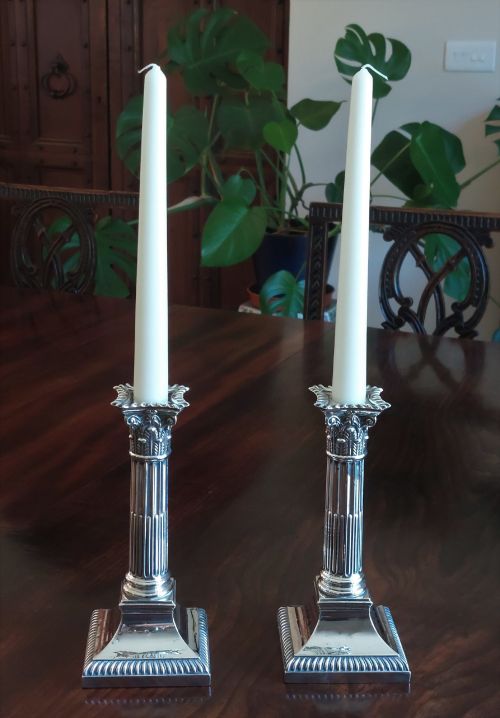
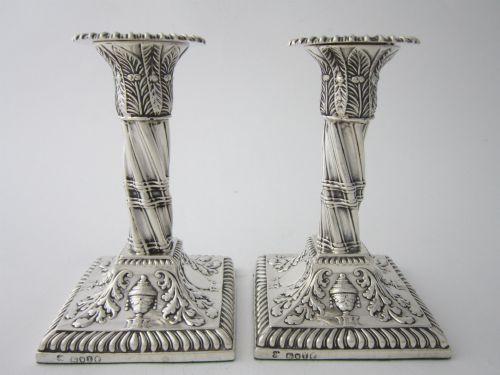
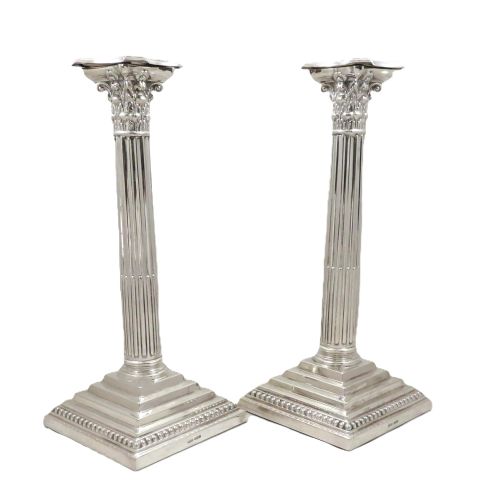
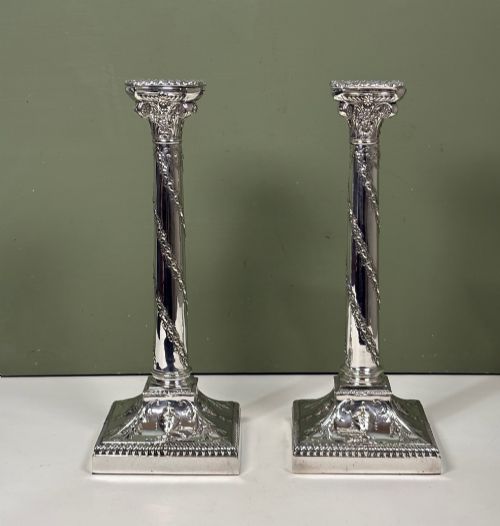
Quality rests upon the crispness of the chased or cast ornament, whether acanthus leaves on a Corinthian capital or figural details on a base, which loses definition in worn plated items or lazy secondary castings. Heavy gauge silver or thick plate maintains structural integrity across the drip pan and stem without thin spots or distortion.
Proportion and balance dictate the visual weight of the piece, where superior examples maintain harmonious symmetry between the stepped foot and the nozzle. Maker marks and clear hallmarks also separate standard production wares from pieces bearing the stamps of distinguished workshops.
Matthew Boulton·Mappin & Webb·Hawksworth Eyre·Garrard & Co·Archibald Knox·James Fenton·WMF
The Silver Candlestick Holders Glossary
- Candelabra
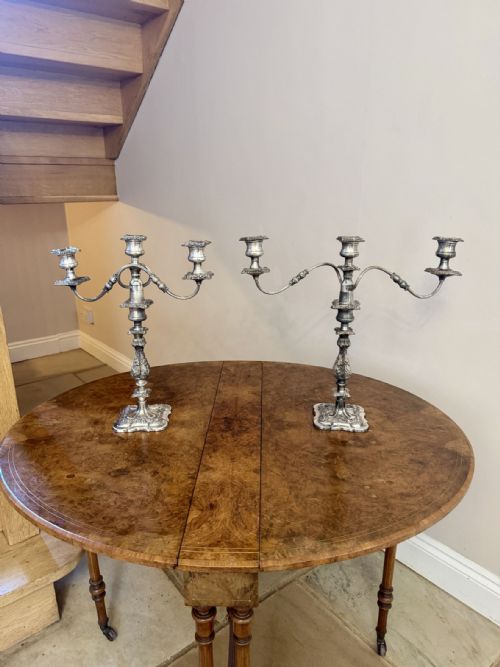
- A branched candlestick holder designed to support multiple candles from a single central stem. These multi light fixtures often feature removable branches for conversion into single candlesticks.
- Chamberstick
- A low candle holder fitted with a wide saucer base and a handle, historically used for carrying light through a house at night. Many incorporate a small cone snuffer resting in the tray.
- Corinthian column
- A classical architectural order featuring an ornate capital decorated with acanthus leaves, frequently adopted as a decorative stem for table candlesticks.
- Sheffield plate
- An early method of fusing a thin sheet of sterling silver to a thicker copper core by heat and pressure. The technique creates characteristic subtle copper bleed lines where the base metal shows through wear.
- Hallmark
- A series of official stamps pressed into precious metal indicating the standard of silver, the assay office, and the date letter for the year of production.
Silver Candlestick Holders: Frequently Asked Questions
How do I clean antique silver candlestick holders?
Use a soft cloth and a gentle, non abrasive silver cream to remove tarnish without stripping thin plating or fine surface detail. Avoid harsh chemical dips, which can permanently ruin the dark antiquing in recessed crevices.
Take care around weighted bases and felted bottoms by keeping moisture away from the underside. Gentle buffing preserves the patina that accumulates over decades of handling.
Are sterling silver and silver plated items marked differently?
Sterling silver pieces carry official assay marks including lion passant symbols, maker initials and date letters indicating the year of manufacture. Items made from base metal carry maker stamps alongside terms like silver plate, EPNS or Old Sheffield plate.
Some unmarked pieces rely on attribution through design style, manufacturing technique or retailer stamps on the base. Examination with a loupe often reveals the tiny punch marks left by the silversmith.
Can I use modern candles in antique holders?
Most antique sockets were designed for smaller diameter taper candles than standard modern ones. Forcing an oversized candle into an antique nozzle can crack thin metal or split soldered seams.
Trim the base of the candle slightly or use small beeswax tapers suited to older dimensions. Ensuring a secure fit prevents dangerous leaning while the candle burns.