


Silver and Glass Salt
A silver and glass salt combines metalwork and blown vessels to hold seasoning on the dining table.
Silver and Glass Salt
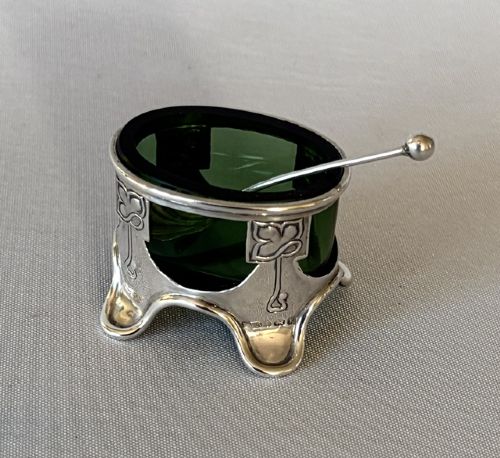
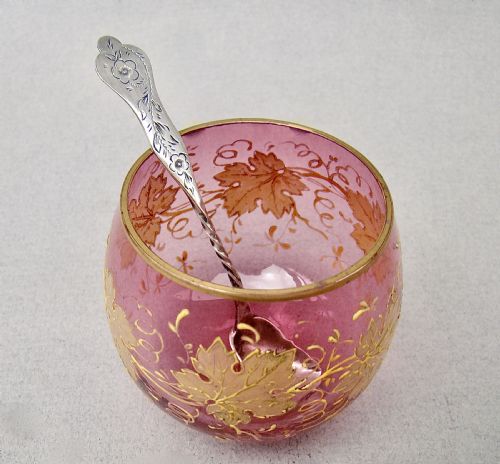
A silver and glass salt typically takes the form of an open tub, a standing cellar, or a covered mustard pot designed to hold table condiments. The pieces found here span the Victorian, Edwardian, and Art Deco periods, alongside earlier Georgian designs.
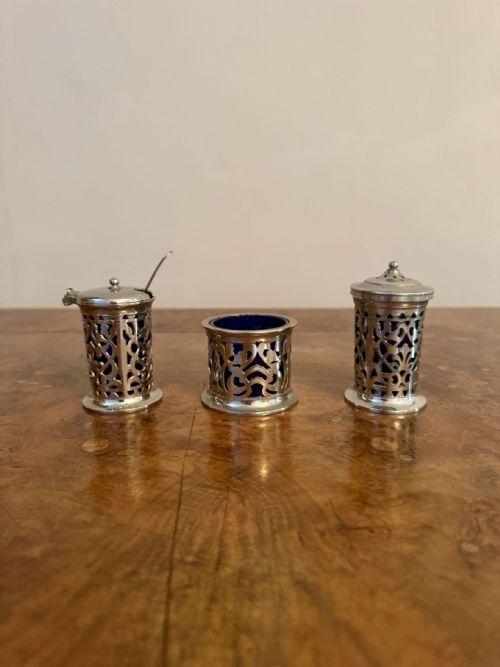
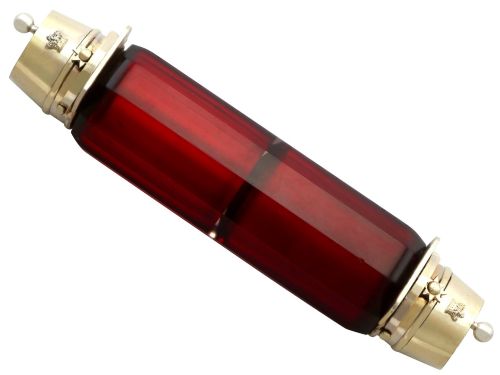
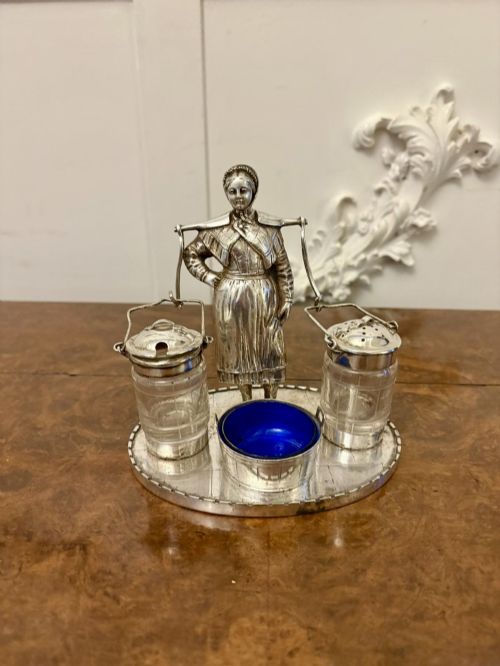
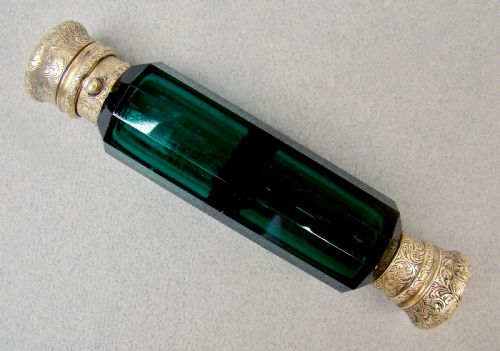
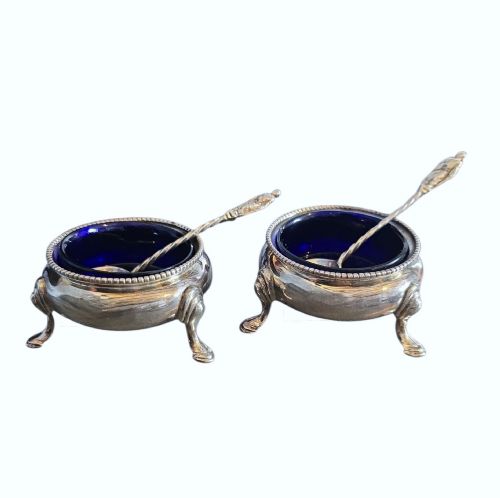
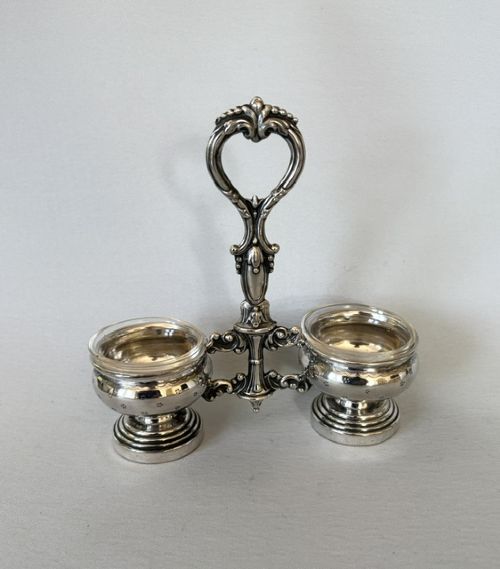
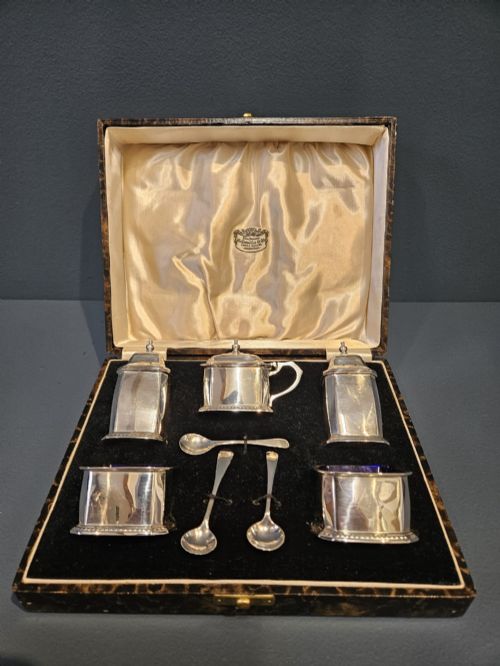
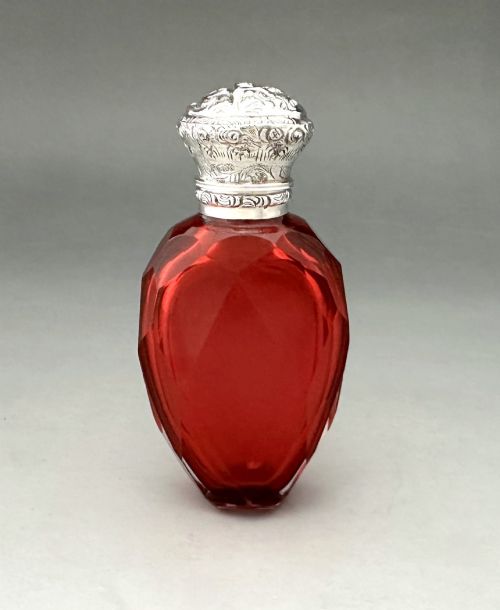
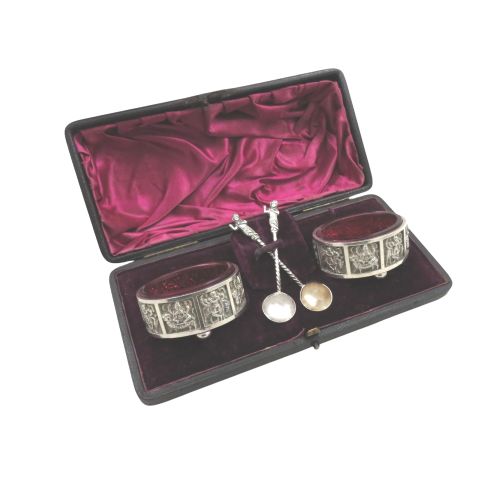
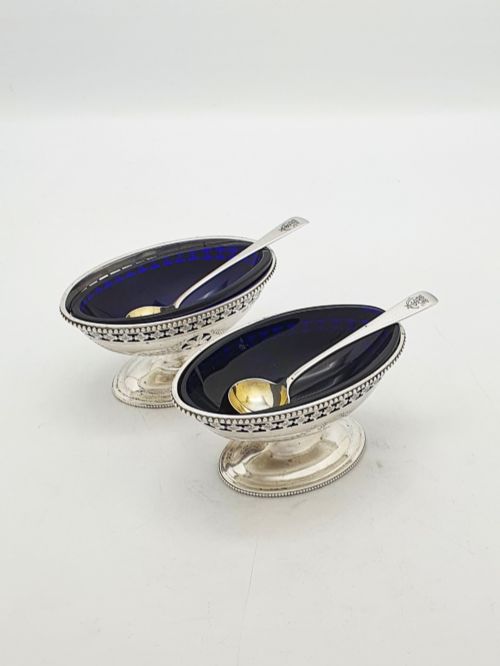
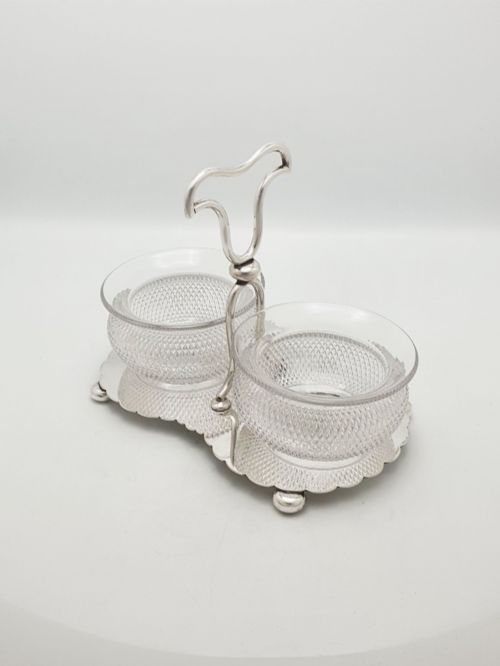
Many examples pair pierced or cast silver frames with removable liners in cobalt blue, green, ruby, or clear cut glass. These range from simple pairs of salt cellars with matching spoons to elaborate multi-bottle cruet sets and novelty vessels.
Materials and construction
Makers combined sterling silver or silver plate with blown and cut glass bodies, often using coloured glass such as Bristol green or deep cobalt to create contrast against the metal mount. Piercing, casting, and wirework formed the silver frames that held or enclosed the delicate glass liners.
Fitted lids, hinged mounts, and detailed spoons completed the pieces, with some items incorporating internal gilt finishes known as silver gilt to protect the metal from corrosive salts.
Silver and Glass Salt Retail Price Guide 2026
Typical asking prices for silver and glass salt among the pieces listed under this phrase on Sellingantiques today, from the lower quarter to the upper quarter. They describe what is for sale here now, not the wider market.
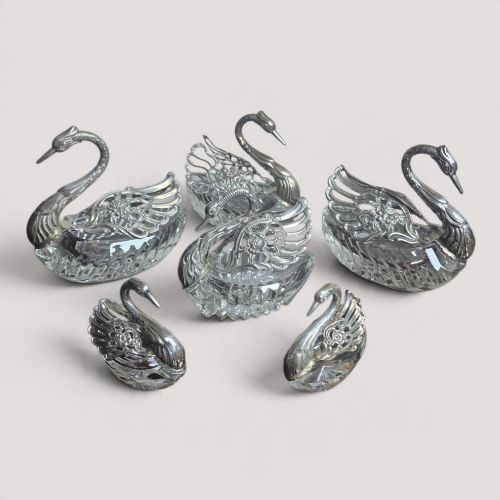
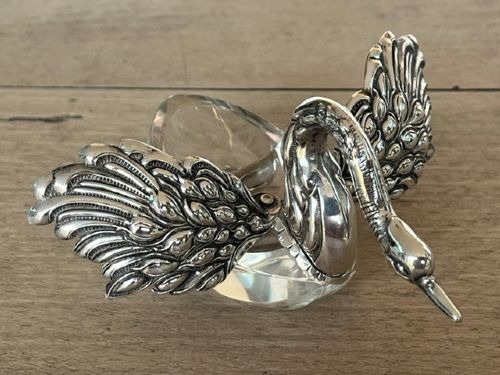
One winged swan glides across the table as a divided salt cellar with movable feathers.
Judging quality and execution
Quality rests on the crispness of the silversmith's piercing or casting work and the weight of the metal used in the frame. Thicker silver wirework and well-defined decorative motifs indicate superior workshop output.
The glass component also dictates worth, as hand-cut crystal, deep colour saturation, and a precise fit within the silver mount show greater care in production than mass-produced alternatives.
Sampson Mordan·Beare Falcke·William Neale·Josiah Williams & Co·Walker & Hall
The Silver and Glass Salt Glossary
- Salt cellar
- An open vessel used to hold salt on the dining table before the invention of the spring-loaded shaker. They frequently require a small spoon for serving.
- Cruet set
- A matched group of bottles, jars, or cellars held in a stand for condiments such as oil, vinegar, pepper, and salt. These often incorporate silver stands and cut glass bottles.
- Blue glass liner
- A removable glass insert placed inside open silver salt cellars to protect the metal from corrosion caused by salt. They appear in deep cobalt and softer blue shades.
- Silver gilt
- Silver that has been coated with a thin layer of gold on its surface. This technique prevents the silver from tarnishing when exposed to acidic contents like mustard or salt.
Silver and Glass Salt: Frequently Asked Questions
How do I clean a silver and glass salt?
Remove the glass liner from the silver frame before cleaning to protect both materials. Wash the glass in warm soapy water and use a soft cloth with dedicated silver polish on the metal.
Avoid submerging cemented parts or antique velvet-lined cases in water. Dry each component thoroughly before reassembling the piece.
Were these salts used for everyday dining?
Wealthy households used silver and glass salt cellars and cruet sets for formal dining tables across the Georgian, Victorian, and Edwardian eras. Servants filled them with loose salt and placed them beside each guest or shared them between multiple diners.
As manufacturing methods shifted toward mass production, simpler silver plated versions became common in middle-class homes.
How do I spot a replacement glass liner?
Examine whether the glass sits flush within the silver frame without wobbling or leaving excessive gaps. Original liners match the precise internal contours and height of the metal mount.
Differences in glass tint, thickness, or minor sizing mismatches often suggest a later replacement.
What is the difference between a salt and a mustard pot?
Salt cellars are typically open vessels meant for dry grains of salt served with a small spoon. Mustard pots feature hinged lids and often include a cut-out in the rim to accommodate a mustard spoon.
Mustard pots also frequently contain blue glass liners to prevent the wet condiment from reacting with the silver.