



Silk Needlework Wall Hanging
When choosing a silk needlework wall hanging, you examine textiles that bring historical regional artistry and rich textile traditions directly into a modern room.
Silk Needlework Wall Hanging
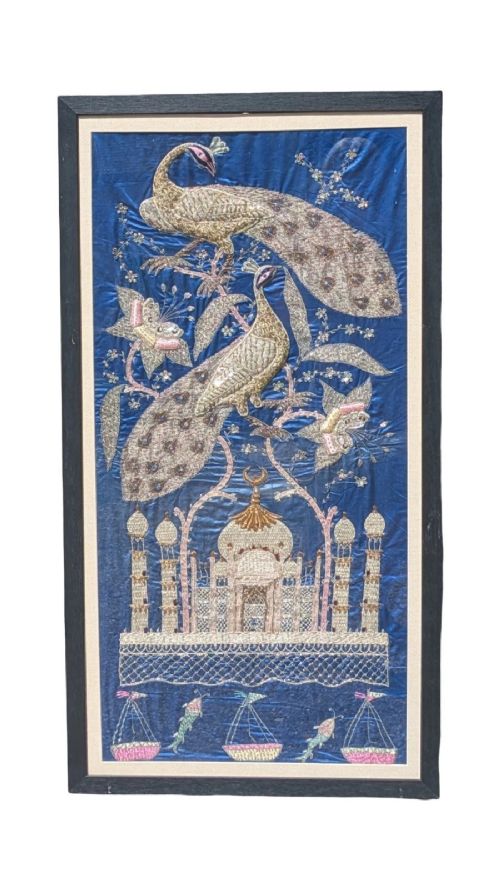
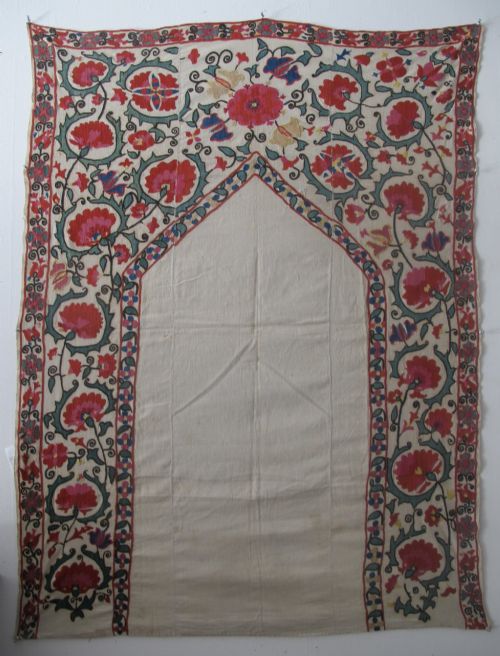
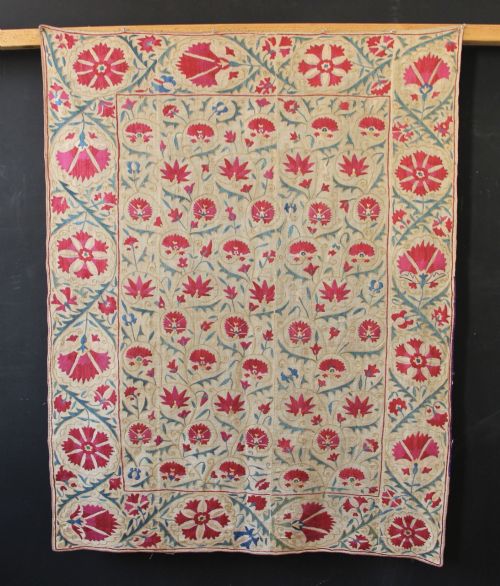
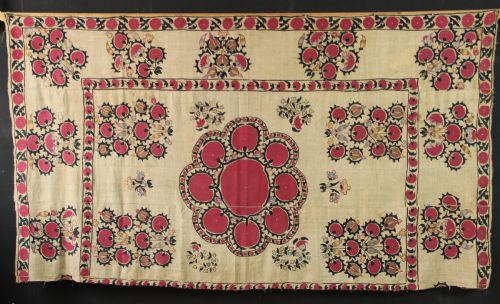
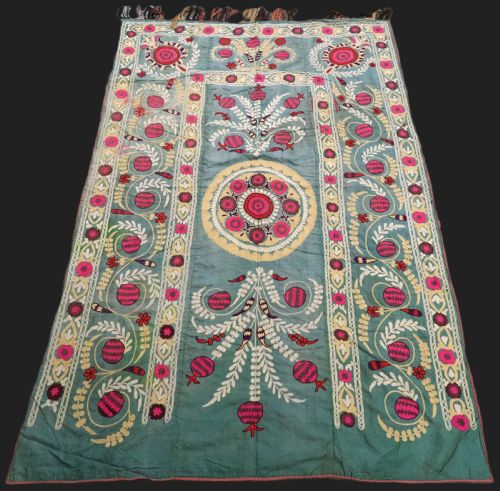
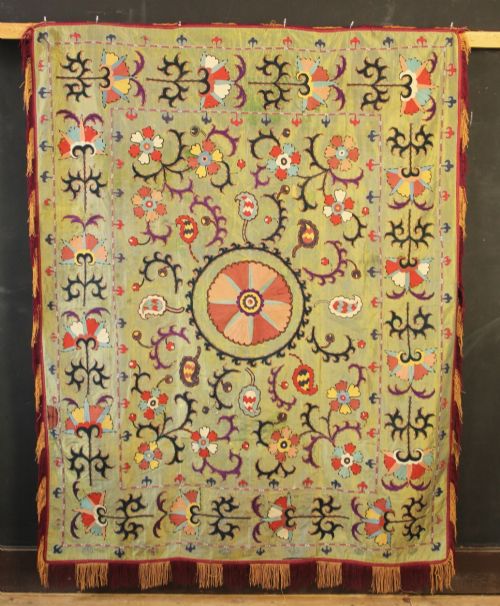
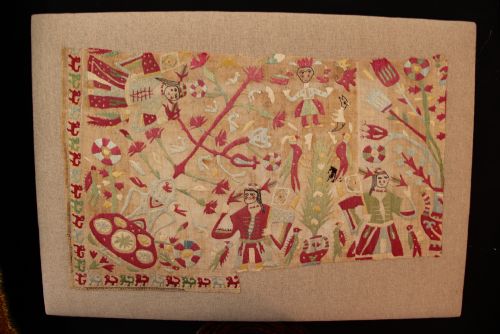
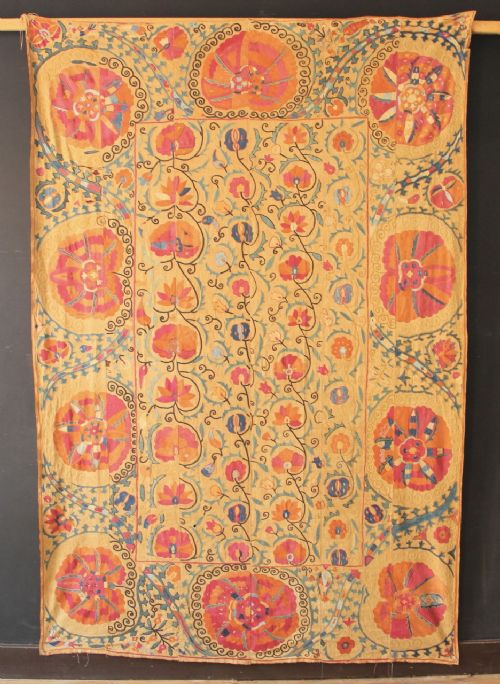
A silk needlework wall hanging encompasses historic embroidered textiles, tribal trappings, and decorative panels originating predominantly from Central Asia, Persia, India, and East Asia. When exploring this selection, buyers frequently encounter Suzanis from regions such as Bokhara, Tashkent, and Shahrisabz, alongside Persian Rasht embroideries.
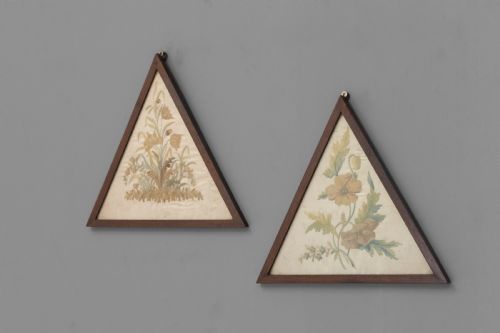
The objects serve as vibrant focal points, translating historic ceremonial items, bed covers, and tribal hangings into contemporary wall art. Pieces range from large medallion variants and fully embroidered Palak designs down to smaller nimble formats and mounted fragments.
Originating across the nineteenth and early twentieth centuries, these textiles reflect distinct cultural aesthetics, incorporating traditional floral motifs, architectural elements, and tribal iconography.
How they were made
The construction of these textiles relies heavily on fine silk thread worked onto supportive ground fabrics such as cotton, linen, or wool felt. Artisans employed complex needlework techniques, including dense surface embroidery and intricate applique work.
Many Central Asian and Persian examples utilise contrasting backdrops like red, green, or black felt and cotton to make the polychrome silk stitching stand out. Individual panels often demonstrate meticulous hand-stitching executed in regional workshops and tribal communities.
The listings span the nineteenth and early twentieth centuries, featuring Persian felts alongside Central Asian cotton and silk grounds.
What varies in quality
The standard of a piece depends largely on the density of the needlework and the complexity of the design layout. Fully embroidered surfaces, balanced colour distribution, and precision in execution distinguish superior examples from simpler formats.
Artistic expression also plays a role, with imaginative medallion placement and fine regional drawing elevating individual panels. The survival of vibrant silk tones and the integrity of the base fabric further define the upper tier of these historical textiles.
The Silk Needlework Wall Hanging Glossary
- Suzani
- A type of embroidered tribal textile originating from Central Asia, traditionally worked with silk threads on a cotton or linen ground. These decorative panels frequently feature grand central medallions and floral motifs.
- Palak
- A fully embroidered variety of Suzani from Tashkent featuring a dense overall pattern that often covers the entire ground fabric. The design typically incorporates a prominent central star.
- Rasht embroidery
- A traditional Persian textile technique characterised by intricate silk and felt applique work. These pieces often display small floral or star medallions set against coloured felt backgrounds.
- Nim Suzani
- A smaller scale or half-sized version of the traditional Central Asian Suzani. They share the same meticulous silk embroidery methods found on larger formats.
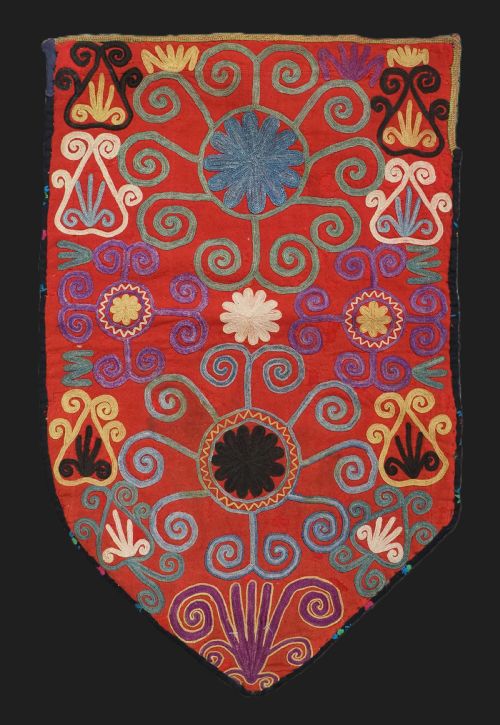
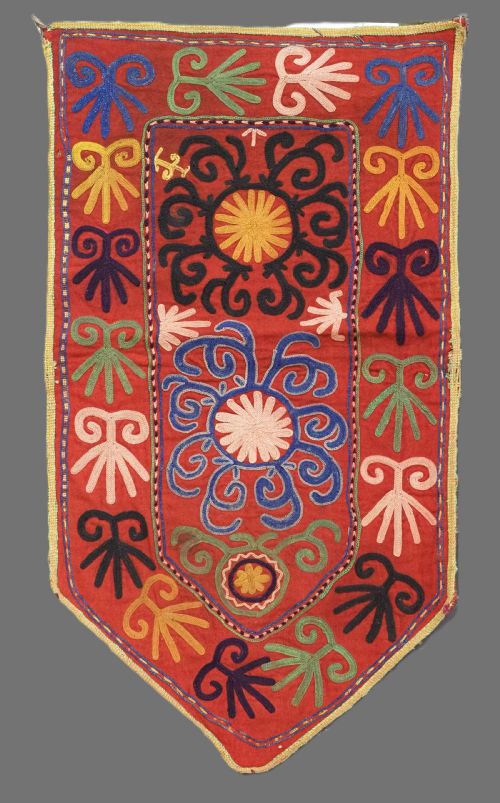
- Uut Kap
- A specific form of Central Asian or Lakai tribal trapping used for domestic storage or ceremonial purposes. They are notable for distinct tribal designs and careful needlework.
Silk Needlework Wall Hanging: Frequently Asked Questions
How do I hang a textile safely?
Mounting heavy historical textiles requires distributing the weight evenly across the entire upper edge. Utilising a concealed fabric sleeve stitched to the reverse prevents direct tension on the ancient fibres.
Keeping the piece away from direct sunlight protects the natural silk threads from fading. Professional framing behind UV-filtered glass provides an alternative method for smaller mounted panels.
Where were Suzanis made?
These decorative embroideries originate primarily from historical centres across Uzbekistan and surrounding Central Asian regions. Towns like Bokhara, Samarkand, and Tashkent developed distinct local styles and colour palettes.
Each urban centre or tribal group infused their needlework with unique geometric and floral compositions. This regional variation allows collectors to trace the specific provenance of individual wall hangings.
What is the difference between a Suzani and a Nim Suzani?
A standard Suzani typically measures large enough to serve as a significant wall covering or bed cover. Their expansive surfaces allow for grand medallion layouts and complex border arrangements.
A Nim Suzani represents a reduced format created using identical embroidery techniques on a smaller scale. These compact pieces suit more intimate wall spaces while retaining the intricate detail of larger works.
How are Persian Rasht embroideries different?
Persian Rasht embroideries rely heavily on intricate felt applique combined with fine silk chain stitch. Artisans cut coloured felt pieces and layered them onto a thicker felt backing before embellishing the edges with detailed needlework.
This technique creates a tactile surface texture distinct from the purely embroidered cotton grounds common in Central Asian textiles. Floral and star medallions dominate their compositional style.