



Silk Floral Embroidered Throw
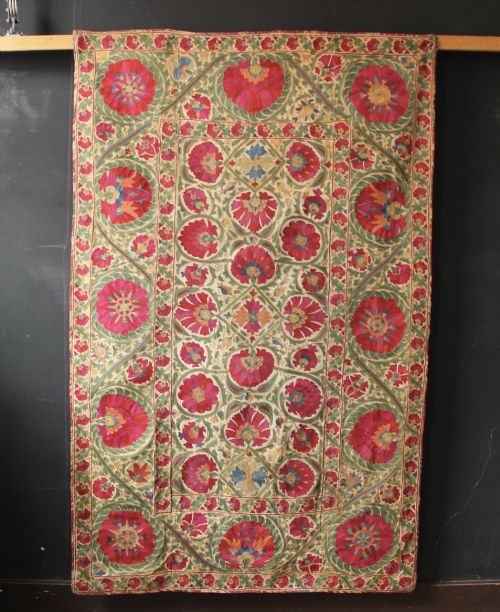
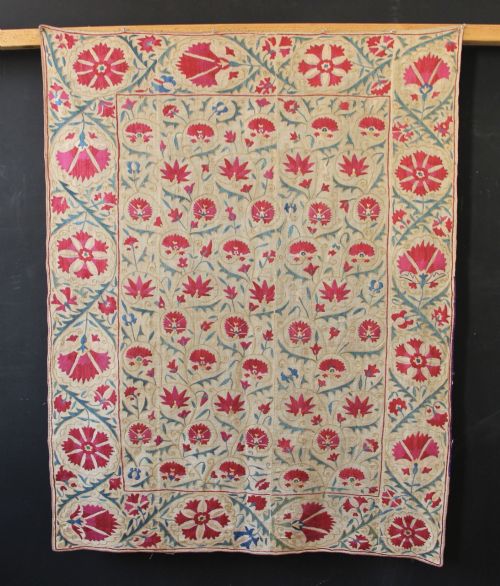
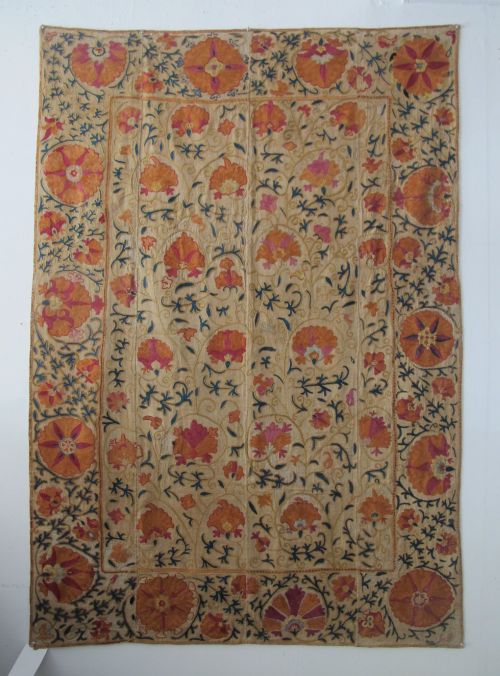
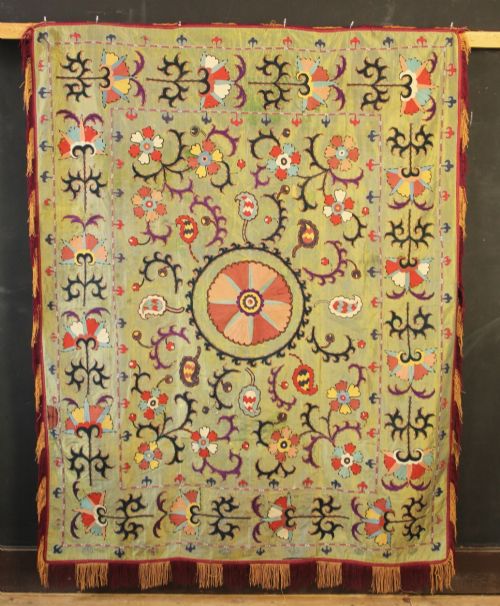
A silk floral embroidered throw brings brilliant Central Asian and Indian textile traditions straight into a modern interior.
Silk Floral Embroidered Throw
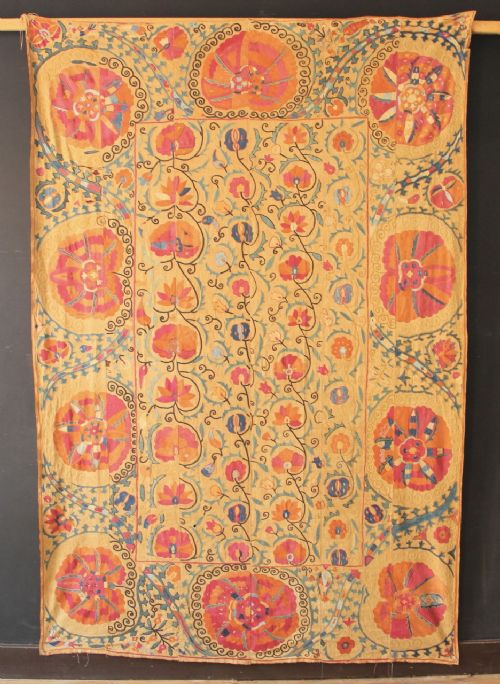
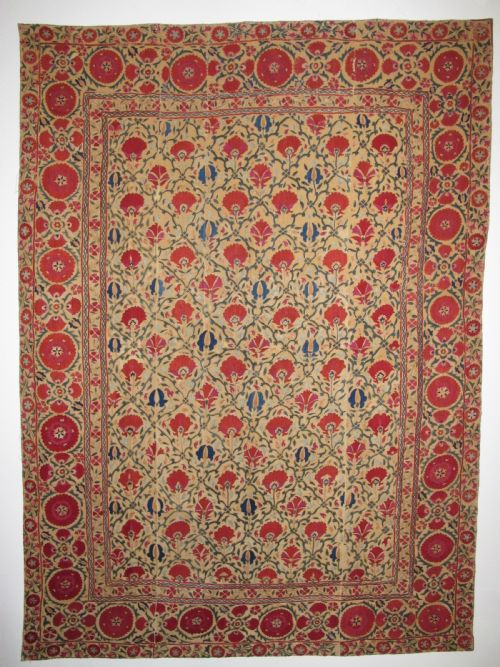
When you search for a silk floral embroidered throw, you are looking at antique and vintage textile panels, wall hangings, and covers originating from Central Asia and India. These pieces span periods from the early nineteenth century through the early twentieth century, reflecting rich regional traditions.
The most common examples you will meet on this page are Uzbek suzanis and nim suzanis, alongside traditional Indian needlework on velvet. They range from compact nim suzanis to large medallion variant suzanis intended to adorn rooms with bold botanical motifs.
Materials and Techniques
These textiles rely on fine silk thread worked meticulously onto supportive ground materials such as woven cotton and rich velvet. Artisans employed needlework techniques to build dense, colourful floral compositions across the surface.
Regional workshops utilised local dyeing methods to achieve vibrant reds, greens, and neutral grounds that hold their character across the decades. The combination of lustrous silk embroidery upon a cotton or velvet backing gives these covers their distinctive tactile depth.
The selection includes pieces spanning the nineteenth and early twentieth centuries, executed in silk thread on cotton and velvet grounds.
Distinctions in Quality
Quality rests upon the fineness of the needlework and the complexity of the botanical design, separating standard utility pieces from exceptional examples. Dense, intricate silk thread application creates greater visual impact and structural integrity.
The harmony of the colour palette and the precision of the traditional motifs distinguish regional tribal artistry from simpler commercial output. Superior panels exhibit confident spacing in the floral arrangement and balanced proportions across the entire textile.
The Silk Floral Embroidered Throw Glossary
- Suzani
- An embroidered tribal textile from Central Asia, traditionally worked in silk on a cotton or linen ground. These large decorative panels often feature bold floral and medallion motifs.
- Nim Suzani
- A smaller half-size version of the traditional suzani, typically measuring around half the length of a full cover. They were historically used for smaller decorative purposes within the home.
- Lakai
- A distinct ethnographic group within Central Asia known for dynamic, expressive embroidery styles. Their work often incorporates lively geometric elements alongside floral themes.
Silk Floral Embroidered Throw: Frequently Asked Questions
How were suzanis originally used?
These textiles served as ceremonial covers, wall hangings, and dowry items within Central Asian homes. They added warmth, colour, and prestige to domestic interiors.
Families displayed them on special occasions, and they formed a central part of a bride's trousseau before entering the antique market.
Can I use these as a throw?
Many collectors gently drape these antique textiles over furniture or beds to bring historic colour and texture into a room. Their woven cotton and velvet grounds provide adequate flexibility for careful placement.
Because of their age and delicate silk threadwork, they suit low-traffic areas where they experience minimal friction or wear.
What is the difference between a suzani and a nim suzani?
A standard suzani is a large full-scale wall hanging or cover, whereas a nim suzani is approximately half that size. The prefix nim denotes this smaller scale in traditional measurements.
Both share the same silk embroidery techniques and botanical imagery, but nim suzanis fit into more compact wall spaces.