





Silk Floral Art
Silk floral art brings centuries of botanical needlework and woven textiles into interior spaces, offering rich textures and historic colour palettes.
Silk Floral Art
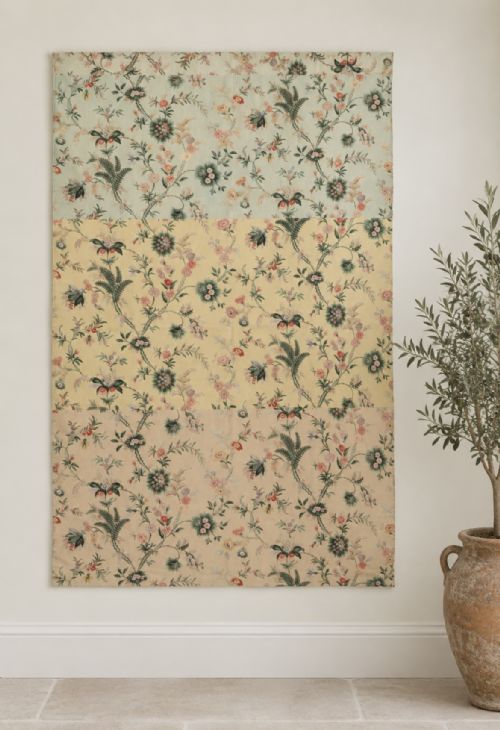
When buyers search for silk floral art, they encounter a diverse range of historic textiles, including framed embroideries, wall hangings, and mounted panels. These pieces span multiple centuries, originating from European, Ottoman, Chinese, and Central Asian traditions.
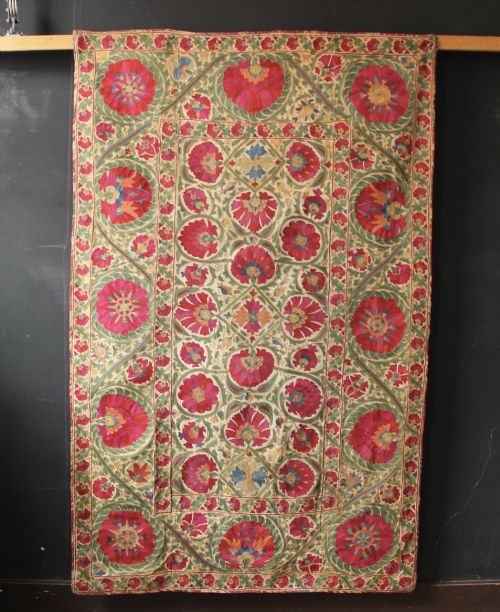
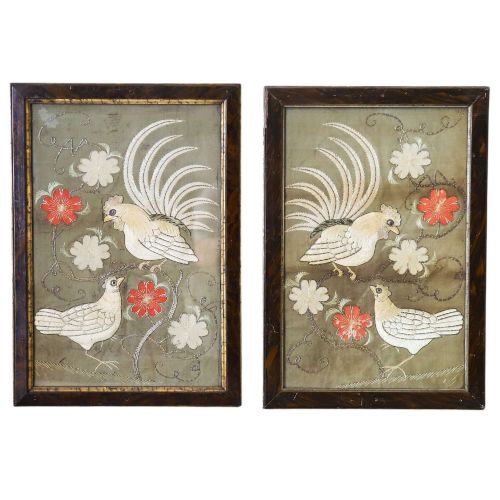
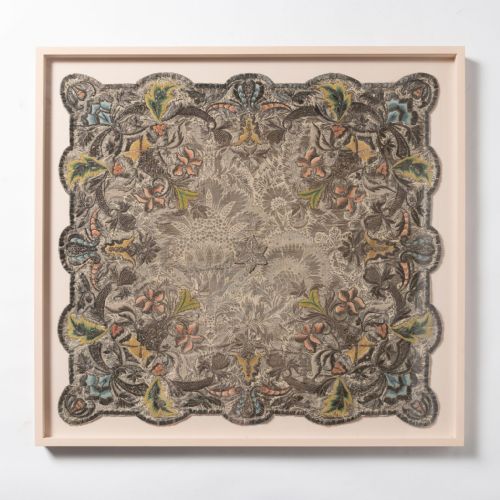
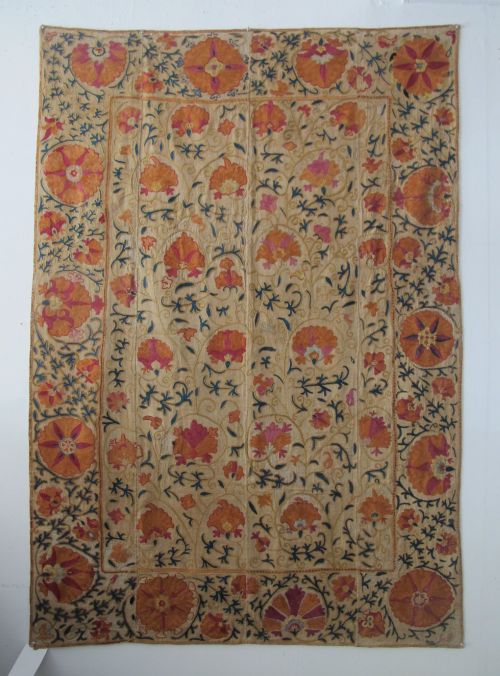
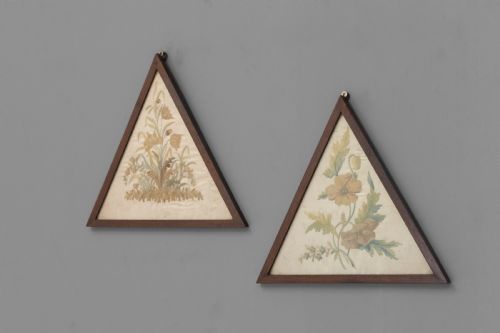
The selection on this page relies heavily on needlework pictures, embroidered fragments, and large-scale suzanis featuring botanical motifs. Buyers frequently meet pieces executed on cotton or linen grounds, embellished with silk thread to render floral designs.
Geographic origins dictate the distinct aesthetic of each piece, shifting from English needlework samplers and French silk embroideries to Central Asian suzanis from Bokhara, Samarkand, and Nurata. Each region applies its own characteristic stitch work and colour arrangement to floral subjects.
Evaluating Quality and Execution
Technical proficiency in the needlework determines the visual impact, separating tightly worked, expressive botanical forms from simpler compositions. The density of the silk thread and the preservation of the ground fabric dictate the overall integrity of the piece.
Provenance and cultural authenticity separate standard decorative items from exceptional historic examples. The complexity of the floral arrangement and the retention of original framing or mounting methods heavily influence the character of each textile.
The listings feature textiles spanning the 17th, 18th, 19th, and early 20th centuries, alongside regional works from Central Asia, China, and Europe.
The Silk Floral Art Glossary
- Suzani
- A type of embroidered tribal textile originating from Central Asia, traditionally featuring bold floral motifs on a cotton or linen ground.
- Needlework
- A piece created by stitching decorative designs onto a fabric foundation using thread and a needle.
- Tapestry
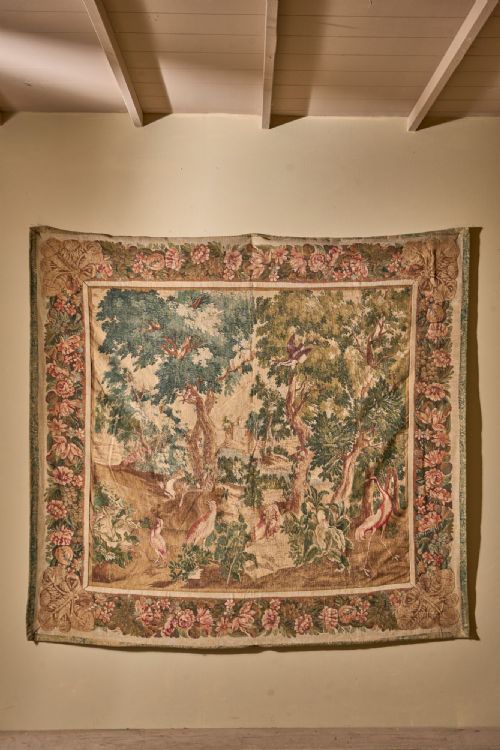
- A form of textile art woven on a loom rather than embroidered, often depicting figurative or botanical scenes.
- Gouache
- An opaque water-based pigment used by artists to paint detailed botanical compositions directly onto silk surfaces.
Silk Floral Art: Frequently Asked Questions
How should I hang historic textiles safely?
Support heavy textile panels evenly across their width using professional mounting techniques rather than suspending them from single points of tension. Keep them away from direct sunlight to preserve the natural dyed colours of the silk.
Consult a textile conservator if the backing fabric shows strain or if the piece requires additional structural support before wall placement.
What is the difference between a suzani and a tapestry?
Suzanis are embroidered by hand using needle and thread on a woven foundation fabric, typically displaying bold floral and botanical layouts. Tapestries are woven on a loom, integrating the design directly into the structural weave of the textile.
Both forms serve as wall art but represent entirely different craft traditions across Central Asia and Europe.
How do I identify the period of an antique embroidery?
Dating relies on examining the type of thread, the weave of the ground fabric, and the stylistic traits associated with specific regions and centuries. Stylistic shifts in botanical representation often provide reliable clues to the era of execution.
Comparing stitch density and material preparation against documented historic examples helps confirm the age of the piece.
Can framed silk panels tolerate room humidity?
Historic silk and cotton fabrics react poorly to fluctuating moisture levels, which can encourage mould growth and fibre degradation over time. Maintain a stable indoor environment away from damp exterior walls.
Glazing the frame with UV-filtering glass protects the delicate silk threads from fading while keeping dust accumulation away from the surface.