
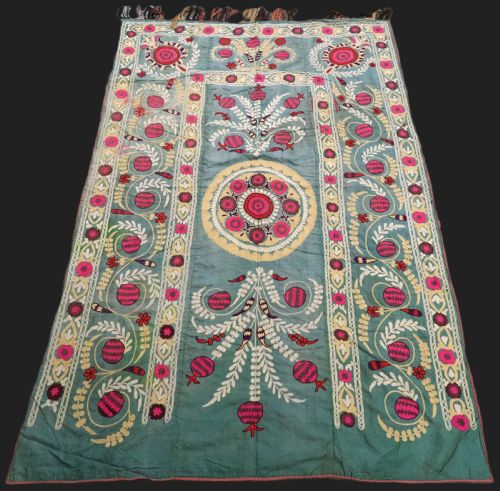


Silk Embroidered Cover
These textiles bring tactile richness to a room, and a silk embroidered cover offers an authentic glimpse into Central Asian, Persian, and Indian craftsmanship.
Silk Embroidered Cover
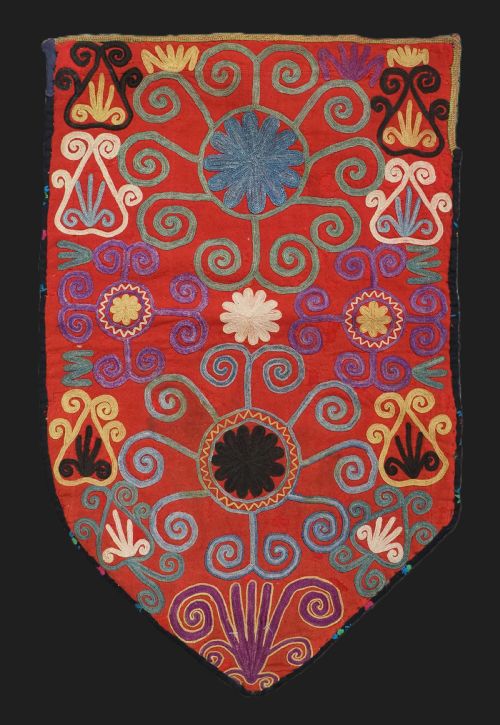
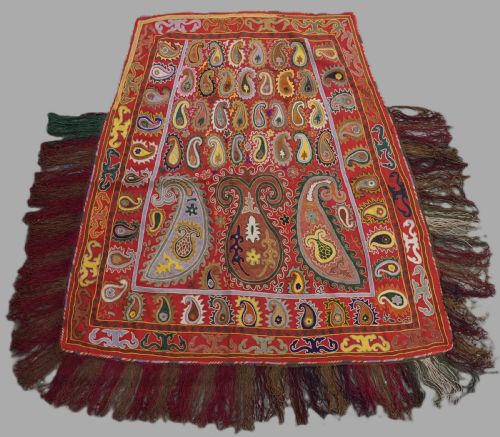
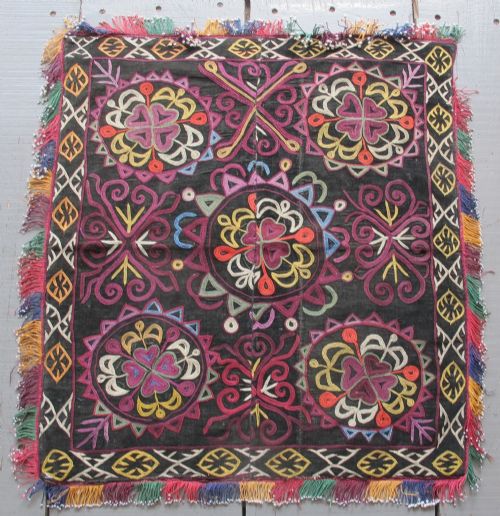
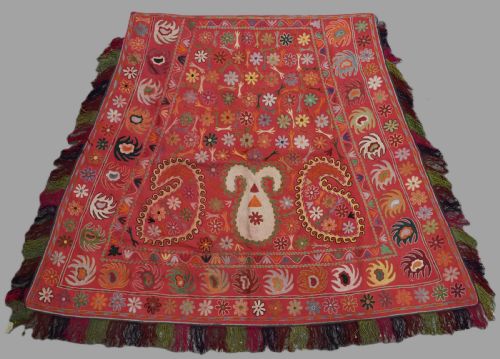
When you search for a silk embroidered cover, you encounter textiles originating primarily from Central Asia, Persia, and India during the nineteenth and early twentieth centuries. The selection spans utilitarian and ceremonial forms, including horse covers, saddle rugs, bed covers, mirror covers, and wall hangings.
The most common examples on this page are Uzbek suzanis and Lakai tribal pieces dating from around 1800 to the 1930s. These range from large panels designed for domestic interiors to smaller ceremonial items worked by regional tribes.
Regional styles dictate the visual language, encompassing Central Asian tribal designs, Qajar motifs, and Persian Rasht embroidery. Each form reflects the specific cultural traditions and domestic requirements of its makers.
Determining quality
Quality rests upon the density and precision of the needlework, the harmony of the palette, and the integrity of the ground fabric. Superior examples display intricate stitch control and balanced compositional geometry that elevate them beyond standard domestic output.
The sophistication of regional design execution also separates standard pieces from exceptional works. Strong provenance, evident in nuanced colour palettes and authentic tribal motifs, defines the upper tier of the range.
Geographic origins represented include Uzbekistan, Persia, India, and broader Central Asian tribal regions.
The Silk Embroidered Cover Glossary
- Suzani
- An embroidered tribal wall hanging or bed cover originating from Central Asia, typically worked in silk on a cotton or silk ground. These large textiles often feature bold floral medallions.
- Rasht embroidery
- A traditional Persian textile technique involving inlaid wool felt and silk appliqué work. Named after the northern Iranian city, it produces rich geometric and floral patterns.
- Lakai
- A Central Asian Uzbek tribe known for distinctive nomadic embroidery. Their work frequently appears on ceremonial horse covers and small domestic panels using vibrant motifs.
- Palak
- A specific type of Uzbek suzani characterised by a fully embroidered ground. These dense compositions cover the entire fabric base with intricate patterns.
- Appliqué
- A sewing technique where pieces of fabric are applied to a larger ground material to form a design. It is frequently seen on Persian felt and velvet works.
Silk Embroidered Cover: Frequently Asked Questions
How were silk embroidered covers used historically?
Historically, these textiles served multiple functions within domestic and ceremonial spheres. Many acted as wall hangings, bed covers, or decorative throws in Central Asian and Persian homes.
Others held specific ritual roles, such as ceremonial horse and saddle covers used during tribal celebrations or protective mirror covers.
How do I care for an antique silk embroidered cover?
Protect these fragile textiles from direct sunlight to prevent the silk threads and dyed grounds from fading over time. Gentle, occasional vacuuming through a mesh screen helps remove dust without disturbing loose stitches.
Avoid hanging heavy panels by a few isolated points to prevent stretching the historic fabric. Professional textile conservators should handle any necessary cleaning.
How can I tell regional styles apart?
Regional styles reveal themselves through distinct combinations of motifs, materials, and colour palettes. Uzbek suzanis often showcase large floral vines and sunburst medallions on cotton foundations.
Persian Rasht works are easily identified by their signature silk embroidery laid over coloured wool felt grounds, featuring centralized star or floral medallions.
What period do most of these covers date from?
The majority of the pieces available date from the late nineteenth century through to the early decades of the twentieth century. This era encompasses late Qajar Persia and various periods of Central Asian tribal production.
Earlier examples from the mid-nineteenth century also appear periodically, distinguished by older dye lots and traditional village craftsmanship.