

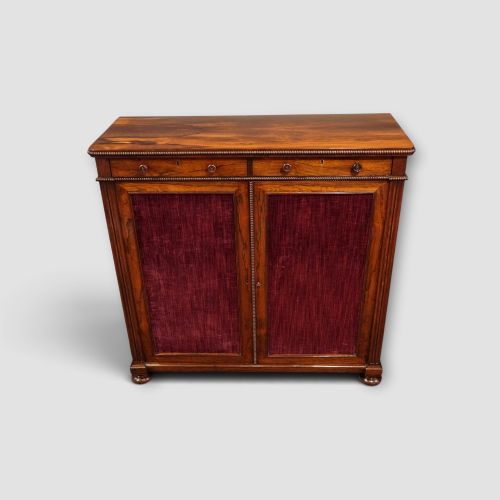
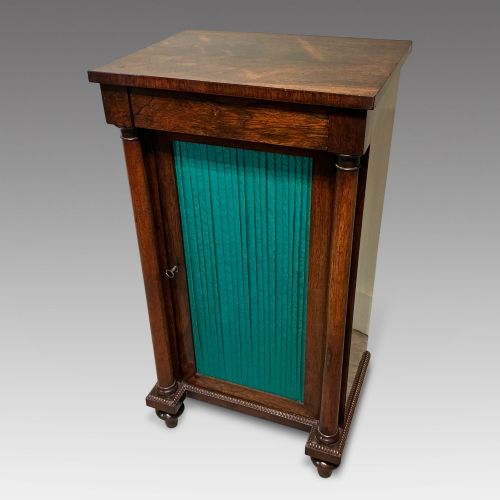
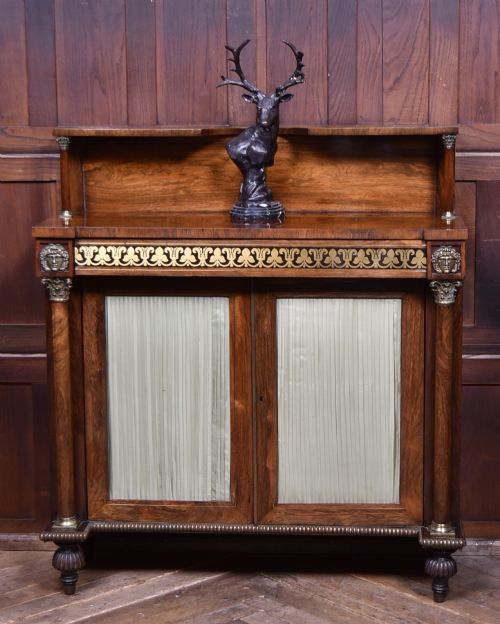
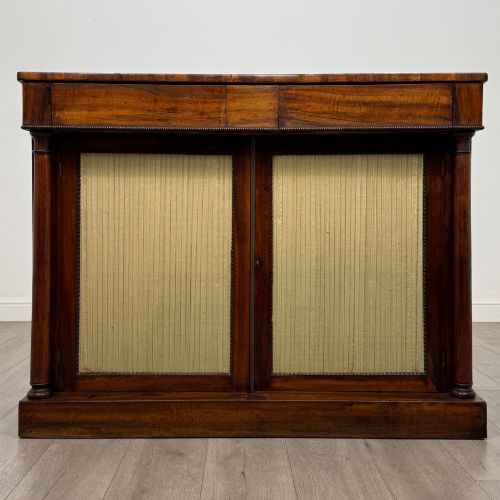
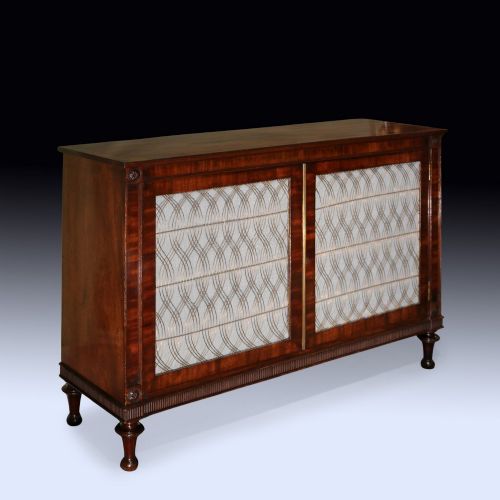
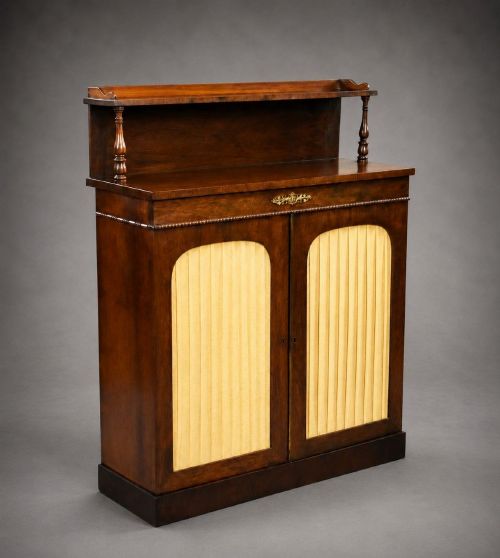


Silk Door Side Cabinet
These silk door side cabinet examples bring rich nineteenth-century timber and textured panels into a room, offering both display and concealed storage.
Silk Door Side Cabinet
A silk door side cabinet is a low storage piece designed to sit against a wall, frequently taking the form of a chiffonier, breakfront cabinet, or cupboard. The pieces seen here span the Regency, George IV, and Victorian periods, alongside general nineteenth-century examples.
Most entries on this page are constructed in rich timbers such as rosewood and mahogany, often featuring distinctive fabric panels behind glass or fretwork doors. These items combine the utility of a traditional side cabinet with the softer texture of silk inserts.
How they were made
Cabinet makers utilised dense hardwoods like rosewood and mahogany for the main carcase, sometimes applying simulated rosewood finishes. Brass mounts, brass grilles, and ormolu details were integrated to accent the woodwork.
Internal and external panels were inset with fabric and silk to soften the substantial timber structures, creating a contrast between polished wood and pleated textile.
Silk Door Side Cabinet Retail Price Guide 2026
Typical asking prices for silk door side cabinet among the pieces listed under this phrase on Sellingantiques today, from the lower quarter to the upper quarter. They describe what is for sale here now, not the wider market.
The furniture on this page bridges the Regency, George IV, and Victorian periods, encompassing both breakfront cabinets and chiffoniers.
What varies in quality
The standard of timber selection and the precision of the brasswork define the upper tier of these cabinets. Finely figured rosewood veneers and well-executed breakfront proportions elevate a piece above standard utility furniture.
The integration of the silk panels within the doors or grilles requires careful execution, where balanced tension and harmonious colour choices separate master workshop output from simpler provincial items.
A. Solomon, London·Gillows
The Silk Door Side Cabinet Glossary
- Chiffonier
- A low sideboard or cabinet featuring shelves or enclosed storage, popular during the Regency and Victorian eras. These pieces typically include cupboard doors beneath a raised upper tier.
- Breakfront
- A piece of furniture where the central section projects forward from the flanking outer sections. This architectural arrangement creates depth and shadow across the front elevation.
- Ormolu
- Gilded bronze or brass applied as decorative mountings on furniture. The technique adds metallic contrast and refined detail to dark timber surfaces.
- Grille
- A lattice framework of brass or wire fitted into cabinet doors to protect delicate contents while maintaining visibility. It often fronts a pleated silk backing.
Silk Door Side Cabinet: Frequently Asked Questions
What is a silk door side cabinet?
A silk door side cabinet is a low nineteenth-century storage piece, often taking the form of a chiffonier or breakfront cupboard. These items incorporate fabric or silk panels behind doors to soften the appearance of dense timbers.
They were designed for principal rooms to store books, linens, or decorative objects while providing a surface for display.
How were these cabinets used historically?
These cabinets served as versatile storage and display furniture in nineteenth-century drawing rooms and dining rooms. The enclosed lower sections hid household items, while the top surface held lamps or decorative ceramics.
Silk panels helped to conceal contents while introducing colour and texture into formal interiors.
How do I identify a Regency period piece?
Regency pieces often display classical architectural proportions, dark rosewood or mahogany timbers, and restrained brass mounts. Makers of this era frequently incorporated brass grilles and fine stringing.
Comparing construction methods and decorative motifs helps distinguish Regency items from later nineteenth-century interpretations.
How do I care for antique silk panels?
Antique textiles require protection from direct sunlight to prevent fading and fibre degradation. Gentle dusting with a soft brush helps maintain the fabric without causing structural damage.
Keeping the timber and textiles in stable environmental conditions preserves both the wood and the delicate silk inserts.