
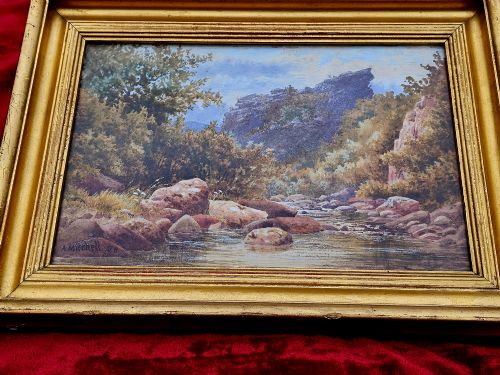
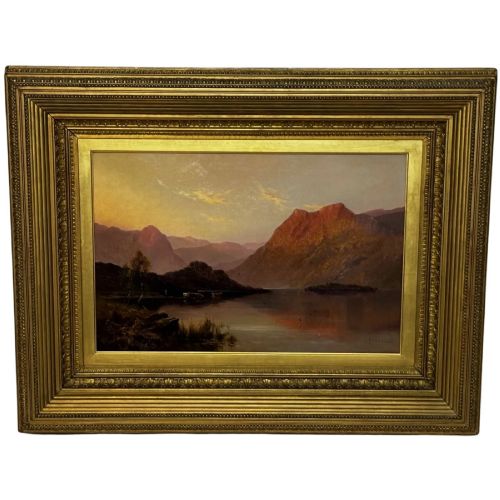
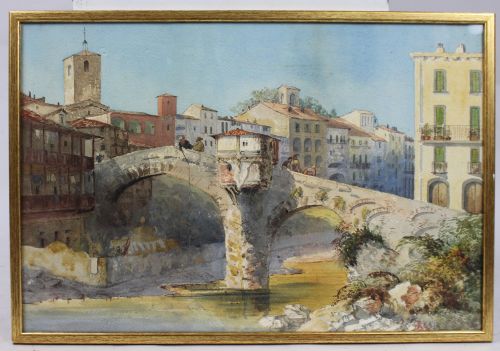


Signed Victorian Landscape Picture
A signed victorian landscape picture brings the nineteenth-century countryside or coast directly into a room through the careful hand of a named artist.
Signed Victorian Landscape Picture
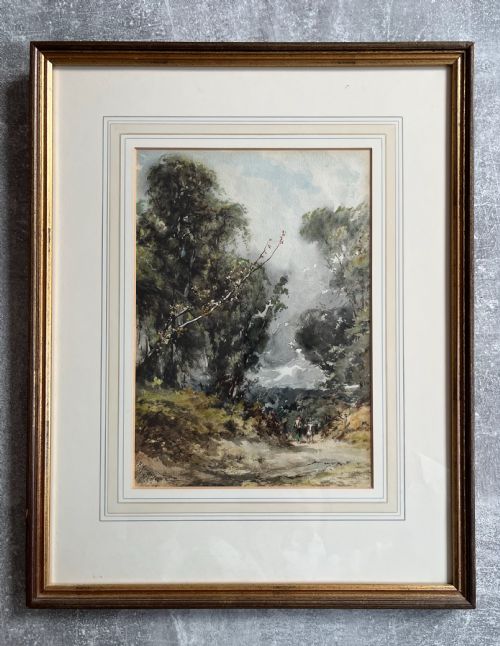
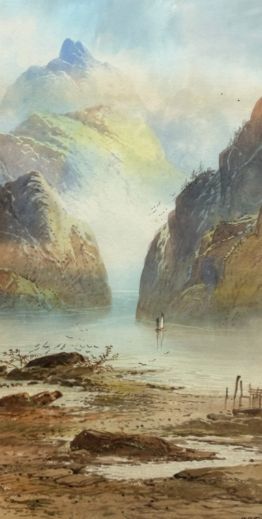
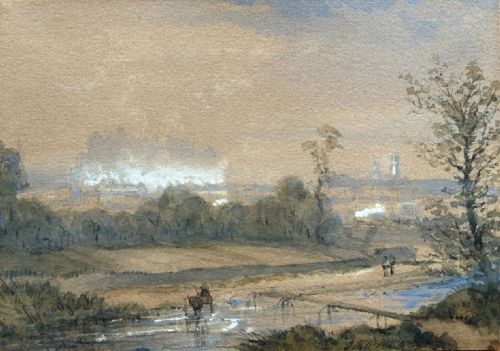
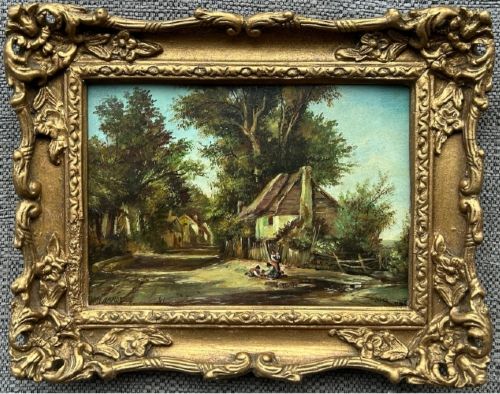
A signed victorian landscape picture captures rural scenes, rivers, coasts and mountain views created during the nineteenth and early twentieth centuries. These artworks bear the personal signature of the painter, marking them as individual creative expressions rather than anonymous studio output. The selection encompasses framed watercolours on paper and oil paintings executed on canvas, wood panel or board.
Most examples originate from British artists working in styles ranging from Victorian realism to early impressionism. Subjects frequently span Scottish highlands, Yorkshire coasts, Welsh valleys and tranquil riverbanks. They offer a direct window into historical topography combined with period artistic interpretation.
Materials and Techniques
The physical foundation typically involves woven canvas stretched over wooden frames, sturdy wood panels, or heavy paper sheets for watercolours. Artists applied oil paint with brushes or palette knives to build rich textures, whilst watercolour works utilised transparent washes layered with fine detail. Finished pieces were commonly housed within period gilt wood frames protected by glass in the case of works on paper.
Pigments were handled with traditional nineteenth-century proficiency, allowing subtle gradations of light across skies, foliage and water. Signatures were usually applied directly by the hand of the painter in the lower corners using contrasting pigment or ink.
Listings feature works spanning the nineteenth century through to the Edwardian era, utilising canvas, paper, wood and gilt frames.
Assessing Artistic Quality
Quality rests upon the confidence of the brushwork, the handling of natural light, and the compositional balance of the scene. Superior works display a careful observation of atmospheric conditions, from autumn woodlands to coastal mists, rather than rigid adherence to formulaic scenery. The integration of figures or livestock into the wider topography also separates exceptional execution from standard topographical record.
The integrity of the original support, the preservation of the pigment without excessive restoration, and the presence of a matching period gilt frame contribute to the standing of an individual piece. The prominence of the signing artist within the artistic record further distinguishes the hierarchy of these works.
George Fotherly Hargitt·William Henry Earp·John R Prentice·Alfred Fontville de Breanski Jr·John Emms·William George Tennick·Alfred George Morgan·Thomas Sidney Cooper·Harry Wanless·Arthur Herbert Rigg·F J Aldridge·Henry Bailey·Benjamin Williams Leader·Robert John Hammond
The Signed Victorian Landscape Picture Glossary
- Watercolour
- A painting method where fine pigment is suspended in a water-soluble binder and applied to paper. This medium relies on the white of the paper showing through translucent washes to create luminous effects.
- Oil on Canvas
- An artwork created using pigments bound in a drying oil applied directly to stretched woven fabric. This combination allows for rich blending and deep textural buildup.
- Gilt Wood
- Timber framing finished with a thin layer of gold leaf or metallic gilding. These decorative surrounds were designed to complement the tones of the painting within.
- Panel
- A solid flat piece of wood used as a rigid support for oil painting instead of flexible canvas. Wooden boards provided a stable surface favoured by many nineteenth-century painters.
- Diptych
- A pair of painted panels or pictures hinged or presented together as a single matched artistic statement. Such works often depict complementary coastal or rural views.
Signed Victorian Landscape Picture: Frequently Asked Questions
What is a signed victorian landscape picture?
It is an original painting or watercolour depicting natural scenery, created during the nineteenth or early twentieth century and authenticated by the artist's personal signature.
These works record British and European topography through the specific aesthetic lens of the period.
How do I care for these paintings?
Keep them away from direct sunlight and fluctuating humidity to protect both the paper or canvas and the original framing. Watercolours especially benefit from UV-protective glazing.
Dust wooden gilt frames gently with a dry cloth without using liquid cleaners.
How are watercolours and oils different?
Watercolours use translucent washes on paper and require glass protection within their frames. Oil paintings utilise heavy pigments on canvas or wood and have robust textured surfaces.
Both mediums capture light differently, with oils offering deeper impasto and watercolours providing luminous delicacy.
Are original frames important?
Period gilt wood frames provide historical context and complement the aesthetic design of nineteenth-century artwork. Matching frames often remain with the piece from its original creation.
Original framing enhances the integrity of the object for collectors.