
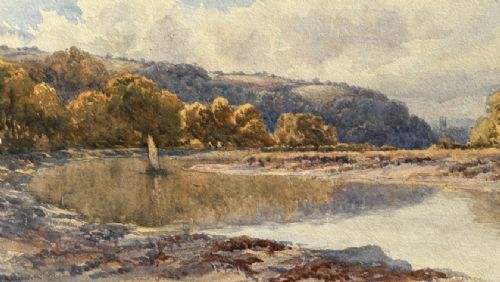


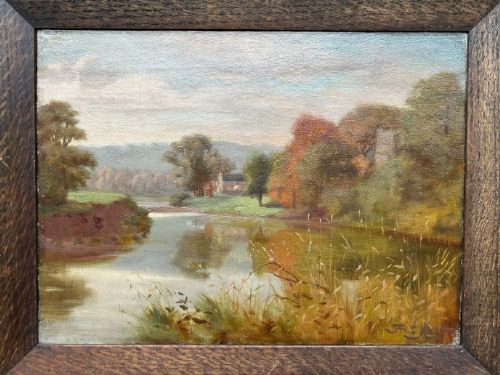
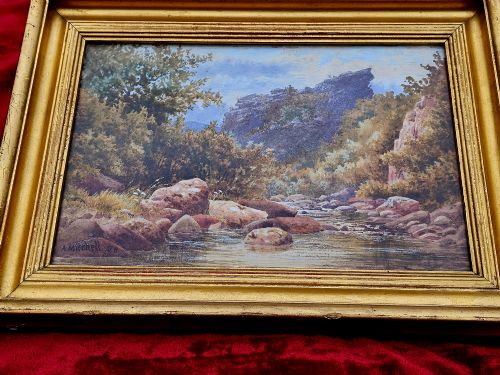
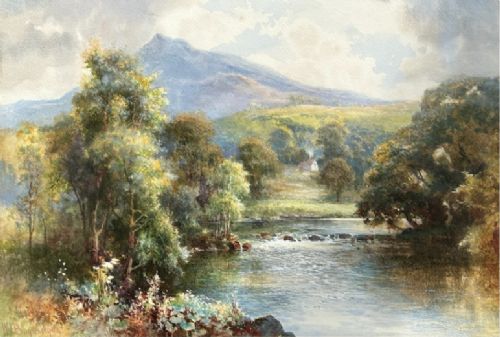
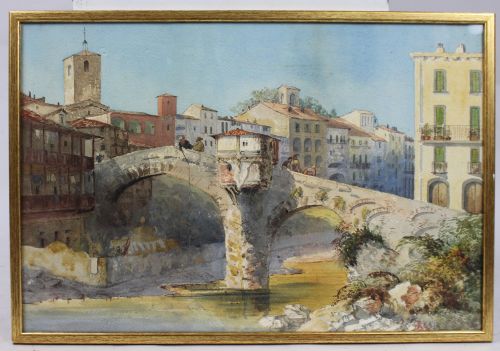
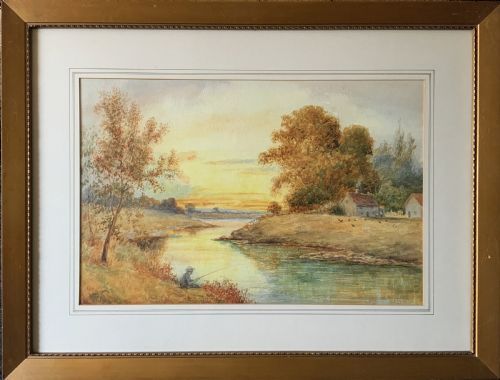
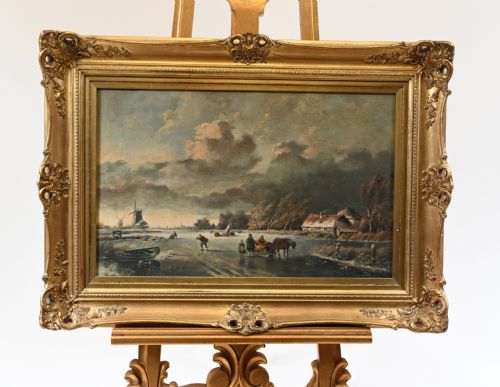


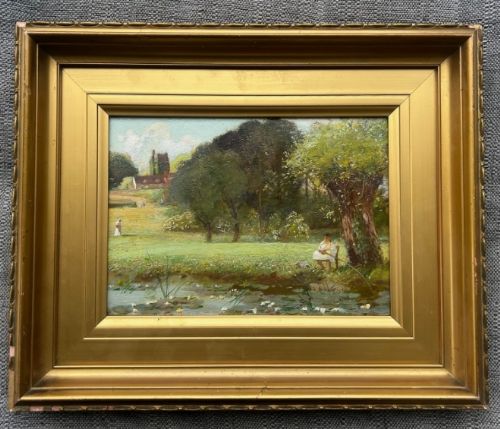
Signed River Landscape Painting
When you search for a signed river landscape painting, you find framed watercolours and oils capturing pastoral waters from past centuries.
Signed River Landscape Painting
A signed river landscape painting brings together flowing water, rural banks and the authenticated hand of a maker from the nineteenth or twentieth century. These works capture British and continental waterways, ranging from quiet Welsh streams to bustling Scottish rivers.
The pieces on this page appear as watercolours on paper or oils on canvas, wood panel and board, reflecting the favoured sketching and studio mediums of the Victorian and Edwardian eras. Buyers encounter intimate sheet watercolours alongside substantial framed oils ready for display.
Most examples date from the Victorian and Edwardian periods up to the mid-twentieth century, showing realistic rural scenes, impressionist brushwork and tonal atmospheric studies. Each piece preserves a specific topography recorded by artists working directly from nature.
Materials and methods
Painters built these landscapes using oil paint applied to stretched canvas, prepared wood panels, milk glass or paper boards, often sealing the surface with protective varnishes. Watercolourists worked on heavy rag paper with transparent washes, occasionally adding bodycolour for highlights.
Artists mounted their compositions within original carved wooden frames, frequently finished with gesso and gilt leaf to accent the painted view.
Listings span periods from the 1800s through the 1960s, executed in oil and watercolour on canvas, paper and wood.
What determines quality
Quality rests upon the confidence of the brushwork and the artist's command of natural light, shadow and water reflection. Superior works reveal decisive mark-making that constructs depth and atmosphere without hesitation.
The preservation of the pigment and the paper or canvas surface dictates the longevity and visual impact of the composition. Stronger pieces retain vibrant colour harmony and minimal disruption from historical damp or light exposure.
David Law·Kenneth Cozens·Frederick Marriott·William Joseph Boyes·Alfred George Morgan·Sir David Murray·Arthur Herbert Rigg·Thomas Bush Hardy·John Syer·Thomas Pyne·Thomas Swift Hutton·David Cox Senior·Claude Hayes·Norman Wilkinson·James Orrock
The Signed River Landscape Painting Glossary
- Watercolour
- A painting method where fine pigment is suspended in a water-soluble binder and applied to paper. This technique allows for translucent washes that capture the movement and reflection of river water.
- Gesso
- A plaster-like mixture applied to wooden panels or frames as a smooth base for painting or gilding. It provides a stable foundation that accepts oil and gold leaf.
- Impressionism
- An artistic approach focusing on visible brush strokes and the shifting qualities of natural light. Practitioners of this style prioritised outdoor observation over strict academic studio finishes.
- Panel
- A rigid wooden support used by artists in place of canvas. These boards were frequently prepared with priming layers before receiving oil paint.
Signed River Landscape Painting: Frequently Asked Questions
How should I hang my painting?
Keep framed watercolours and oils away from direct sunlight and damp walls to protect the paper and canvas. Mount them securely using appropriate fixings suited to the weight of the wooden frame.
Maintain a stable room temperature to prevent the wood panels and canvases from expanding or contracting over time.
Are these works original?
The listings feature hand-painted original works rather than modern mass-produced prints or reproductions. Artists applied paint directly to canvas, wood or paper during the periods indicated.
Signatures inscribed by the hand of the artist appear on the face of the works or occasionally on the reverse.
How do I identify the date?
Dates appear through handwritten inscriptions on the front or back of the work, artist signature styles, and framing conventions typical of the era. Catalogues and historical exhibition records also help place undated works.
Materials such as mill-stamped canvas boards and specific paper watermarks provide further chronological markers for the Victorian and Edwardian periods.
What subjects are depicted?
The paintings show rivers, streams, bridges, pastoral valleys and coastal harbours across Britain and continental Europe. Figures fishing, crossing stone bridges or tending boats frequently populate the banks.
Topographical views range from Welsh valleys and Scottish highlands to English rivers like the Thames, Tees and Wharfe.