




Green Forest Landscape Painting
These green forest landscape painting works capture woodland scenes in oil and watercolour across the nineteenth and twentieth centuries.
Green Forest Landscape Painting
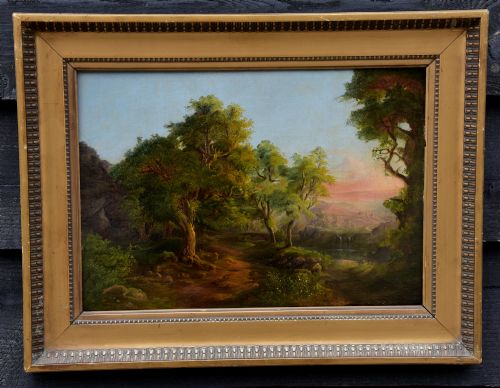
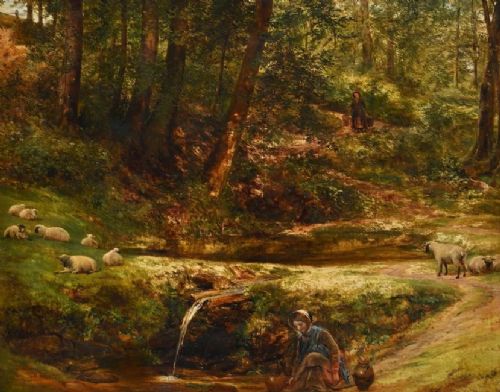
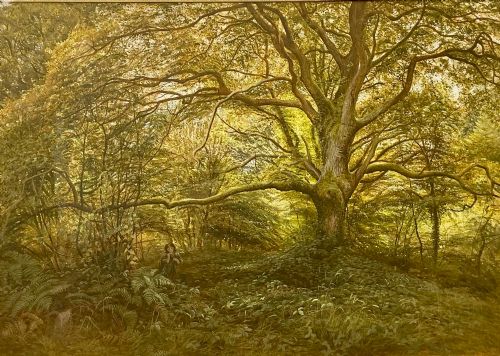
A green forest landscape painting depicts trees, woodlands, and rural nature, mostly originating from the nineteenth century and the mid-twentieth century. Buyers searching this phrase meet works rendered on canvas, board, paper, and wood panel.
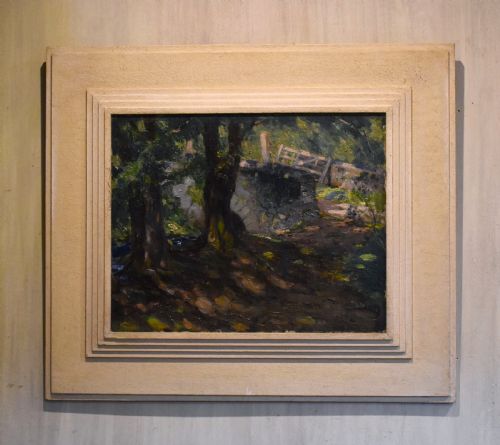
The selection includes Victorian examples alongside Edwardian pieces and later impressionist interpretations. British impressionism and realism appear frequently among the listed objects.
Makers and artists span named British painters and continental works, capturing everything from deep woodland paths to river landscapes in autumn.
Materials and methods
Artists apply oil paint or watercolour onto prepared supports such as canvas, wooden boards, and heavy paper. Pigments build up depth in foliage and tree trunks through brushwork characteristic of nineteenth century romanticism and impressionism.
Frames and panels utilise wood, while works on paper or board rely on the stability of the backing material to preserve the pigment over decades.
Several artists clearly spent damp afternoons peering into Yorkshire and Devon woods to capture bluebells and river spray.
Judging quality
Quality rests on the handling of light within the woodland canopy and the dexterity of the brushwork. Works by accomplished painters display confident control over tone and atmosphere compared to simpler decorative pieces.
The preservation of the paint surface and the stability of the original canvas or board contribute significantly to the standing of an individual artwork.
William H Myers·Thomas W Lascelles·Richard Redgrave·Bonomi Edward Warren·Thomas Bromley Blacklock·James Proudfoot·Rowland Henry Hill·Edmund George Warren·Ernest Higgins Rigg·Augustus William Enness·Charles Branwhite·Albert de Belleroche·Walter Emsley·Henri Harpignies
The Green Forest Landscape Painting Glossary
- Canvas
- A heavy woven fabric stretched across a wooden frame to serve as a support for oil painting. It provides a flexible yet resilient surface for the artist.
- Board
- A rigid flat panel, often made of wood or pressed material, used as a support for paintings instead of stretched canvas. Painters utilise boards for smaller or more direct plein air studies.
- Watercolour
- A paint consisting of pigment suspended in a water-soluble vehicle, typically applied to paper. It yields transparent washes of colour suited to delicate landscapes.
- Impressionism
- An art movement focusing on accurate depiction of light and its shifting qualities rather than strict detail. Practitioners capture the immediate visual impression of a scene.
Green Forest Landscape Painting: Frequently Asked Questions
How do I date a woodland painting?
Examine the style of the brushwork, the pigments used, and the framing materials. Victorian and Edwardian works often carry specific signatures, exhibition labels, or stretcher marks indicative of their period.
Supporting documentation or artist biographies help narrow down the decade of creation when signatures are absent or indistinct.
Where should I hang a landscape painting?
Position these works away from direct sunlight and damp environments to protect oil paint and paper from fading or degradation. Stable interior walls with gentle ambient lighting suit them best.
Ensure the hanging fixings match the weight of the frame and the support panel safely.
What is the difference between oil and watercolour?
Oil paint uses a drying oil binder that allows for thick impasto application and rich, blendable colour layers. Watercolour relies on water-soluble binders on paper, creating translucent washes.
Oils generally require canvas or board supports, whereas watercolours need protection behind glass.
How do I clean an antique painting?
Dust surfaces gently with a soft, dry brush without applying pressure to the pigment layer. Professional conservators should handle any removal of old varnish or deeper grime.
Avoid household cleaners, water, and chemical solvents entirely on historic paint surfaces.