

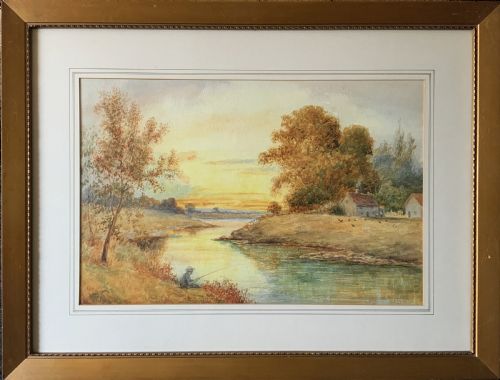
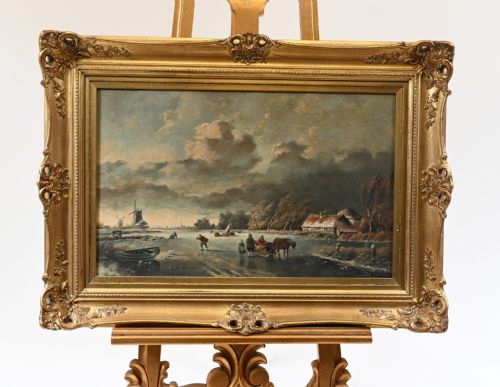

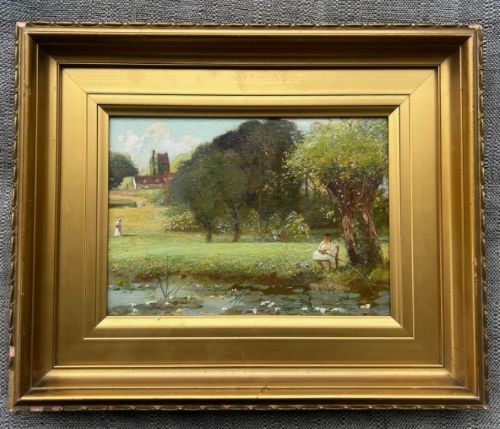
Signed River Landscape Artwork
A signed river landscape artwork brings the quiet pull of moving water and open banks indoors, recorded by artists across the nineteenth and twentieth centuries.
Signed River Landscape Artwork
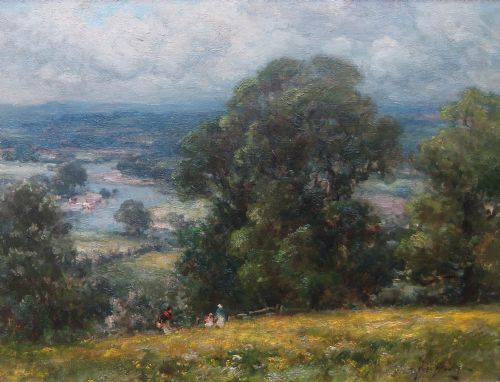
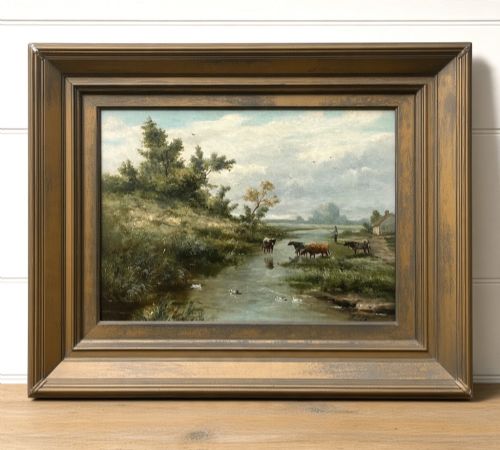
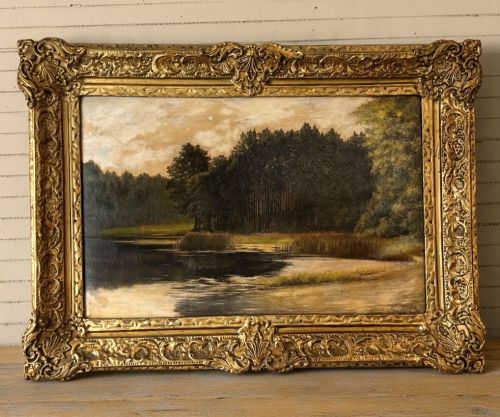
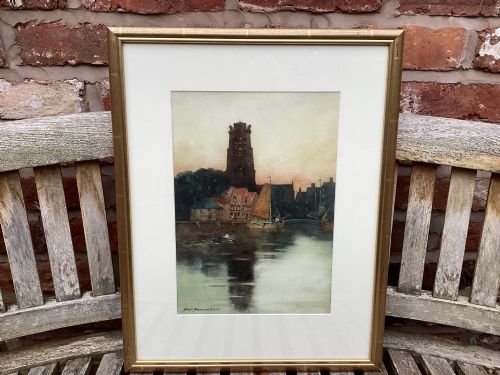
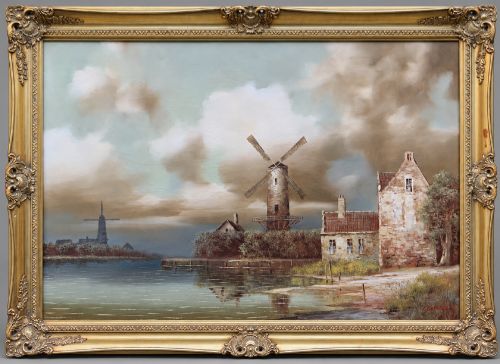
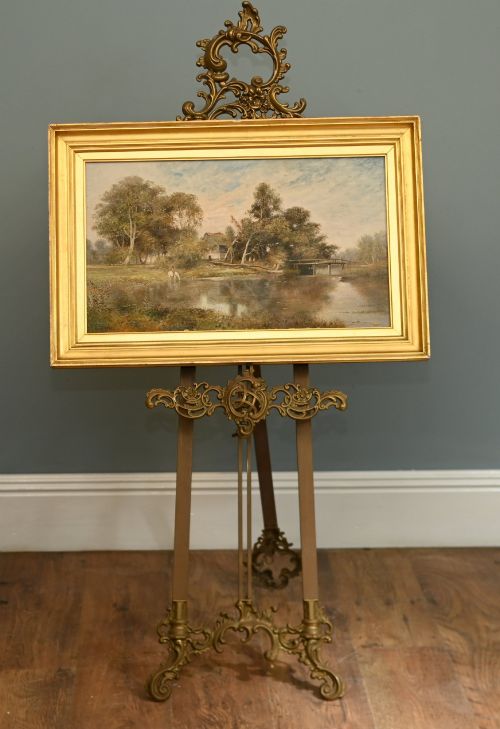
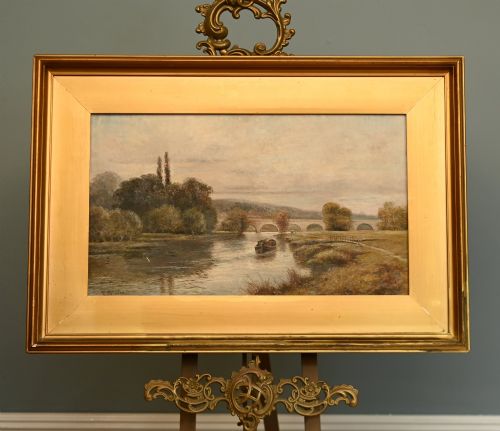
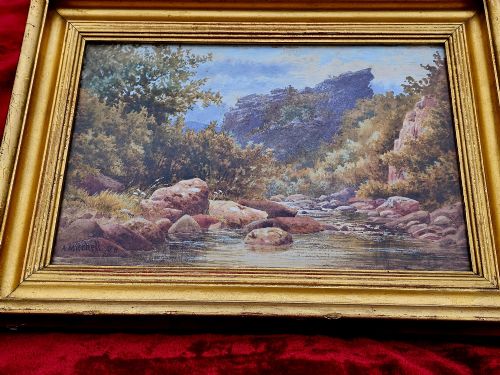
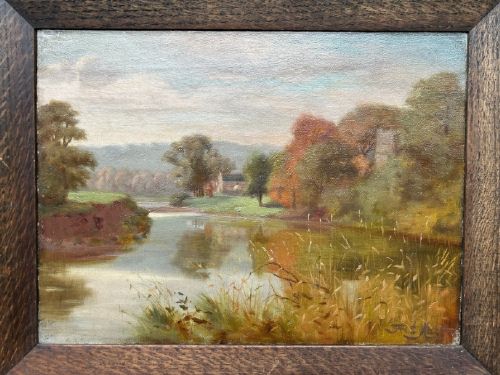
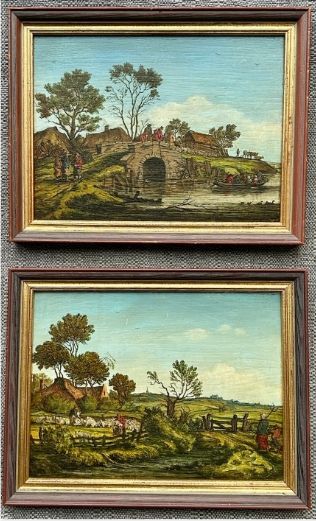
When searching for a signed river landscape artwork, buyers encounter framed wall art spanning from the nineteenth century into the mid-twentieth century, capturing British, Scottish, Dutch, and French views. The selection relies heavily on oil paintings and watercolours on canvas, wood panels, paper, and board, produced during periods such as the Victorian and Edwardian eras.
The most common pieces on this page are nineteenth-century British and Scottish watercolours and oil paintings bearing visible artist signatures, often depicting rural river banks, bridges, and coastal estuaries. Styles range from Victorian realism to Dutch School landscapes, British Impressionism, and Post-Impressionism.
These works document specific locations from the River Thames and the River Esk to continental scenes in Holland, executed by named academic painters and regional artists alike. Each piece serves as a historical window into past topography, rendered through traditional mediums.
Materials and methods
Artists painted these river scenes using oil paint or watercolour applied to stretched canvas, wooden panels, heavy paper, or prepared board, often incorporating gilt frames and protective glass. Oil mediums allowed for rich layering and textured brushwork on wood or canvas, whilst watercolours captured translucent washes on paper.
Makers utilised traditional grounds and binders, working en plein air or in studios from preparatory sketches to map out river currents, foliage, and architectural elements like stone bridges and mills. Signed pieces indicate the maker's hand, preserved through durable wood, canvas, and paper supports.
Signed River Landscape Artwork Retail Price Guide 2026
Typical asking prices for signed river landscape artwork among the pieces listed under this phrase on Sellingantiques today, from the lower quarter to the upper quarter. They describe what is for sale here now, not the wider market.
Listings feature works across the nineteenth and twentieth centuries, spanning Victorian, Edwardian, and post-war periods.
Differentiating quality in execution
Quality rests upon the artist's handling of light, atmosphere, and spatial depth, where superior brushwork defines water movement and cloud structures with conviction rather than formulaic repetition. The finesse in capturing the transient light of an autumn river or the chill of a frozen landscape separates masterly works from routine topographical records.
The preservation of the medium, the strength of the composition, and the clarity of the signature contribute to a piece's standing, alongside the quality of the original wooden panel or canvas support. Works endorsed by Royal Academy affiliation or notable regional schools demonstrate superior draughtsmanship and tonal balance.
Hans Jacob Hansen·E Steele·F Staple·David Law·Kenneth Cozens·W Klombeck·Frederick Marriott·A Mitchell·T Bergman·William George Tennick·Alfred George Morgan·Sir David Murray·Arthur Herbert Rigg·Thomas Bush Hardy·J Phipps·E A Minardo·Colin H Greenwood·H Wallace·Maud Raphael Jones·William Joseph Boyes·Fred Stead·William Manners·Nasmyth·Fred Lawson·William Hoggatt
The Signed River Landscape Artwork Glossary
- Watercolour
- A painting method where fine pigment is suspended in a water-based, translucent solution applied to paper. It relies on the white of the paper to provide luminosity and light.
- Oil on Canvas
- A technique utilising pigments bound in drying oils applied to a woven fabric stretched over a wooden frame. This method permits extensive blending and rich texture.
- Wood Panel
- A rigid wooden support used by artists instead of canvas, common in earlier and continental painting traditions. Panels provide a firm, smooth surface for detailed brushwork.
- Gilt
- A thin layer of gold leaf or gold paint applied to frames to ornament the border. It frames the artwork with reflective warmth.
Signed River Landscape Artwork: Frequently Asked Questions
How do I date a signed river landscape artwork?
Dating relies upon the style of the signature, the materials such as wood panel versus modern board, and framing conventions typical of periods like the Victorian era or the mid-twentieth century. Subject matter and clothing of any figures depicted also offer clues.
Artists often inscribed locations and dates directly onto the reverse of the canvas or the wooden mount, assisting in pinpointing the exact decade of creation.
What is the difference between watercolour and oil paintings?
Watercolour paintings use water-soluble pigments on paper, protected beneath glass, resulting in a lighter and more translucent finish. Oil paintings utilise oil-based pigments on canvas or wood, offering heavier textures and deeper colour saturation.
Oils are traditionally more robust and do not require glass framing, whereas watercolours require careful framing to protect the paper from moisture.
Where should I hang a river landscape painting?
These works suit dining rooms, studies, or hallways where natural light can illuminate the brushwork without exposing the piece to direct, harsh sunlight. Pairing the painting with traditional wooden furniture complements the rural and maritime themes.
Ensure the room maintains stable humidity levels, particularly for watercolours and works on paper or wood panels, to prevent warping or fading.
What does an indistinct signature mean?
An indistinct signature indicates that the artist's handwriting has faded, worn away, or was rendered loosely with a dry brush, making the full name difficult to read. This is common on nineteenth-century works due to age and cleaning.
Despite the unreadable name, the style, materials, and framing often allow experts to attribute the piece to a specific regional school or period.