







Green Woodland Landscape Painting
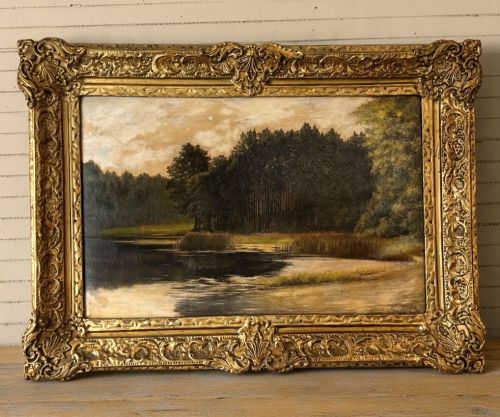
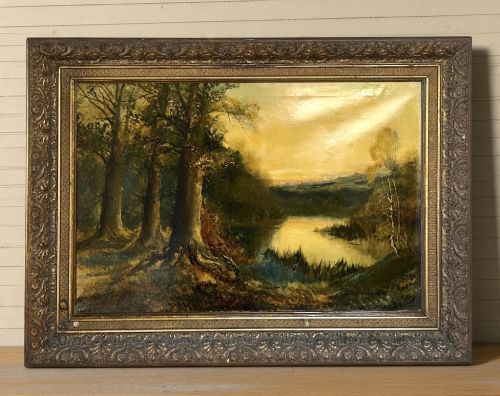
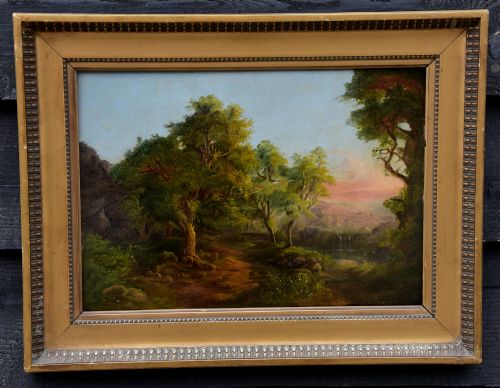
A green woodland landscape painting brings the quiet depth of trees, shade and filtered light directly onto an interior wall.
Green Woodland Landscape Painting
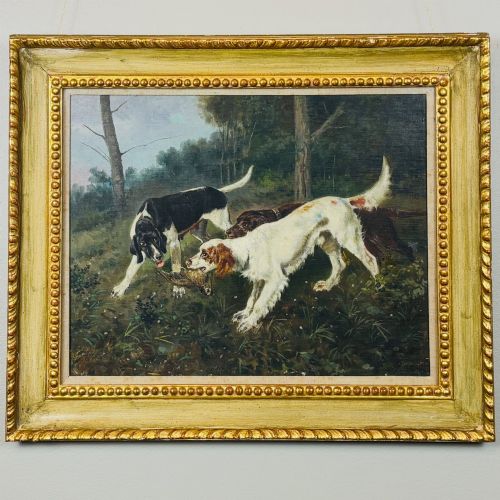
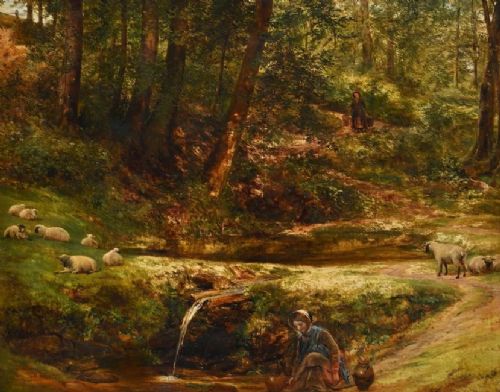
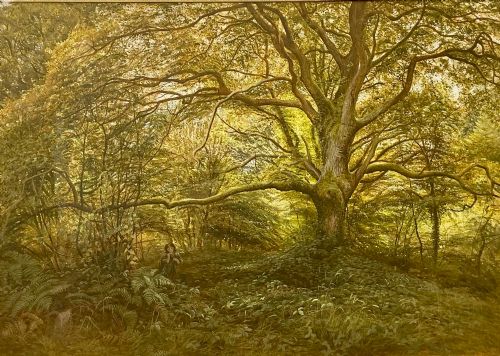
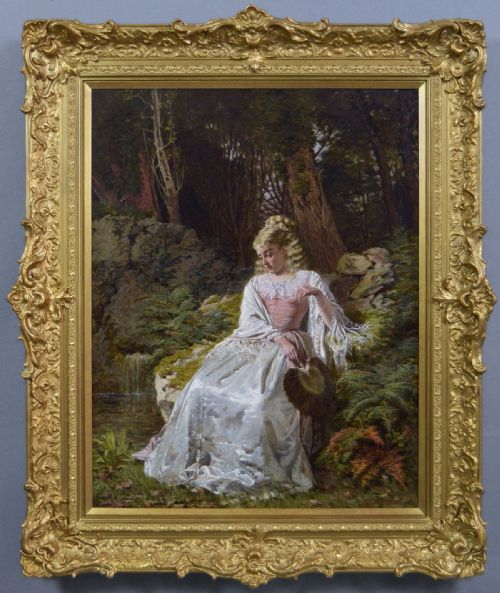
A green woodland landscape painting captures forested paths, timbered clearings and secluded groves through the eyes of artists working from the Victorian era into the mid-twentieth century. These works range from grand nineteenth-century oils on canvas to intimate early twentieth-century watercolours on paper.
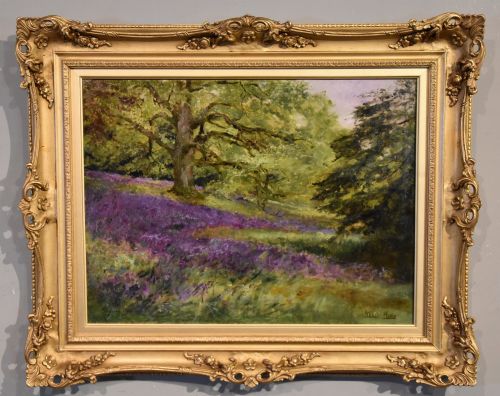
The subjects frequently feature figures gathering firewood, cattle resting beneath canopies, or paths winding through bluebells and ferns. Most examples encountered here date from the nineteenth and early twentieth centuries, reflecting deep nineteenth-century and Edwardian engagements with the countryside.
Materials and technique
Artists built these scenes using oil paint on canvas or board, and watercolour on paper, often applying rich layers of pigment to capture the dense foliage and dappled light of the woods. Canvas supports allowed for textured brushwork in larger oil works, while paper held the translucent washes characteristic of watercolours.
Gilt frames commonly house the oil paintings, adding a reflective boundary that complements the deep greens and browns of the forest floor.
Green Woodland Landscape Painting Retail Price Guide 2026
Typical asking prices for green woodland landscape painting among the pieces listed under this phrase on Sellingantiques today, from the lower quarter to the upper quarter. They describe what is for sale here now, not the wider market.
Canvas and paper serve as the primary supports, carrying mediums of oil and watercolour across Victorian, Edwardian and mid-twentieth-century periods.
Judging quality in woodland scenes
Quality rests upon the artist's command of light, shadow and spatial depth within the forest canopy, distinguishing observational depth from formulaic foliage. Stronger pieces demonstrate confident handling of pigment and balanced composition that draws the eye along a woodland path or towards a shaded pool.
Condition of the canvas or paper surface, alongside the presence of period framing, influences the overall integrity of the piece.
Richard Sebastian Bond·William H Myers·Thomas W Lascelles·Richard Redgrave·Paul Désiré Trouillebert·Henry Yeen King·Thomas Bromley Blacklock·William Hoggatt·Thomas Edward Roberts·James Mallard Bromley·Alfred Grey·Henri Joseph Harpignies·John Wright Oakes·James Proudfoot·Rowland Henry Hill·Abraham Hulk Jnr·Alfred W Parsons·Harold Swanwick·William Lucas·Thomas Hollingsworth·Ernest Higgins Rigg·Edward H Holder·George F Wetherbee·Beatrice Parsons
The Green Woodland Landscape Painting Glossary
- Oil on canvas
- Pigment bound in drying oil applied to a stretched woven fabric support. This combination permits thick impasto application and deep colour saturation.
- Watercolour
- Pigment suspended in a water-soluble vehicle, typically applied to paper. It relies on the white of the paper showing through thin washes to create luminosity.
- Barbizon School
- A nineteenth-century French movement focused on direct observation of nature and forest interiors. Painters associated with this group emphasised realism and atmospheric light.
- Impressionism
- A style emphasising unblended brush strokes and the shifting qualities of natural light. It often translates the flickering sunbeams of a woodland floor into broken colour.
Green Woodland Landscape Painting: Frequently Asked Questions
What periods do these paintings cover?
The available selection spans from the seventeenth-century Dutch school through Victorian realism and into mid-twentieth-century interpretations.
Most pieces, however, concentrate in the nineteenth and early twentieth centuries, particularly the Victorian and Edwardian eras.
How were these woodland scenes originally displayed?
Owners typically hung them in parlours, drawing rooms and studies as a way to bring the outside world indoors during periods of urbanisation.
Heavily moulded gilt frames often accompanied the larger oil paintings to suit formal Victorian and Edwardian interior decoration.
Are watercolours as durable as oils?
Watercolour paintings on paper require protection from direct sunlight to prevent fading of the delicate green and blue pigments over time.
Oils on canvas offer greater resilience against environmental light, though both benefit from stable indoor humidity.
How do I identify a Barbizon influence?
Barbizon-influenced works prioritize earthy tones, subdued greens and a moody, atmospheric rendering of forest interiors rather than bright decorative palettes.
Artists trained in this tradition focused closely on the ordinary realities of rural trees and shaded paths.