

19th Century Country Landscape
These 19th century country landscape works capture rural life, quiet rivers and pastoral scenes through oil and watercolour.
19th Century Country Landscape
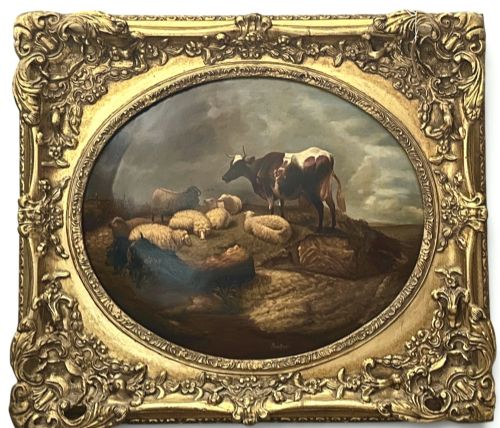
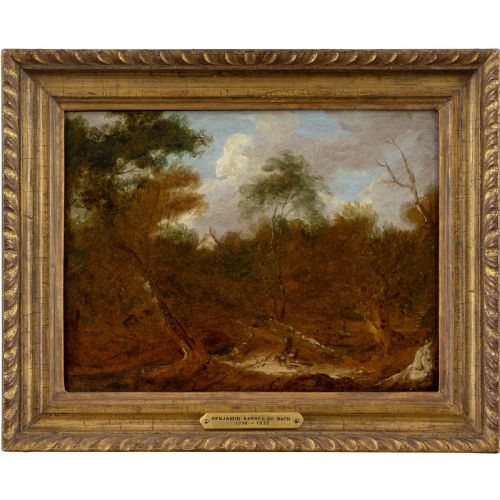
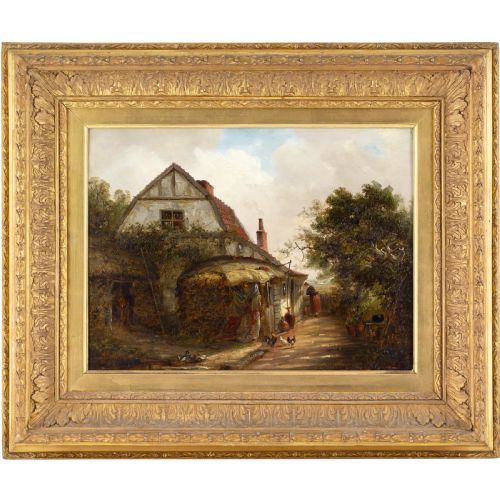
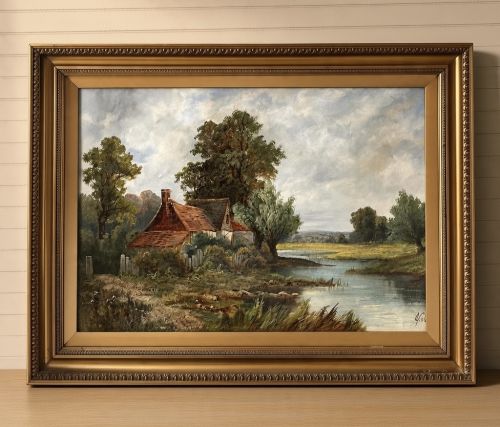
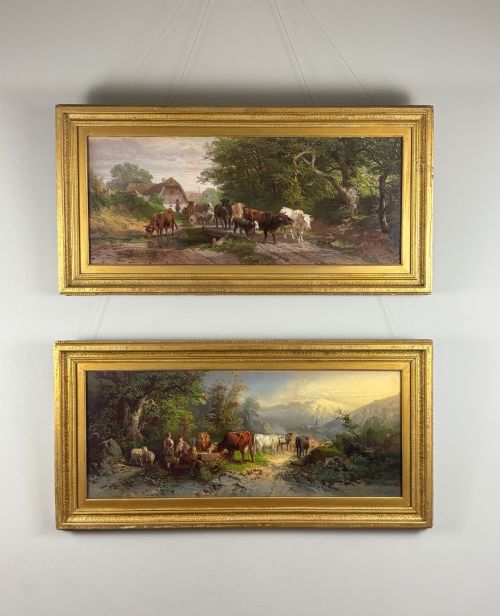
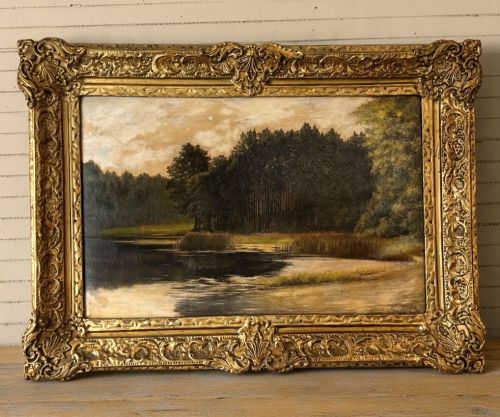
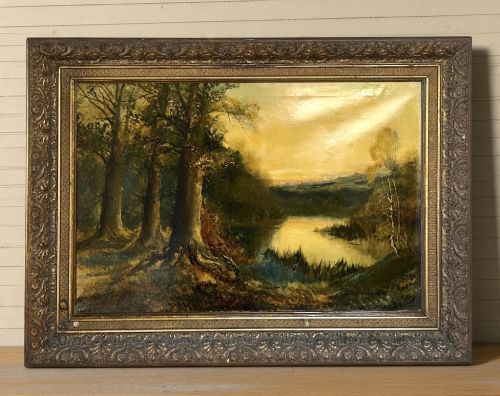
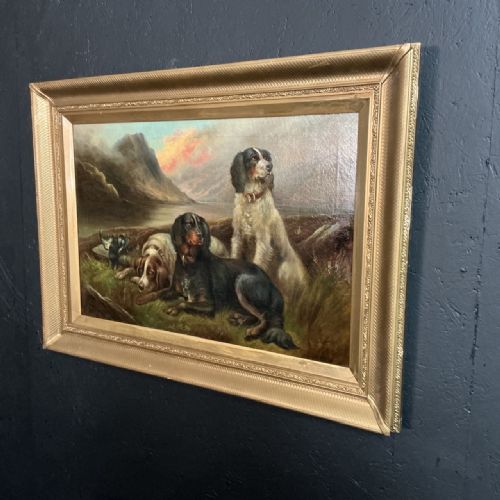
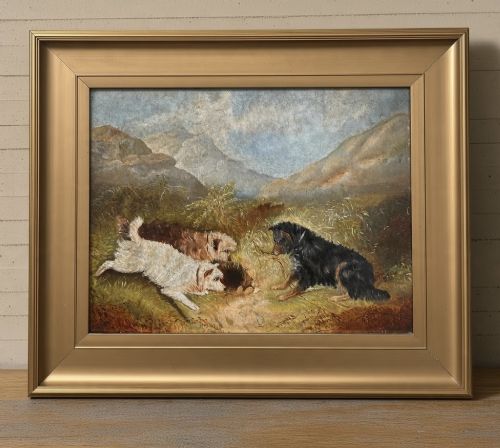
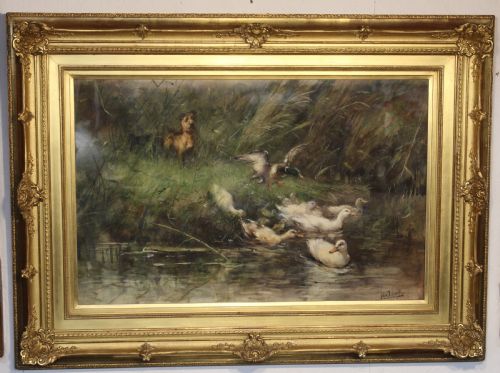
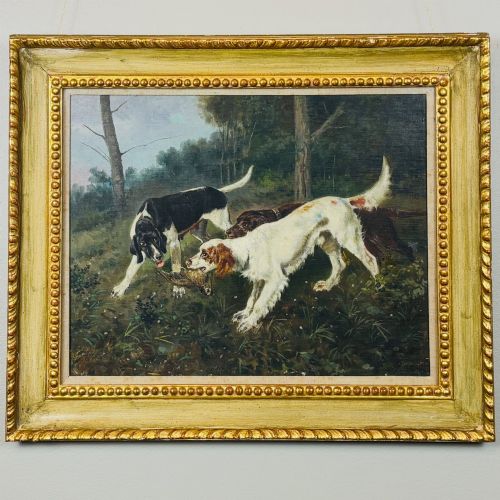
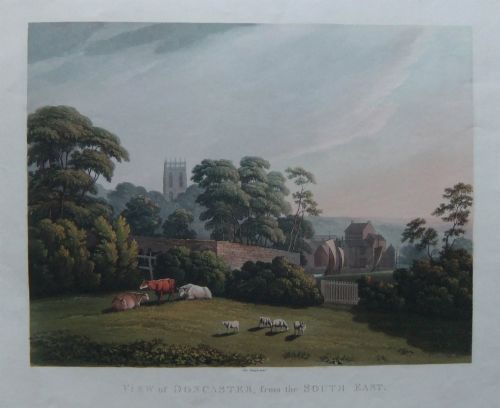
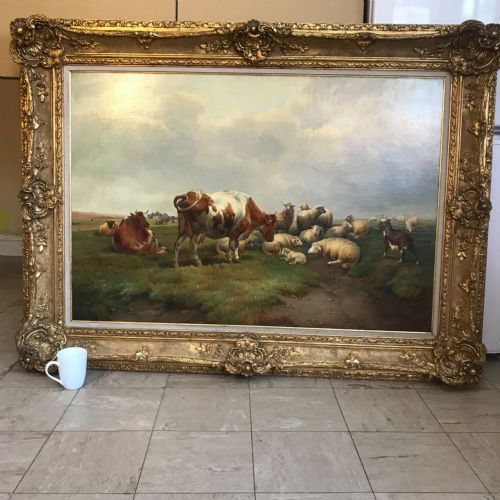
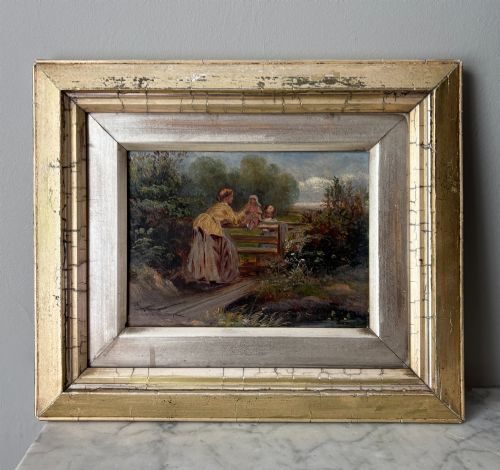
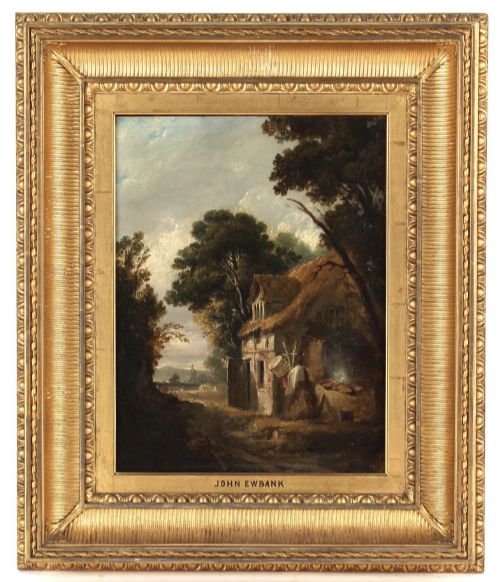
A 19th century country landscape brings the rural British countryside indoors, depicting scenes from quiet riverbanks to busy farmyards under changing skies. These works range from expansive canvas oils to intimate watercolours on paper, capturing rural folk, livestock and rustic cottages.
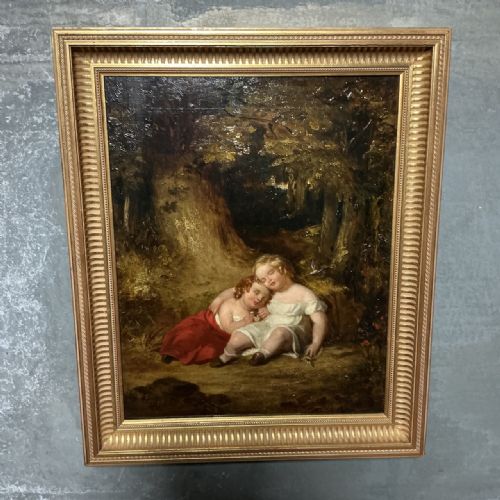
The pieces on this page lean heavily towards Victorian oil paintings and watercolours, alongside framed prints and drawings. Artists of the period often placed figures, cattle or sporting dogs within the scenery to give scale and narrative to the view.
English and Scottish school painters dominate the selection, recording recognisable regions from Yorkshire to the Thames Valley. Rural scenes bridge the gap between pure topography and pastoral romance, reflecting how the Victorians viewed the countryside.
Materials and Methods
Painters worked primarily with oil paint on stretched canvas or wooden board, building up rich textures and deep tones. Watercolours on paper offered a lighter, more immediate medium for capturing changing light at dusk or dawn.
Frames play a crucial role in presentation, utilising moulded gesso and giltwood to complement the warmth of the pigments. Many works retain their period frames, which contribute significantly to the overall presence of the artwork.
19th Century Country Landscape Retail Price Guide 2026
Typical asking prices for 19th century country landscape among the pieces listed under this phrase on Sellingantiques today, from the lower quarter to the upper quarter. They describe what is for sale here now, not the wider market.
Several artists clearly struggled to make cows stand still, resulting in cattle that gaze directly at the viewer with mild, human-like confusion.
Markers of Quality
Brushwork and composition set the standard for these landscapes, separating hurried topographical records from deeply considered artistic visions. A master hand shows in the rendering of atmospheric effects, such as mist rising over a river or light filtering through woodland.
The handling of secondary elements like livestock, figures and architecture dictates the success of the composition. Stronger pieces integrate these details naturally into the scenery rather than treating them as isolated additions.
Henry Cooper·George Armfield·Thomas Sidney Cooper·Miles Birkett Foster·Tom Rowden·James Albert Clark·Benjamin Williams Leader·John Wilson Ewbank·Thomas Mackay·Samuel Joseph Clark·Robert Gallon·John Horace Hooper·John McDougal·Robert John Hammond·Walter Heath Williams·Robert W. Macbeth·Robert Thorne Waite
The 19th Century Country Landscape Glossary
- Canvas
- A heavy woven fabric stretched across a wooden frame to form the primary support for oil paintings. It provides a flexible yet durable surface that holds thick layers of pigment.
- Gesso
- A plaster mixture applied to wooden frames and mouldings to create a smooth surface for gilding. It allows for crisp, ornate decorative details.
- Watercolour
- A paint consisting of pigment suspended in a water-soluble binder, traditionally applied to paper. It creates transparent washes of colour that rely on the white of the paper for luminosity.
- Barbizon School
- A mid-nineteenth-century movement focusing on realist landscape painting inspired by direct observation of nature. Painters emphasised mood and atmospheric truth over grand historical narratives.
- Giltwood
- Timber coated with a thin layer of gold leaf or gold paint, commonly used for framing Victorian artworks. It adds warmth and reflects light onto the canvas.
19th Century Country Landscape: Frequently Asked Questions
Are these paintings usually signed by the artist?
Many works bear signatures, monograms or contemporary inscriptions on the front or verso, while others remain attributed to a specific school or follower.
Unsigned pieces are common in nineteenth-century provincial art and are judged purely on the strength of their brushwork and composition.
Where should I hang a landscape watercolour?
Watercolours are sensitive to direct sunlight, which can fade pigments and discolour the paper over time.
Choose a wall away from strong light sources and ensure the framing provides a protective barrier between the paper and the glass.
How can I tell the difference between oil and watercolour?
Oils present a textured surface with visible brushstrokes and a slight sheen, typically stretched over a wooden frame.
Watercolours appear flat and matte on paper, usually protected behind glass within a mount that keeps the surface from touching the glazing.