
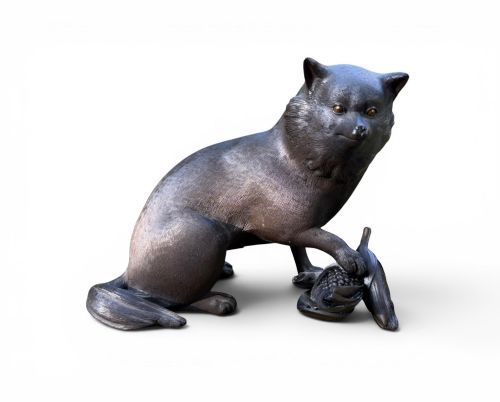


Signed Japanese Bronze
Signed japanese bronze works bring tangible evidence of Meiji period artistry into the room through animal okimono, vases, and figures bearing artist signatures.
Signed Japanese Bronze
When you search for signed japanese bronze, you encounter sculptural animals, vessels, and figures originating primarily from the late 19th and early 20th centuries. These works include okimono depicting creatures such as tigers, turtles, and puppies, alongside large vases and incense burners.
The most common examples on this page are Meiji period bronze okimono and vases carrying artist signatures, often cast with distinct surface detail. Pieces range from small paperweights to substantial sculptural figures mounted on wood bases or finished with mixed-metal inlays.
How they were made
The objects are produced using bronze casting techniques, frequently incorporating mixed-metal applications of silver, gold, and copper to accentuate specific details on the surface. Artisans also utilised enamel and porcelain elements in related vessels and chargers to add colour and texture to the metallic framework.
Signatures and seals are typically cast directly into the metal or engraved into the base during the finishing process, identifying the individual artist or workshop responsible for the creation. Secondary materials such as root wood serve as custom bases for sculptural figures and eagles.
Listings feature Meiji period bronze okimono portraying animals, alongside cloisonne enamel chargers and mixed-metal vases.
What varies in quality
The distinction between tiers of work rests upon the precision of the casting and the depth of the hand-finishing applied to the surface details. Finer pieces demonstrate meticulous attention to anatomical accuracy in animal subjects and precise execution in inlaid mixed-metal elements like silver and gold.
The clarity and prominence of the artist signature or seal also influence the standing of an object, alongside the overall weight and structural integrity of the bronze or mixed-metal body. Superior examples maintain crisp feather, fur, and garment definitions without losing the natural fluidity of the form.
Shosai·Kinkozan·Gyoko·Hozan Yoshiyama·Mitani·Seiyasu·Takasaki·Akimitsu·Tokutani·Kose·Kiyomitsu·Masaaki·Yamamoto zo·Kosen·Miyao Eisuke·Kizan·Seiunsai Miyamoto Sei
The Signed Japanese Bronze Glossary
- Okimono
- A standalone Japanese decorative figurine or sculpture designed for display on a shelf or in a tokonoma alcove. These pieces frequently represent animals, figures, or natural subjects.
- Meiji Period
- The historical era spanning from 1868 to 1912, characterised by rapid modernisation and the opening of Japanese crafts to international markets. Much of the surviving metalwork originates from this timeframe.
- Koro
- A traditional Japanese incense burner, typically featuring a pierced lid to allow scented smoke to escape. They appear in bronze, porcelain, and mixed-metal configurations.
Signed Japanese Bronze: Frequently Asked Questions
What is an okimono?
An okimono is a decorative object or small sculpture created for display in a Japanese home interior. They portray animals, mythological figures, and daily scenes.
Unlike utilitarian items, their primary purpose is artistic appreciation. They represent the high point of Meiji period metalwork skill.
How do I identify a signature?
Signatures on these metalworks are usually carved, engraved, or cast directly into the reverse or base of the object. They identify the individual artist, workshop, or Tokyo school responsible for the casting.
Locating these marks often requires examining the underside or lower edges of the bronze body.
What is mixed-metal inlay?
Mixed-metal inlay involves hammering contrasting metals such as gold, silver, and copper into recessed channels on the bronze surface. This technique creates pictorial details like birds, foliage, and landscapes.
Artists utilised this method to add visual depth and colour variation to dark bronze patinas.
How should I display bronze?
Bronze pieces require stable indoor environments away from excessive moisture and direct sunlight to preserve their patinas. Wooden bases, when included, benefit from occasional dusting with a dry cloth.
Allowing the metal to remain untouched helps maintain the historical surface finish accumulated over decades.